Gaza's toll crosses 73,000: how casualty arithmetic became a press freedom test
Two Telegram feeds, two casualty counts, the same 24 hours. The fight over who gets to publish Gaza's death toll is now a fight over what counts as journalism.
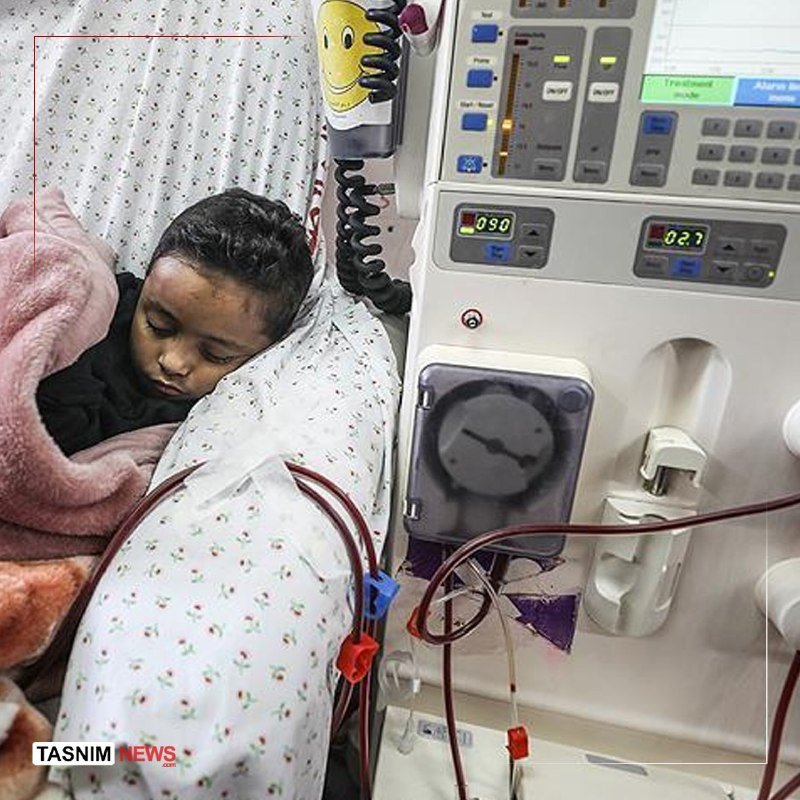
On 20 July 2026 at 09:43 UTC, a channel affiliated with The Cradle carried a Gaza Health Ministry bulletin: three Palestinians killed and 22 wounded across the strip in the previous 24 hours, with victims still trapped under rubble awaiting rescue. Forty minutes later, at 10:08 UTC, Tasnim, the Iranian state news agency, ran the same ministry's running total: 73,283 martyrs since the war began. Two wire items, two different framings, the same institutional author on the casualty side, and a chasm of editorial treatment between them. The arithmetic of dying in Gaza is now the arithmetic of journalism under pressure.
The point is not whether 73,283 is the right number; it is that the number, whoever issues it, is doing political work that newsrooms are refusing to police. The wire services that foreign readers actually scroll past have, for almost two years, alternated between two moves: report the Gaza Health Ministry's count with a hedge that explains the ministry is run by Hamas, or replace the count with an Israeli military figure that is consistently and dramatically lower. Both moves are framed as rigour. Both moves leave readers without a defensible number.
The 24-hour count and the running total
Cradle's 20 July item is granular and recent: three dead, 22 wounded, a reminder that rescue teams are still pulling survivors from collapsed structures. It is the kind of figure that reads as discrete and checkable. The Tasnim item, also timestamped on 20 July, is cumulative and totalising. Together they illustrate the two registers in which Gaza casualty data now circulates: the daily drip and the body count of the war. Both ultimately trace back to the same ministry in the strip, and both carry the same caveat that Western wires almost always attach to the ministry's figures, even when independent reviewers and UN agencies have cross-checked them against hospital records and found them credible.
Why the count gets buried
The standard editorial reflex in Western newsrooms is to attach a single qualifying clause to any Gaza Health Ministry figure and move on, or to substitute an Israeli military spokesperson figure in the same sentence. The structure is polite and technically defensible. It is also the move that turns the ministry into an unreliable narrator by default, even though United Nations Office for the Coordination of Humanitarian Affairs (OCHA) reporting has repeatedly used the ministry's totals as its primary baseline, even though the World Health Organization has done the same, and even though the only independent attempt to reconstruct the toll from obituary-style records on social media produced a figure in the same order of magnitude. The single qualifying clause travels further than the cross-checks do.
A second reflex is equally corrosive: treating the count as a statistic rather than a story. Three dead and 22 wounded, as Cradle reported for the 24 hours to 20 July, are people. Each of them has a name, a household, a hospital record. The aggregate figure, 73,283, is the only number that survives in a foreign reader's head, and it survives precisely because it has been stripped of context. It is also the figure that gets challenged most aggressively by commentators who insist, without methodology, that it must be inflated.
What the structural picture actually shows
The deeper problem is not disputed arithmetic; it is the economics of reporting from inside the strip. International journalists have been largely locked out since the early months of the campaign, leaving a press ecosystem in which local reporters work under bombardment, under signal blackouts, and under the constant threat that their work will be tagged as either Hamas propaganda or Iranian echo. Iranian-state and resistance-aligned outlets such as Tasnim and The Cradle have filled the vacuum with their own framing, which is why a 20 July bulletin of three dead and 22 wounded travels through Telegram to readers who would otherwise see only a milestone figure. The vacuum was not created by Telegram; it was created by the closure of the strip to outside reporting, and Telegram simply occupies the space.
What this means in plain terms is that casualty data is now a media-architecture story as much as a battlefield story. Every number a reader encounters arrives with a structural fingerprint: the original source on the ground, the channel that amplified it, the wire that summarised it, the headline that framed it, and the social platform that delivered it to a phone. The five layers each have their own incentives, and each has reason to bias the count either up or down. The reader is left to triangulate.
Stakes and the next inflection point
If the pattern holds, two things will continue to happen in parallel. The cumulative number will climb toward and past 75,000, and Western headlines will keep reporting each new milestone with the same qualifying clause. The daily number will keep circulating through outlets that most Western newsrooms consider inadmissible as primary sources, which means the granular story of who died today will travel almost exclusively through channels that mainstream readers are warned not to trust. The press freedom story is not that these figures are being published; it is that the published figures have been split into two libraries, and readers are forced to choose which one they are allowed to believe.
The next test will be procedural rather than numerical. When the next major milestone figure is issued, the question worth asking is whether major outlets will report it as a number, a number with a caveat, or a number refused. That choice will say more about the state of press freedom under conditions of war than any single casualty count ever could.
Desk note: this piece tracks the same wire items as Western coverage from 19-20 July 2026 but treats the casualty total as a media-architecture story rather than a battlefield tally. The difference is editorial framing, not arithmetic.
Wire provenance
This editorial synthesis draws on the following public wire/social posts:
- https://t.me/thecradlemedia
- https://t.me/JahanTasnim
- https://t.me/TheCradleMedia