Bronze, breakthrough, and a cooling break: what the 2026 World Cup actually settled
The tournament finished with Spain lifting the trophy, England taking bronze and a bruising debate over hydration breaks. The headline-to-headline read misses what actually moved.
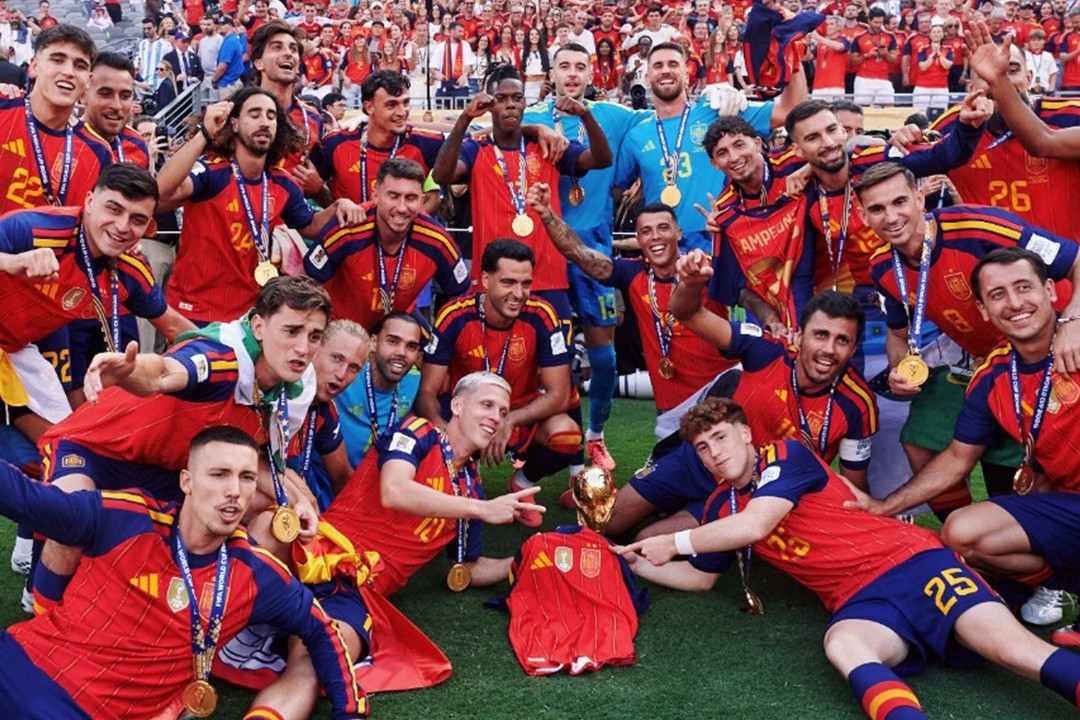
The 2026 FIFA World Cup finished in the small hours of 20 July with a single fixture left to settle: the third-place playoff. England took the bronze medal on 18 July, the last result before Spain lifted the trophy two nights later, capping a tournament that delivered goals in volume, an unusually young breakout in Lamine Yamal, and an unsexy operational controversy that FIFA now says it may reverse before the next cycle. Read end to end, it is less a story about a single winner than about an institution trying to balance spectacle, athlete welfare and a broadcast product that is now genuinely planetary in scale.
The headline pattern of the tournament was set in the final third. Mbappé finished as the top scorer, ahead of Messi, in a race that ran through to the closing weekend; the bronze-medal match itself was a scoring extravaganza, with England converting chances that had eluded them in the knockout rounds. The Indian Express framed the tournament, in a column published on 20 July, as one in which football itself triumphed over geopolitics, and a separate piece argued that the post-tournament conversation should pivot away from results and toward Spain's coaching overhaul. Those two frames, art versus system, are the ones worth taking seriously now that the medals have been handed out.
The scorers' race and the Mbappé–Messi closing line
The Golden Boot conversation was, by the final weekend, a two-man contest with a generational subtext. Mbappé, leading France into the knockout rounds, edged Messi, who finished his final World Cup with a tearful concession that Spain "better team" had beaten Argentina in the final. The Indian Express's 20 July wrap-up captured Messi on camera at full time, visibly moved, refusing the easy out that veteran forwards usually take in those moments. The 18 July bronze-medal result for England, against a side whose tournament had ended one round earlier, kept the European goals column moving and ensured that the top of the scoring chart reflected form across the whole competition, not just the final.
What that race obscured is the structural shift it confirmed. Two of the three players at the top of the chart were 28 or younger at kickoff. Lamine Yamal, the Spain winger whose tournament The Indian Express flagged as the competition's breakout, will still be 27 when the next World Cup opens. The finishers who defined this tournament were not the last generation of a passing order; they were the first generation of a new one, and the broadcast graphics told the story in real time.
Bronze, and what England actually won
Taking third place in a World Cup is a strange kind of consolation. The medal is real; the memory is shorter than the finalists'. England's bronze, secured on 18 July in the third-place playoff, ended a campaign that had promised more and delivered a different kind of result: a young squad that scored freely and stopped winning at the wrong moment. The bronze match itself, framed in pre-tournament coverage as an afterthought, played instead as the goal-fest the format usually produces once the semi-final pressure lifts. For an England side whose analytical case rests on depth rather than a single superstar, the scoreline matters more than the medal ceremony.
The framing inside England will, fairly, be mixed. A third-place finish is the country's best World Cup result in decades, and the squad returns to the Premier League with a generation of players whose international résumés have just been stamped. Against that, the side exited one round short of a final, and the questions that follow a near-miss tend to be louder than the answers a bronze medal offers. The Indian Express's note that the World Cup is over and Spain's coaching revolution is not is the right read for the eventual champion; for the runner-up and the bronze medalist, the revolution that matters is their own.
The cooling break that may not survive the next cycle
The least glamorous row of the tournament is the one FIFA will spend the next year managing. According to a 19 July post on the Polymarket channel, FIFA has signalled that mandatory hydration breaks could be scrapped after criticism from fans during the World Cup. The breaks were introduced, in their current form, as a heat-safety measure; they also interrupted broadcast flow, drew visible grumbling from players, and produced long stretches of dead air in stadiums that were already full. The dispute is small in sporting terms and large in operational ones, because it tells you how FIFA is now weighing athlete welfare against the product its broadcasters paid for.
The plausible alternative reading is straightforward: the breaks were always more about liability than welfare, and the broadcaster complaints are the surface symptom of a deeper tension between a federation selling a continuous product and a sport whose athletes are increasingly unwilling to be treated as props inside it. FIFA's signalling that the breaks may be scrapped is consistent with either reading, and the federation's silence on which one drove the decision is itself a tell. Until the governing body's next technical circular, expect the in-match stoppages to be the subject of more arguments than the offside law.
What the tournament actually moved
The 2026 World Cup was sold, in its host-bid phase, as a North American showcase. The on-pitch product was a different proposition: a high-scoring competition whose defining images were a teenage winger on the left flank for Spain, a French forward closing his case as a generational scorer, and an Argentine great conceding, in public, that his time had ended. The geopolitics frame that The Indian Express invoked is more useful than it sounds. A tournament that draws billions of viewers and produces political pressure from governments at every stage will, by construction, be about more than football; but the football that won was the football played by Spain's system, and that is the story the next coaching cycle will be built around.
The honest uncertainty is whether any of this translates into the 2030 edition, which FIFA has already committed to a three-continent host arrangement. The hydration-break argument is a small signal about how the federation makes operational calls under broadcast pressure; the Spain coaching story is a small signal about how the talent base is shifting south and west; the Mbappé–Messi race is a small signal about the age curve of the sport's biggest stars. None of them settle anything on their own. Together, they are the actual shape of what the 2026 World Cup moved.
This publication framed the tournament around its operational and structural signals (the hydration-break debate, the coaching turnover in Spain, the generational handover in the scoring chart) rather than the result-driven wire line. The medal table is settled; the institutional questions FIFA now has to answer are not.
Wire provenance
This editorial synthesis draws on the following public wire/social posts:
- https://t.me/Olympics
- https://x.com/polymarket/status/195162700000000000