The agent economy comes for China's enterprise stack
Ant, Tencent and a cohort of well-funded model labs are racing to put autonomous AI agents inside Chinese corporate workflows. The bet is that the next platform war will be won in invoicing, not search.
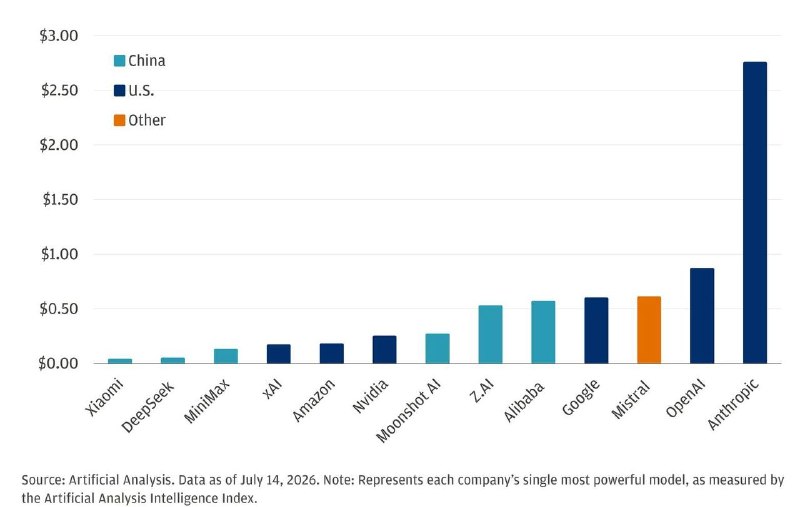
On 18 July 2026, Moonshot AI pushed a new version of its Kimi model into public preview, and the reaction on Chinese tech timelines was less about the benchmark scores than about a phrase that has since refused to die: "full AI communism." The label, which began as a sarcastic jab on a few Weibo threads before being picked up by international coverage including a TechCrunch dispatch the same day, gestures at a real strategic posture: a large, well-funded Chinese model lab giving away frontier capability cheaply, or in some cases free, in order to seed an ecosystem rather than defend a price tag.
That posture is not unique to Moonshot. Across the Chinese tech stack, from Ant Group to Tencent to a handful of newer contenders, a coordinated bet is taking shape that the next platform contest will be fought inside enterprise workflows: invoice reconciliation, supply-chain scheduling, customer service triage, internal knowledge search, compliance reporting. The wager is that whoever owns the agent layer of Chinese corporate IT by 2030 will own something close to a permanent toll booth on the country's digital economy. The Kimi release is the most visible artefact of that bet in motion this week, but it sits inside a much larger move.
From models to agents, on someone else's tab
The South China Morning Post reported on 20 July 2026 that Chinese tech giants, including Ant and Tencent, are repositioning their AI offerings around autonomous agents sold to enterprise clients, a shift away from the chatbot-first strategy that defined the previous eighteen months. The framing matters. A chatbot is a product; an agent is a procurement line. The first sells to a chief marketing officer. The second gets written into a multi-year contract, a service-level agreement and an internal data-governance memo, and then quietly becomes the substrate on which the rest of a company's AI spending runs.
Ant Group, the fintech affiliate of Alibaba, has the deepest distribution advantage. Its Alipay rails touch roughly a billion consumer accounts and a dense network of small and mid-sized merchants, any one of which is a candidate customer for an embedded accounting or procurement agent. Tencent's play is structurally different: WeChat Work and the broader enterprise messaging stack give it a foothold inside the daily communications of Chinese offices, which is the highest-traffic surface for any internal AI assistant. Both companies have spent the last two years converting consumer large-model launches into business units with their own sales pipelines and dedicated go-to-market teams.
Moonshot AI sits one rung down that ladder. Founded in 2023 and backed by a roster of Chinese internet investors, the lab has staked its identity on long-context models: Kimi K2 and its predecessors are tuned to ingest hundreds of thousands of tokens in a single window, which is unusually well suited to the document-heavy, multi-step work that defines corporate back offices. The 18 July release extends that lineage, and the company's bet, as TechCrunch noted, is that this kind of grunt work is exactly where the next wave of value capture will sit.
The "full AI communism" provocation
The phrase doing the rounds deserves a closer read. It was not, on inspection, a serious policy proposal. It began as a meme aimed at Moonshot's aggressive pricing on its API and consumer chatbot, with a sub-current of complaint that a state-aligned capital base was allowing private labs to undercut Western competitors in ways that pure market players could not match. The framing travelled quickly because it confirmed priors in two camps at once: Western commentators heard in it confirmation that Chinese AI is subsidised; Chinese commentators heard in it an admission that Chinese AI is competitive.
The structural reality is more prosaic. Chinese model labs are operating inside a cost curve that is genuinely lower than the US equivalent, in part because of access to domestic accelerator supply, in part because engineering talent is priced in a market that has not seen the salary inflation of the Bay Area, and in part because the country's enterprise customers are unusually price-sensitive after a decade of mobile-first software wars. None of that is altruism. It is a competitive strategy, and like most competitive strategies it is being executed because it works.
There is also a counter-current. The same SCMP reporting documents that Chinese enterprises have been slower than US peers to write large AI line items into their IT budgets, in part because of a preference for building in-house, in part because data-sovereignty concerns push large state-owned enterprises toward on-premise deployments. The result is that the Chinese agent economy is, for now, more speculative than its US counterpart. A Polymarket contract priced the probability that Moonshot would end July 2026 as China's top AI company at 29% as of 19 July, a level that suggests informed bettors are treating the leadership question as genuinely open.
The Western reading, and what it gets right
The dominant Western framing of the Chinese AI push remains centred on three claims: that the country has access to frontier hardware through grey channels, that state capital is distorting competition, and that the resulting products will be deployed for geopolitical leverage as much as for commercial gain. Each of those claims has evidence behind it. Each is also incomplete. Hardware access has tightened materially under successive US export controls, and Chinese labs are demonstrably innovating around the constraint, not ignoring it. State capital is real, but so is the deep private capital that funds US competitors; the playing field is not level in either direction. And the geopolitical-leverage claim conflates two separate things: domestic commercial deployment and external technology export, which are governed by different regulatory and commercial logics.
A more useful frame is the one the Chinese majors themselves prefer to use in their investor communications: that they are building an agent stack for the Chinese enterprise first, with international expansion as a secondary, optional leg. That posture mirrors the playbook Chinese cloud companies ran a decade earlier, when Alibaba Cloud and Tencent Cloud spent years fighting for domestic share before venturing abroad in any serious way. The agent economy is on a similar trajectory, with the added wrinkle that the customer base is orders of magnitude larger.
What it changes, and what to watch next
If the bet pays off, three things follow. First, the centre of gravity in enterprise AI shifts measurably eastward, with Chinese-developed agents handling a meaningful share of the back-office workloads for the country's small and mid-sized enterprises, the segment that global SaaS has historically underserved. Second, the export question becomes live: at what point do Ant's, Tencent's and Moonshot's agents become competitive enough to bid for work outside China, and what does that do to the geography of the global enterprise-software market, which has been American-dominated for two decades? Third, the talent and capital flow inside China continues to concentrate around a handful of model labs and platform companies, with the rest of the developer ecosystem forced into a narrower set of roles: implementation partners, data-preparation specialists, verticalised agents built on top of the foundation-model APIs.
What remains genuinely uncertain is the speed. The Polymarket contract that put Moonshot at 29% on 19 July 2026 is a useful temperature read: it tells you informed money does not yet know who wins. The same is true of enterprise procurement cycles in China, where the first wave of agent deployments has been pilot-heavy and the conversion from pilot to multi-year contract is still mostly in the future. The next decisive data points will arrive with the Q3 earnings calls from the listed Chinese platform companies, where agent revenue will need to be broken out from broader cloud and AI lines, and with the API-pricing moves that Moonshot and its peers announce over the autumn.
The "full AI communism" line will fade. The structural contest underneath it will not.
Desk note: Monexus framed this piece around enterprise procurement as the contested layer, not model capability, and steelmanned the Chinese majors' go-to-market logic alongside the Western concern about subsidies. The Polymarket price is treated as a temperature read on the leadership race, not as a forecast.
Wire provenance
This editorial synthesis draws on the following public wire/social posts:
- https://t.me/SCMPNews
- https://t.me/polymarket
- https://t.me/techcrunch