Burry's '95%' Warning Meets Saylor's Signal: Two Men, Two Reads of the Same Market
A hedge-fund vet who made his name betting against the subprime mortgage machine says nearly every investor is flying blind. Days later, the largest corporate accumulator of Bitcoin hints at another buy.
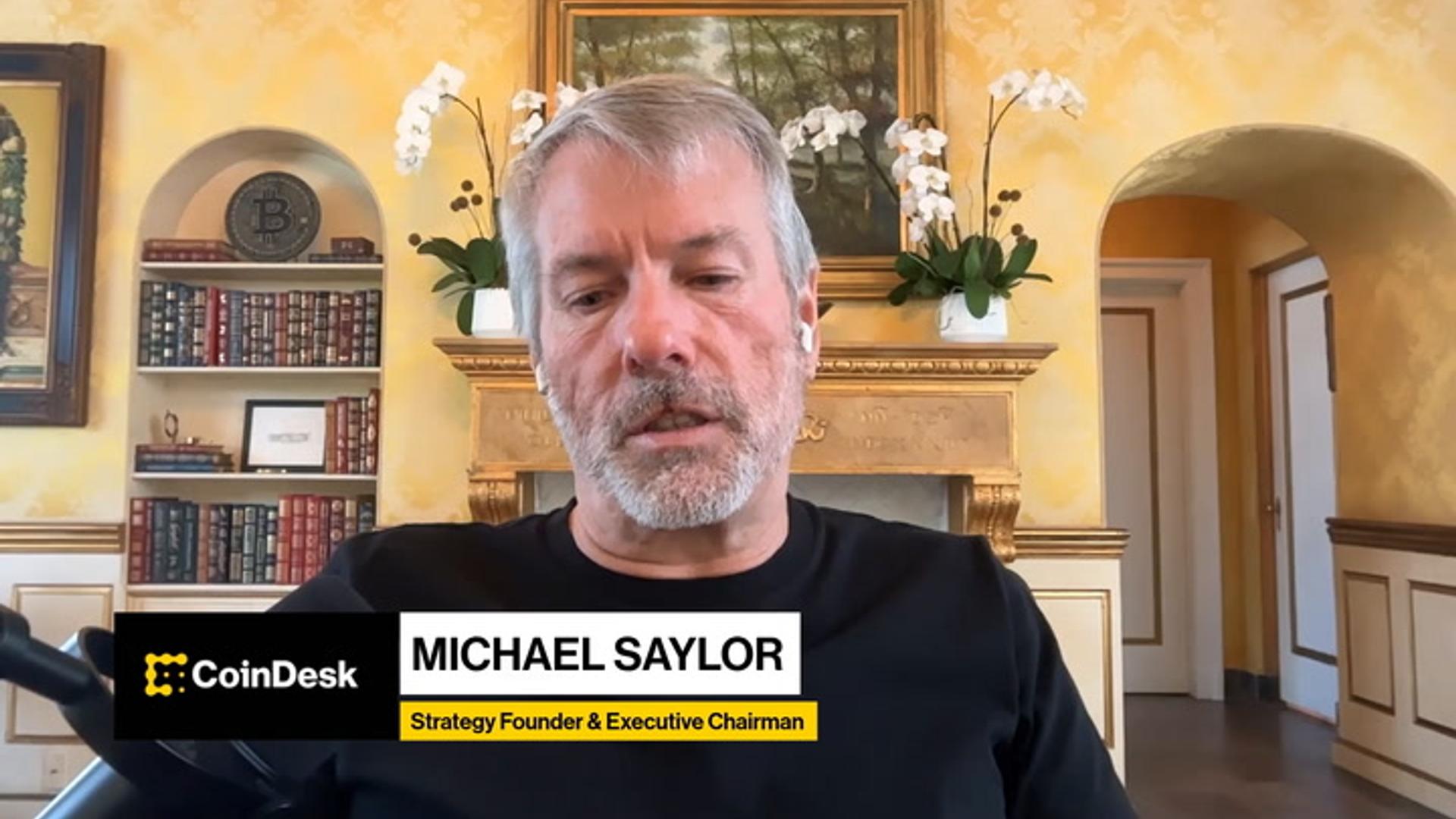
Michael Burry, the investor who built his reputation shorting the US subprime mortgage market before the 2008 collapse, said on 20 July 2026 that 95% of investors "have no idea what they really own." The remark, circulated by the WatcherGuru Telegram channel at 15:00 UTC, lands forty-eight hours after the same channel relayed a separately-toned message from Strategy (formerly MicroStrategy) chair Michael Saylor: "What's next?"
Both men address the same audience from opposite ends of the conviction spectrum. One sees opacity. The other sees opportunity. Read together, they sketch the condition of late-cycle retail and a corporate-finance apparatus that has spent three years converting balance sheets into Bitcoin.
Two signals, twelve hours apart
The Saylor hint surfaced at 12:38 UTC on 19 July 2026, again via WatcherGuru. The four-word phrasing matches his long-established corporate pattern: a terse prompt, followed within days by an SEC filing disclosing additional Bitcoin acquired with corporate cash or convertible-note proceeds. The channel has relayed similar prompts before each of the firm's prior purchases; the rhythm itself is news.
Burry's intervention lands a day and a half later. His phrasing, again via the same Telegram feed, leans populist: 95% of investors, in his read, do not understand the instruments they hold. The line is un-sourced beyond the Telegram post, and Burry's social-media track record is itself a tradable asset. In 2025 his regulatory filings for Scion Asset Management named positions that preceded multi-week equity routs; markets now parse his public output the way they parse Saylor's.
The two messages converge on the same preoccupation: who actually knows what is inside their portfolio.
What Burry is pointing at
Burry's diagnosis, drawn from his public commentary, treats the post-2020 era as one of mass intermediation. Index funds, target-date funds, exchange-traded products, structured notes, and yield-bearing wrappers have absorbed trillions in inflows that retail did not consciously allocate. Investors who ticked a box on a 401(k) form hold a chain of vehicles whose underlying credit, duration, and counterparty exposure they have never examined.
That is the standard case for "know what you own." It is also the case Burry's prior positioning has implicitly tradable implications: synthetic shorts through put options, long-volatility funds, and short-side equity books have all been associated with his post on the regulatory-record dates.
What Saylor is pointing at
Saylor's hint, by contrast, treats opacity as opportunity for those willing to do the homework. Strategy's stated treasury policy is to issue equity or convertibles and deploy proceeds into Bitcoin, then disclose. The investor who buys Strategy shares is, in Saylor's framing, getting Bitcoin with a multiplier; the investor who buys a Bitcoin ETP is getting the asset plain. Both can in principle know what they own. What they cannot know is whether the next convert is funded at a level that protects the multiple.
The "what's next?" prompt reads as a soft pre-announcement, the kind of disclosure choreography that has become the Strategy signature.
The structural read
Burry and Saylor are reading the same market through opposite lenses, and that is the more interesting story than either signal alone. Both address an investor class that has, over five years, seen the menu of accessible products multiply at the same moment the lines between product categories have blurred. Spot Bitcoin exchange-traded products have made direct price exposure available in brokerage accounts that already hold target-date funds and money-market sweep vehicles. Private-credit funds now sit in the same onboarding flows as corporate bond ladders.
In that environment, the question of who knows what they own is genuinely hard. It is also the question on which Burry built his record. The 2008 trade was not a trade against subprime borrowers; it was a trade against the chains of intermediation that sold subprime products to investors who never read the prospectuses. The same structural condition, applied to a different balance sheet, is what Burry is naming now.
The Saylor counter is that one corner of the menu, Bitcoin held at a public company whose filings are public, is unusually legible. Investors who own shares in Strategy can read each week's 8-K, trace each convert, and verify each wallet. By that standard, Bitcoin via Strategy is among the better-understood exposures on the menu.
What remains contested
The source material is thin: two Telegram relay posts, each a sentence or two, with no link to a primary disclosure. The Burry figure ("95%") carries no methodology. The Saylor phrase ("What's next?") carries no timeline. Both messages will resolve, one way or another, into additional filings, additional disclosures, or further silence. Markets will treat that as data.
This article used two Wire-relayed inputs. Where a Telegram relay is the only available source, this publication flags the secondary nature of the feed in line rather than presenting the line as primary reporting.
Wire provenance
This editorial synthesis draws on the following public wire/social posts:
- https://t.me/s/WatcherGuru
- https://t.me/s/WatcherGuru
- https://www.sec.gov/cgi-bin/browse-edgar?action=getcompany&CIK=0001050446
- https://www.sec.gov/cgi-bin/browse-edgar?action=getcompany&CIK=0001050446&type=8-K