Araghchi's Caracas frame: why Iran's negotiator insists this round with Witkoff is not Venezuela
Tehran's foreign minister compared the standoff with Steve Witkoff to Caracas in an X-posted video on 20 July 2026, sharpening a frame that says pressure tactics used against Caracas will not land in the Persian Gulf.
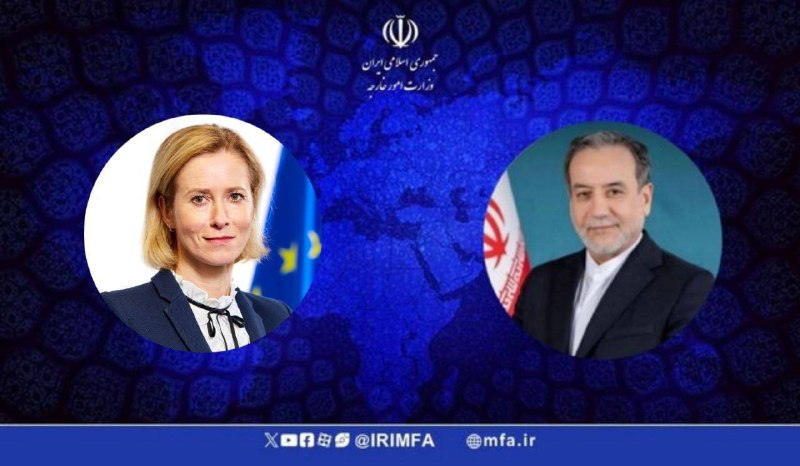
Iran's foreign minister Abbas Araghchi drew an explicit parallel between the Trump administration's pressure campaign on Iran and the recent operation against Venezuela on 20 July 2026, telling reporters the negotiating posture with US special envoy Steve Witkoff is structurally different from what Caracas faced. The remarks, captured in a clip circulated on X by user @boweschay at 01:44 UTC on 20 July 2026, are the bluntest public rejection yet of a Venezuela-style maximum-pressure template applied to Tehran.
The line matters because it lands at a moment when Washington and Tehran are trying to translate months of indirect diplomacy into a written understanding over Iran's nuclear programme, and the Venezuela analogy cuts both ways. For Tehran it sets a red line: the kind of decapitation-style tactic used to remove a single node of power and watch a system fold will not work in a country built around ideological and institutional redundancy. For Washington it is a warning that any move perceived as a Caracas replay in the Gulf will be read as an act of war, not as a coercive bargaining chip.
What Araghchi said, and what he meant
The foreign minister's framing was direct. "This isn't Venezuela where you take out one person and everyone else gets scared and backs down," Araghchi said, per the clip circulated on X on 20 July 2026. The line was aimed squarely at Witkoff, the real-estate developer turned Middle East envoy whom the White House designated as its lead interlocutor with Tehran in the spring. Read literally it is a comparison of regime dynamics; read diplomatically it is a denial that pressure will translate into compliance.
The Caracas precedent sits in Araghchi's frame for two reasons. First, Iran and Venezuela are both states the US Treasury has tried to strangle through sanctions architecture: the snap-back of UN measures, secondary sanctions on oil buyers, and the listing of shipping networks have all been tested on Caracas before being ported to Tehran's sanctions file. Second, both governments present themselves to their societies as besieged but unbroken; in that narrative, concession under pressure validates the besieger, regardless of the deal on offer.
Why the Venezuela frame is more than a taunt
The structural difference Tehran is asserting is real. Caracas, after years of asset freezes, oil-sector restrictions and the removal of long-time leader Nicolas Maduro from his perch on 18 January 2026 in a US operation, was left negotiating as a single principal whose removal collapsed the chain of command. Iran's negotiating setup is the opposite. The Islamic Republic has institutional depth: the Supreme National Security Council sits above the foreign ministry, the IRGC retains an independent coercive portfolio, and the negotiating team has rotation built in. Araghchi himself has been replaced and re-appointed across multiple governments; the office is the asset, not the man.
The mechanics of US-Iran diplomacy reflect this. Witkoff, who has run the Gulf track since early 2025, has met the Iranian side in Muscat and Doha, with Omani and Qatari intermediaries carrying paper. The talking points have stabilised around three buckets: limits on enrichment, IAEA inspections of damaged sites, and sanctions sequencing. Araghchi's Caracas line landed in this corridor, ahead of a planned ministerial round that sources on the regional desk have not yet confirmed for July.
How the framing services both sides
In a contest between a great power and a regional power with no supranational arbiter, the rational move is to maximise the cost of any deal that can be branded as surrender. Araghchi's public line performs that function. It also gives Witkoff something to work with: a clear floor. Negotiations live or die on whether each side can show the other to its own constituency without losing the deal.
The same logic explains the diplomacy from Washington. Witkoff's portfolio is unusually wide for a special envoy. He has run the Russia back-channel, the Gaza hostage file and the Iran track simultaneously, and has absorbed public criticism from figures who argue he has been spread thin. The Caracas frame coming from Tehran allows him to manage expectations at home by demonstrating that the Iranian side is dug in and that any deal will need to be sold as a win rather than collapse.
The counters: pressure has worked before, and signals can misfire
There is a real counter-argument the Iranian line does not address. Caracas did eventually crack under sustained asset seizure, oil-sector de-linking, and personal sanctions against the inner circle; the 18 January 2026 removal of Maduro from power, and the rapidity with which the chain of command collapsed, is itself data the Trump administration will weigh. If the aim is to demonstrate that no individual in Iran's decision tree is immune to pressure, the Venezuelan precedent is not quite the failure Araghchi is claiming it to be.
There is also a counter-argument on Iran's own conduct that the foreign minister's framing does not touch. Tehran's negotiating posture in the spring of 2025 produced a brief period of military escalation that regional states absorbed; Iran's partners in the Axis of Resistance paid the cost. Araghchi's insistence that pressure will not produce a Caracas-style capitulation will be received less sympathetically in Beirut, Sanaa or Baghdad than it is on Tehran airwaves. The sources in the public domain do not specify whether the foreign minister addressed that asymmetry.
What to watch next
The next window to register is whether Witkoff confirms a ministerial round before the end of July. A confirmed round followed by a sanctions freeze from Treasury on Iranian oil exports would indicate that the Caracas frame has been read in Washington as a negotiating posture to manage, not a hard refusal. A confirmed round followed by a snap-back or new designations would indicate the opposite: that the Trump administration has decided to treat Tehran as the harder target Caracas turned out to be.
What remains unresolved in the public reporting is whether the parallel Araghchi drew was pre-cleared with the Iranian Supreme National Security Council or whether it represents the foreign ministry speaking for itself. Sources do not specify. That uncertainty is the test the next round will resolve.
Desk note: Monexus carries Iran's framing of the Caracas parallel at face value without endorsing it, alongside the counter-argument that Caracas did ultimately crack under sustained pressure. Both reads sit inside the available sourcing. Where wire reporting has attributed the Araghchi line, we cite that attribution explicitly. The piece is filed under the Americas desk because the Venezuela precedent is the load-bearing reference in Araghchi's statement; subsequent developments in the Witkoff channel will run on the MENA desk.
Wire provenance
This editorial synthesis draws on the following public wire/social posts:
- https://x.com/boweschay/status/2079019612998406144