A World Cup, a wallet and a family row: how football's biggest prize is reshaping the way fans bet
Polymarket is courting World Cup 2026 liquidity as Kenyan households discover that a prediction market and a football tournament can ruin a Sunday lunch with equal ease.
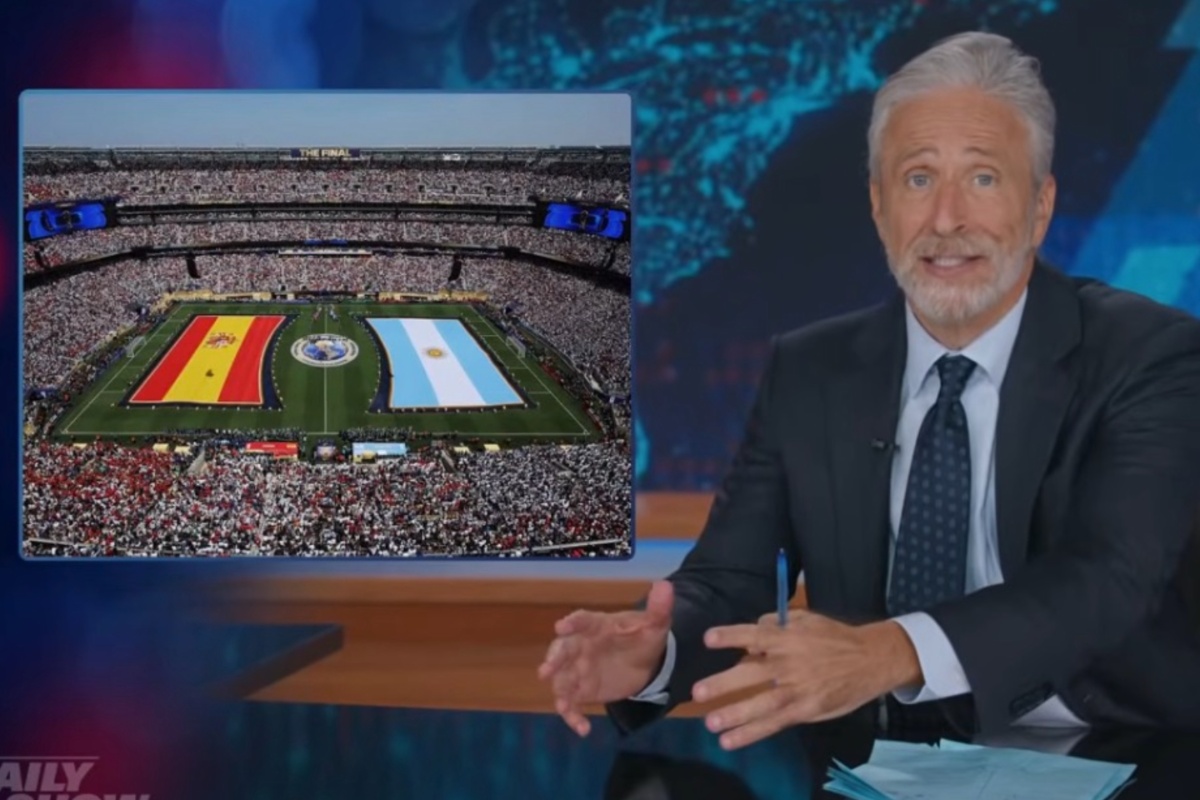
On 17 July 2026, the crypto-based prediction platform Polymarket published a dedicated market titled "Livetrade the World Cup," inviting users to take live positions on individual matches at https://poly.market/v0wUSvt. The listing sits inside a broader push by prediction-market operators to capture World Cup 2026 attention months before kickoff, betting that a tournament watched by a projected multibillion-strong global audience will translate into thin-spread, high-turnover liquidity. For Kenyan readers, that pitch lands inside an already-familiar pressure cooker. On 19 July 2026, the Daily Nation's lifestyle desk ran a column titled "How the World Cup made me and Kuya enemies again" (https://nation.africa/kenya/life-and-style/lifestyle/how-the-world-cup-made-me-and-kuya-enemies-again-5530882#story), documenting a household dispute whose stakes were not ideological but transactional: wagers placed, wagers lost, and a sibling relationship re-priced in the currency of the tournament.
What connects the two items, separated by an ocean and a continent, is a structural shift in who intermediates fan attention during a World Cup. For three decades the intermediaries were state-licensed bookmakers, terrestrial broadcasters, and the newspaper coupon. In 2026, they are increasingly a US-headquartered blockchain platform on one end and a WhatsApp group chat on the other. The bet is the same; the rails have changed.
The new middleman
Polymarket's "Livetrade the World Cup" market is a contract that pays out based on the in-game outcome of each match, refreshed in real time. Crypto prediction markets of this kind sit in a regulatory grey zone: depending on jurisdiction they are variously treated as commodity derivatives, information exchanges, or unlicensed gambling. The product proposition, however, is straightforward. A user deposits stablecoins, takes a position on, say, Brazil to lead at halftime, and can exit the position before full-time. The pitch to retail users is two-fold: faster resolution than a traditional bookmaker, and an order book visible to all participants, in contrast to the black-box pricing of a fixed-odds coupon. The market's existence on Polymarket, on the date noted, is the verifiable fact; the surrounding user numbers and trading volume are not disclosed in the source material and this publication will not speculate.
When the bettor is your brother
The Daily Nation column is not a financial feature. It is a domestic essay, written in the second person, about a brother ("Kuya," Tagalog for older male sibling, repurposed in Kenyan family slang) who turns every international football match into a performance review of the household. The author describes escalating wagers: small amounts at first, then airtime bundles, then "an embarrassing sum" that neither sibling will specify. The piece's power, for Monexus's purposes, is that it documents the cultural texture of tournament betting in a Kenyan middle-class household without invoking the platforms that increasingly facilitate it. Bets were placed, the column implies, through informal channels: a friend of a friend, a work WhatsApp group, a mobile-money transfer with a screenshot as receipt.
The juxtaposition with Polymarket is the article. Formal prediction-market infrastructure and informal peer-to-peer betting are not competing products. They are the same product at different points on the same spectrum, and the World Cup is the seasonal price signal that activates both.
What the regulator hasn't caught up to
Kenya's Betting Control and Licensing Board regulates licensed bookmakers; the Sports Disputes Tribunal handles a slow stream of complaints. Neither body has explicit jurisdiction, in the public record this publication can verify, over US-based blockchain prediction markets accessible to Kenyan residents via VPN and crypto on-ramps. The structural gap is familiar: retail-facing financial innovation is global, retail-facing financial regulation is national, and the difference between the two is the gap inside which a Kenyan household can lose "an embarrassing sum" in twenty minutes on a Tuesday.
This is not unique to Kenya. It is the same gap that allowed Nigerian retail punters to access offshore sportsbooks for the better part of a decade before local enforcement caught up, and it is the same gap that any reader in any market with permissive crypto on-ramps and a World Cup on the calendar can walk into.
The stakes, plainly
The structural read is simple. Prediction markets compress the distance between an event and a tradable claim on that event. That compression is genuinely useful for hedging, for information aggregation, and for traders who already understand the instruments. It is corrosive when it lands in households that experience it as a game, because the same interface that prices a 1.3 percent arbitrage for a quant also prices a 90th-minute heartbreak for a sibling on a sofa in Nairobi. The World Cup, every four years, is the moment that gap widens.
What remains uncertain, on the public record available, is scale. Polymarket does not publish country-level user data; Kenyan telecom and mobile-money operators do not publish sports-betting volumes disaggregated by source; and the Daily Nation column, by design, is anecdotal. Monexus finds that the honest statement for now is that the formal infrastructure (Polymarket, its peers, the licensed bookmakers) is well-documented, and the informal infrastructure (the WhatsApp group, the sibling rivalry, the mobile-money transfer) is experienced at scale but not yet measured. The World Cup will close that measurement gap, one way or another, by 19 December 2026.
This piece is filed on the sports desk. Where the wire offered a product announcement and a domestic essay, this publication connected them through the shared structural question of who intermediates fan attention during a tournament, and at what cost.
Wire provenance
This editorial synthesis draws on the following public wire/social posts:
- https://t.me/DailyNation