Trump's World Cup cameo collides with a visa denial for Spain's Capdevila
A 2010 World Cup winner is blocked at the US border hours before the final he was meant to attend. The politics of entry are now part of the show.
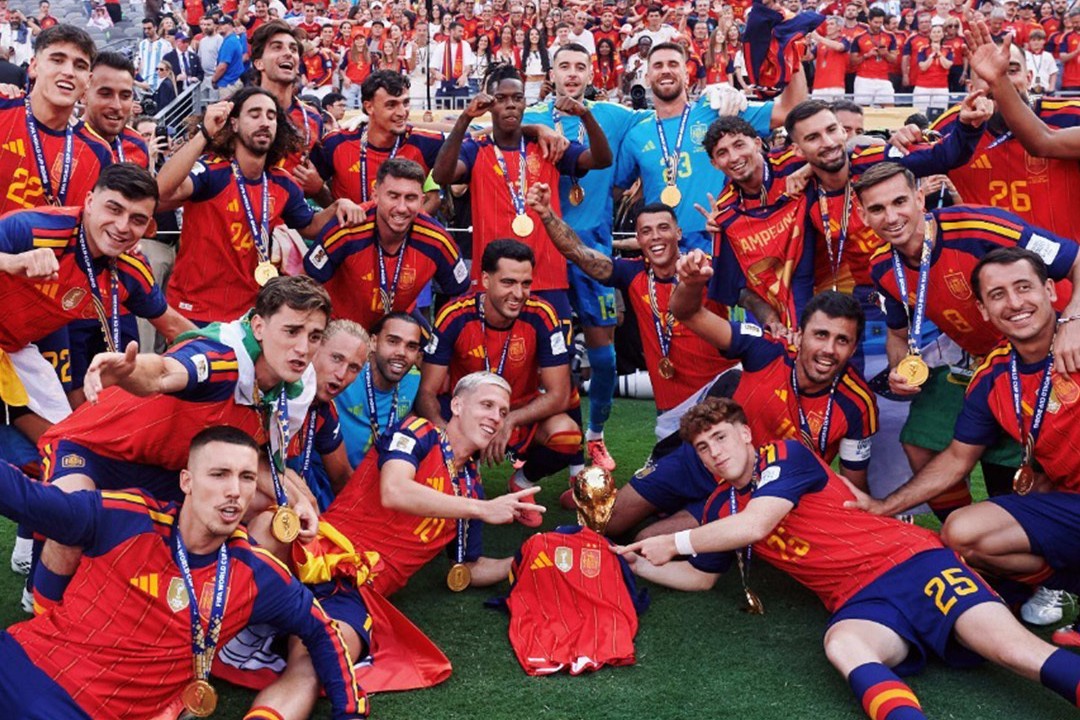
Joan Capdevila, the Spanish left-back who helped La Roja lift the 2010 World Cup in South Africa, was denied a visa to enter the United States ahead of Sunday's final and has appealed directly to President Donald Trump for help, the BBC reported at 10:43 UTC on 18 July 2026. The denial landed less than 48 hours before kickoff at MetLife Stadium in East Rutherford, New Jersey, and turned what was meant to be a ceremonial alumni appearance into a test of how the United States' immigration machinery handles foreign sporting dignitaries during its biggest football moment of the decade.
The visa refusal, and the public appeal to the US president, is more than a logistical hiccup. It folds the politics of entry into the politics of spectacle at the very tournament Washington is using to project soft power, and it does so in the same week the White House confirmed Trump will be in the stadium on Sunday, when FIFA will present championship rings and stage the first halftime show in World Cup final history, according to a CBS Sports report filed at 01:09 UTC on 18 July 2026. The two stories, running on parallel tracks, expose a contradiction the host nation has not yet resolved: who gets to walk onto American soil, and on whose terms.
A champion told to stay home
Capdevila was part of the Spain squad that beat the Netherlands 1-0 in Johannesburg to win the country's only men's World Cup. He earned 60 caps between 2002 and 2011, including that final at Soccer City, and has remained a visible ambassador for Spanish football since retiring. His planned appearance in the United States was a guest-of-honour role tied to the 2010 squad's anniversary, not a competitive engagement.
Details of the refusal have not been made public by US Customs and Border Protection. The BBC report cites only the visa denial and the appeal, with no published reason code. That opacity is the point: under standard non-immigrant visa procedures, consular officers do not owe applicants a substantive explanation, and denials are not routinely published by name. Capdevila's recourse, if his legal channels run out, is the political one he has now taken: asking the president personally to intervene.
The final becomes a state occasion
Sunday's match will be staged as something closer to a state event than a sporting fixture. CBS Sports reported that Trump will attend in person and that FIFA will mark the occasion with championship rings and the tournament's first ever final-halftime show. The White House presence turns the broadcast into a presidential backdrop, and the halftime production signals FIFA's ambition to put the World Cup on the same cultural shelf as the American Super Bowl.
That scale of staging sharpens the optics of the Capdevila episode. The host country is preparing to present rings and stage a show to a global audience estimated in the hundreds of millions while telling a player who once helped win the trophy he cannot cross the border to watch the match. If the White House resolves the case before kickoff, it will be read as a personal favour. If it does not, it will be read as a policy choice made in real time on a world stage.
Power, access, and the price of entry
The episode sits inside a familiar American pattern: access to the United States is treated as discretionary, not as a right, and the discretion is increasingly visible at the political top. Visas for athletes, coaches, officials and visiting foreign dignitaries are processed through the same State Department machinery that handles tourists, students and business travellers, but high-profile cases routinely draw political attention. Capdevila is not the first foreign sports figure to find himself in this position, and he will not be the last.
The argument the administration has made for tighter screening is straightforward: visa issuance is a national-security instrument, and the threshold for admission is set by the elected government, not by foreign federations or sporting nostalgia. That is a defensible position in the abstract. It looks less tidy when the tournament in question is being sold, ring by ring and halftime show by halftime show, as a celebration of global football on American soil.
What to watch on Sunday
Three things will determine whether this story is a 24-hour news cycle or a precedent. First, whether the State Department or the White House acts on Capdevila's appeal before kickoff at MetLife Stadium on 19 July. Second, whether FIFA, which has commercial and political reasons to keep former champions on its broadcasts, makes any public statement; the organisation has so far stayed silent. Third, whether other 2010 squad members or former World Cup winners travelling for the final face similar processing, which would convert an isolated case into a pattern.
What the sources do not specify is the reason code on Capdevila's file, whether other members of the Spain 2010 squad have been admitted, or whether FIFA has privately lobbied Washington on his behalf. The public record, as of 18 July 2026, is two paragraphs and a question that the White House now has to answer in front of a global audience.
Desk note: Monexus framed the Capdevila episode as a collision between US visa policy and the optics of a presidential World Cup, rather than as either a feel-good intervention story or a pure immigration critique. The wire framing from CBS led with Trump's attendance and the rings; the BBC led with the visa denial. We held both leads and let the tension carry the piece.