Trump lands at MetLife as Spain and Argentina walk out for the 2026 World Cup final
Helicopters over the East Rutherford roof marked the US president's arrival minutes before kick-off in the most politically freighted final the tournament has staged.
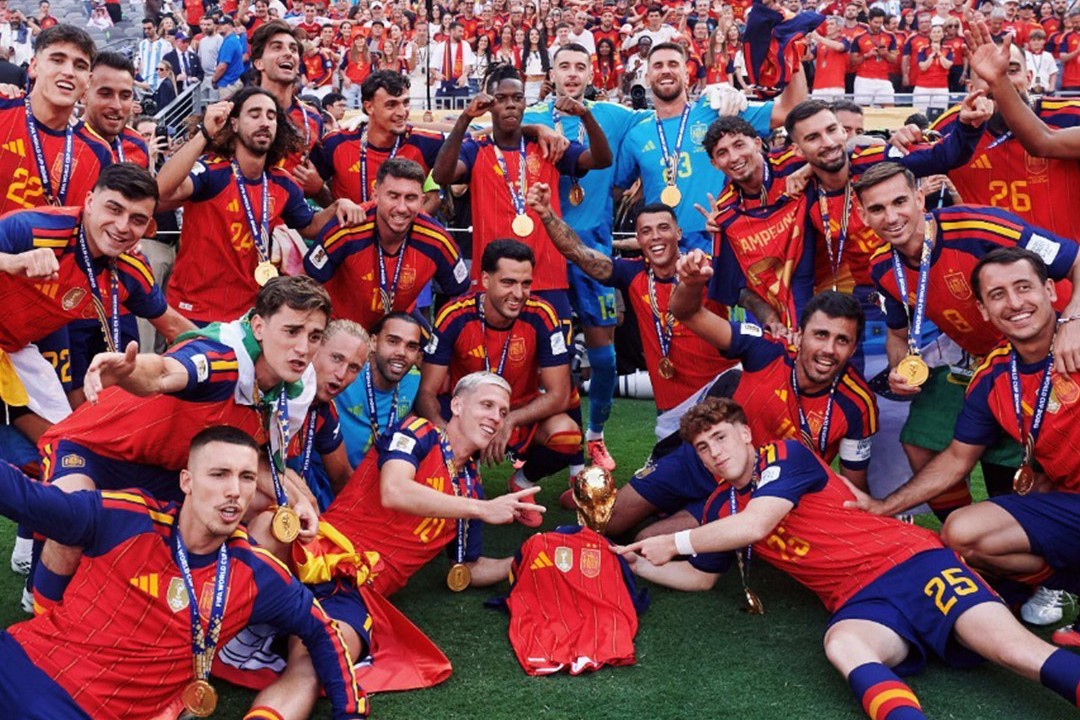
Helicopters circled the open roof of MetLife Stadium in East Rutherford, New Jersey, on the afternoon of 19 July 2026, minutes before Spain and Argentina kicked off the World Cup final. Al Alam Arabic's urgent bulletin timed the overflight to the arrival of US President Donald Trump, who crossed the Atlantic to take a prime seat inside the most-watched sporting event of the calendar.
The match began at 22:00 UTC under the East Rutherford lights, with both sides walking out to a final that carries more political weight than any since the United States last hosted the tournament in 1994. The Spanish and Argentinian federations spent the run-up trading press releases about form and fitness. By the time the referee's whistle sounded, the fixture had become a stage for a far larger argument: who gets to set the optics of a tournament whose host nation has recast its relationship with the global game.
The optics in the owner's box
Trump's decision to attend in person, rather than receive a post-match trophy presentation at the White House, signals how seriously his administration treats the closing weekend of the first 48-team World Cup. The federal government invested in security, transport upgrades and a Border Force posture across the eleven US host cities; the final has therefore become a credentialing exercise for an administration that wants the tournament remembered as a delivery, not a debacle.
Al Alam Arabic's bulletin on the helicopter overflight, posted at 19:02 UTC, framed the moment in language closer to a state visit than a sporting fixture. Spain and Argentina walk out into a stadium where the host head of state occupies the central box, with broadcast cameras pointed in his direction as much as at the teams. That is a deliberate piece of staging, and the staging matters: a World Cup final is the rare global product where the picture is genuinely shared in real time across hemispheres.
A final without a European host city
The Madrid federation arrived in New Jersey as the senior partner of a Spanish side that spent the knockout rounds dismantling higher-ranked opponents. Argentina, defending the title it won in Qatar, treated the tournament's closing rounds as a referendum on the post-Messi generation, with the captain's minutes managed carefully through the group stage. El País's live blog, timestamped at 18:58 UTC, marked the teams' emergence from the tunnel as the moment a year of qualifying resolved into 90-plus minutes of football.
The absence of a host-city bias is unusual for a tournament staged across one federation's territory. American venues have favoured neither Spain nor Argentina in their previous meetings here; the Estadio Azteca ghosts of 1986 and the Pasadena memories of 1994 sit in the stands more than on the pitch. What the neutral venue gives the final is parity of crowd noise, an unusual commodity in a tournament otherwise shaped by partisan travelling support.
What the cameras cannot avoid
Every World Cup final is also a political broadcast. FIFA's institutional reluctance to be drawn into Washington's political theatre sits uneasily against the practical reality that the United States is staging nearly every match. Trump's presence inside the stadium pushes the federation's carefully maintained neutrality back into the open. Iranian participation, briefly a story of its own in the group stage, has been resolved; the diplomatic choreography now belongs to the closing ceremony.
The view from Buenos Aires and Madrid matters too. Argentina's federation has spent the last four years selling a tournament-defining narrative around its captain's last cycle; Spain's has built one around a La Masia cohort coming of age. Both stories are now compressed into a single broadcast slot that the host's presidential visit is reframing in real time, whether the cameras intend to or not.
The kicker
The trophies will be lifted before midnight UTC, and the political residue will outlast the ceremony. Whether the final is remembered as a sporting event or a piece of presidential staging depends on which moment the cameras keep: the goals, or the helicopter over the open roof at 19:02 UTC. Both are now part of the record.
Desk note: Monexus framed this as a dual-event story, a football final and a presidential arrival, using Al Alam Arabic for the security and staging layer, and El País for the sporting layer. The wire so far has tended to treat Trump's attendance as a sidebar; we treated it as the lede, because that is what the early bulletins actually foregrounded.
Wire provenance
This editorial synthesis draws on the following public wire/social posts:
- https://t.me/alalamarabic
- https://t.me/elpais