The year the betting market started running the news cycle
Prediction markets priced a Ukrainian military shake-up at 80% before the cable networks had a chyron. The informational order is being repriced in real time, and the public square hasn't noticed.
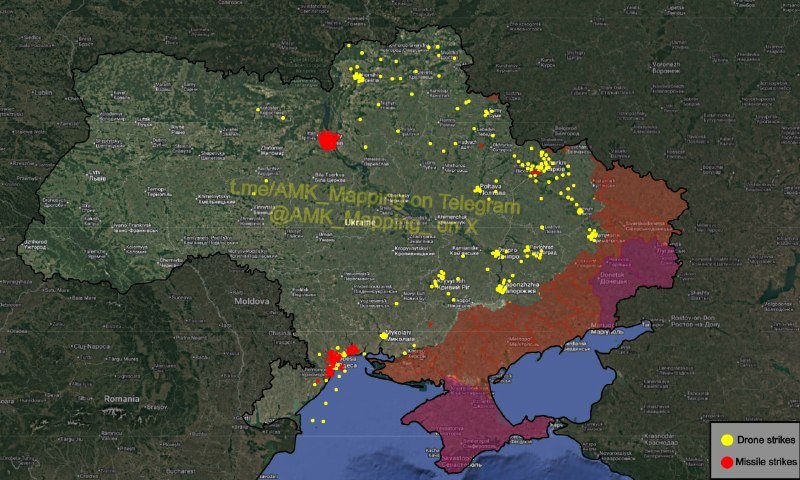
On 19 July 2026 at 22:54 UTC, a Polymarket contract titled "BREAKING: Zelenskyy projected to fire Ukraine's military commander-in-chief this year, as growing protests demand his removal" traded at roughly 80%. The same contract had been logged at 06:19 UTC the same day as a softer "Zelenskyy is reportedly considering replacing Ukraine's top military commander as protests grow." Six hours, sixteen hours: between a hedge and a near-certainty, on a question the major wires were still filing as a "considering." The market moved faster than the press conference.
That is no longer a curiosity. It is the new information order, and the public square has not caught up. Across the same 24-hour window, a Polymarket post carried a separate item: "FBI agents nationwide were reportedly told the bureau will no longer investigate confrontations involving ICE officers," attributed to the New York Times. The price action was already there before the byline. And earlier the same day, Unusual Whales surfaced a Wall Street Journal figure: 556,850 people worldwide now hold a net worth above $30 million, a 14.4% jump in 2025 alone, the fastest expansion since 2017. The number reads like a wire story. It behaves like a price.
None of these threads is breaking news in the old sense. Each is a trade first, a paragraph second.
The market is the wire now
For decades the institutional sequence was legible: a leak, a phone call, a press conference, a wire copy, then the derivative chatter on cable. Prediction markets invert the chain. The crowd prices the probability of an event before the event is officially confirmed, and the price is the story. Cable producers, who treat a moving contract the way they once treated a senator's statement, have a built-in editorial cue that updates by the second. Newspapers, slower, file the confirmed version the next morning. By the time the broadsheet lands on a doorstep, the contract has already settled or rolled.
The Zelenskyy question is the cleanest case on the board. Protests in Kyiv demanding the removal of the military leadership have been building for months; the question is no longer whether the commander is politically exposed, but at what price the dismissal becomes tradable fact. An 80% probability is not an article of faith. It is a crowd saying: this is going to happen, the only open variable is timing. The reporting will catch up, or it won't, but the bet is already on.
A billionaire class growing faster than its critics can name it
The wealth figure lands on the same day as a reminder of what else is being repriced. Half a million people crossed the $30 million threshold in a single year. That is not a one-off windfall. The fastest growth in the segment since 2017 is a structural marker. Asset inflation, private-credit expansion, and the rerating of equity holdings in a handful of technology platforms have done the work. The critics of inequality are still arguing about whether to call this a class. The arithmetic has already answered them.
The interesting question is not whether concentration is widening. The interesting question is which institutions are equipped to track it in real time. Wire economics desks file the figure once. Prediction markets, in principle, could attach a contract to the trajectory: probability that the $30 million cohort crosses 600,000 by year-end, probability that the G20 imposes a coordinated wealth-floor tax, probability that a major jurisdiction breaks ranks first. Each is a tradable, falsifiable question. Each would force the conversation out of annual-report rhetoric and into a price.
The FBI-ICE item is the warning shot
The third thread of the day deserves more weight than the headline grants. A reported instruction to FBI agents that the bureau will no longer investigate confrontations involving ICE officers is not a marginal procedural tweak. It is a jurisdictional boundary redrawn inside a federal law enforcement agency, attributed to the New York Times and propagated through a prediction-market feed. If accurate, the practical consequence is that a class of incidents, precisely those that touch immigration enforcement, sits outside the FBI's investigative remit. Local police, the Department of Justice's civil-rights division, or internal ICE oversight become the residual forum. That is a smaller bench than the FBI.
Markets are good at pricing institutional shocks. The Polymarket feed that carried the FBI item will, in the next 24 to 72 hours, generate derivative questions: probability of a congressional oversight hearing, probability of an inspector-general referral, probability of a state attorney general filing. Each will trade. Each will set the news agenda before the first committee is convened. The reading public will encounter the story as a settled probability, not as a developing one.
What the public square loses
There is a real cost. Prediction markets compress ambiguity. They reward a single number where the world contains several. The 80% Zelenskyy figure flattens the distinction between "the commander will be removed this year" and "the commander's authority will be quietly redistributed through a reshuffle timed for a quiet news cycle." Both could be true. Only one is tradable as phrased.
The same flattening distorts the wealth story. A cohort crossing 600,000 by January 2027 is a different political fact than one crossing it by December 2029. The market will pick a date. The political economy will run on whatever the market picked.
This publication is not against prediction markets. They are a serious instrument, and they have exposed more lazy reporting than they have produced. But they need a counter-discipline: reporting that names the ambiguity the price has erased, names the institutional actors the price has flattened, and names the second-order effects the contract didn't ask about. The market tells you what the crowd thinks will happen. It does not tell you what is happening, what is being lost, or who is being asked to absorb the cost.
The 19 July 2026 feed is a single day. It is also the new default. The cable chyron will quote the contract. The broadsheet will quote the cable. The reader will inherit a price disguised as a fact. The only durable defence is journalism that does the work the price cannot: trace the institutional chain, name the affected parties, and say plainly what the contract left out.
Wire provenance
This editorial synthesis draws on the following public wire/social posts:
- https://x.com/unusual_whales/status/