Stavropol oil depot hit for third time in two weeks as Ukraine expands its deep-strike footprint
An oil depot in Mikhailovsk, Stavropol Krai, was struck for the third time in roughly two weeks on 19 July 2026. The pattern points to a quieter escalation in Ukraine's long-range campaign against Russian energy logistics.
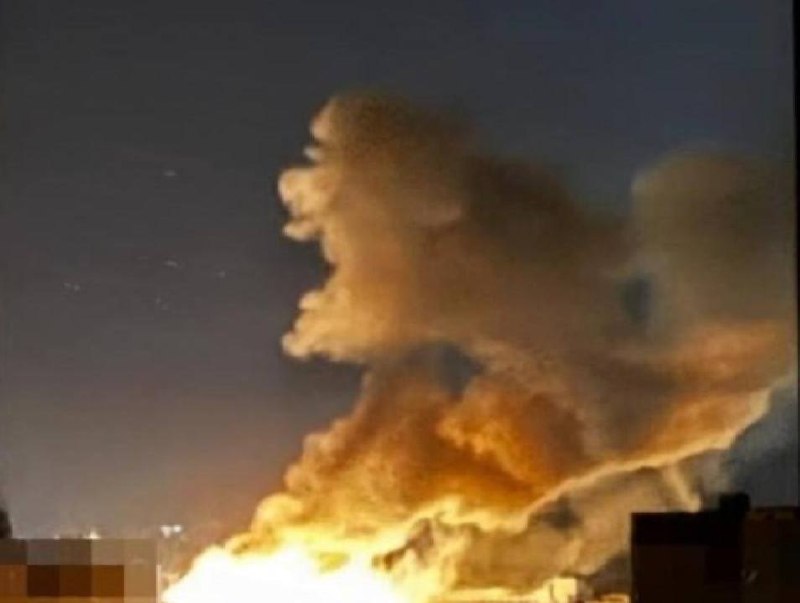
Fires broke out at the Mikhailovsk oil depot in Stavropol Krai before dawn on 19 July 2026, after what Russian and Ukrainian Telegram channels described as a fresh strike on the facility. The depot had been hit twice earlier in July; the overnight strike made it three in roughly two weeks on a single site.
The picture is consistent, even if the details are thin. Two Russian-aligned channels, gruz_200_rus and the channel operated by Gerashchenko's Pravda, both report the strike on 19 July, with timestamps of 05:03 UTC and 04:20 UTC respectively. The Ukrainian-aligned UNIAN wire reported fires at the same site at 04:47 UTC. None of the channels provide evidence of the strike's origin beyond Telegram's own framing: gruz_200_rus credits "defence forces," while Gerashchenko's channel refers to "kind drones." UNIAN simply reports that an oil depot in Mikhailovsk is under attack and that several fires are visible.
What the reporting actually shows
The cross-channel timing matters more than the language. Three independent Telegram feeds, including one Ukrainian outlet and two channels close to the Russian war effort, all converge on the same event within a 43-minute window on the morning of 19 July 2026. That convergence is the news. The Mikhailovsk depot, a logistics node inside Stavropol Krai roughly 1,300 km from the front line, has now been struck three times in approximately fourteen days. Gerashchenko's channel calls the facility "a key logistics" point.
What the sources do not provide is damage assessment. There is no independent satellite imagery in the thread context, no confirmation of fuel volumes destroyed or storage tanks affected, and no Russian Ministry of Defence briefing. The photographs attached to the Russian-aligned channels show visible smoke and active combustion, which is consistent with an active fire but says nothing about the scale of the loss.
Why Stavropol, and why now
Stavropol Krai sits well behind Russia's own border. It hosts part of the country's internal fuel-distribution chain rather than the export terminals at Novorossiysk or Tuapse on the Black Sea. Striking it requires either long-range drones or cruise-type munitions capable of flying 800–1,300 km. Ukraine's long-range strike capability has expanded over 2025 and 2026 in ways that Russian military bloggers have grudgingly acknowledged, and the geography of recent hits suggests a deliberate broadening of the target set beyond the usual refining hubs in Krasnodar Krai and the Volga region.
The choice of a depot rather than a refinery is itself revealing. Depots are softer, less defended, and often closer to military fuel consumption in southern Russia. The pattern fits a campaign that is hitting Russia where it stores and moves fuel rather than where it refines it.
The two frames
Moscow's framing, as represented by gruz_200_rus, treats the strike as a Ukrainian attack on Russian civilian infrastructure. That framing is consistent with the Russian government's broader narrative of an externally directed war against the Russian interior. The Ukrainian framing, as represented by UNIAN, is closer to a logistics brief: an oil depot used to support Russian military operations is hit, fires reported, no claim of responsibility in the channel's own text.
The structural read sits between those two. A site hit three times in fourteen days is being treated by the attacking side as a recurring target, not a one-off. Repeated targeting of a single depot is a known pressure tactic against military logistics: each strike forces a redistribution of fuel stocks, additional firefighting capacity, and defensive attention. The economic damage can be modest while the operational drag is significant.
Stakes and what to watch
The immediate stake is internal Russian fuel distribution in southern federal districts. A repeated outage at a logistics hub of this kind feeds through, over weeks, into retail fuel prices in the North Caucasus and onward into Central Russia. The longer stake is strategic: if the pattern at Mikhailovsk replicates at other interior depots, the cumulative effect on Russian military fuel availability in the south could become material during the next operational cycle.
Three things are worth watching over the next two weeks. First, whether Russian authorities publicly acknowledge the strike or continue to treat it as a local incident. Second, whether satellite imagery from commercial providers confirms the scale of damage at Mikhailovsk in the days ahead. Third, whether other interior depots, particularly in Rostov, Volgograd or Saratov oblasts, appear in the cross-channel reporting with similar frequency. The sources do not specify any of those outcomes; they only confirm the third hit on a single site in fourteen days, on the morning of 19 July 2026.
This article is the work of Monexus staff, drawing on Ukrainian and Russian-aligned Telegram channels. Wire reporting on the strike was not yet available at the time of writing.
Wire provenance
This editorial synthesis draws on the following public wire/social posts:
- https://t.me/gruz_200_rus
- https://t.me/uniannet
- https://t.me/Pravda_Gerashchenko