Spain's Wall Meets Argentina's Fire: What the Numbers Say Before the World Cup Final
A defensive record built on expected-goals suppression meets an Argentine attack running ahead of its underlying numbers. Luis de la Fuente has already learned once what happens when you assign a man to Lionel Messi.
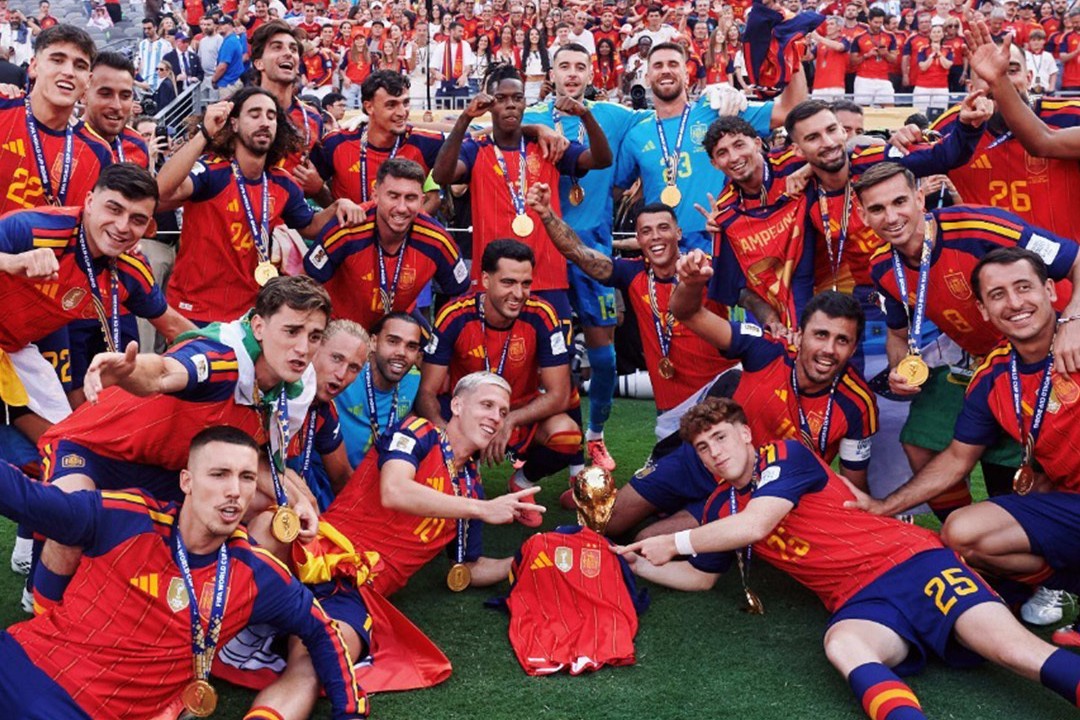
At 18:15 UTC on 18 July 2026, Spain manager Luis de la Fuente addressed the question every tactical analyst has been posing since the bracket took shape: how do you stop a 38-year-old Lionel Messi in a World Cup final? His answer was blunt. He will not assign a man-marker. The reason is autobiographical. The first time de la Fuente crossed paths with Messi, the Argentine was sixteen, and the lesson was written in four goals. "I took the man-marker off and Messi scored four," the coach recalled, a defeat that has calcified into doctrine two decades later.
The final, kicking off in the small hours of 20 July UTC, pairs the holders of South America's and Europe's continental titles for the first time in the tournament's modern era. Spain arrive as the competition's stingiest defence, built less on individual brilliance than on collective expected-goals suppression. Argentina arrive as a counter-attacking machine running materially ahead of its underlying numbers, carried by a forward line that has repeatedly converted limited chances into tournament-altering goals. It is a clash of footballing philosophies with a tactical puzzle at its centre: how does a possession-dominant side that rarely concedes break down a team that defends deeper than any of its rivals?
The Numbers That Built Spain's Run
Spain's path to the final has been defined by what they have prevented rather than what they have created. Their defensive expected-goals against is the lowest of any side remaining in the competition, a function of two structural choices. First, the back line holds a high line, squeezing the width of the pitch and forcing opponents to play through congested central corridors. Second, the double pivot in front of the centre-backs has been exceptional at intercepting line-breaking passes before they reach the final third. The result is a side that rarely allows shots from dangerous zones, and rarer still allows them on target.
The trade-off is real. Spain have not been the tournament's most prolific attack. Their expected-goals figures rank below Argentina's and below two of the other semi-finalists, a reminder that de la Fuente's system is calibrated to deny rather than to dazzle. Against opponents content to chase possession, that balance is comfortable. Against a side willing to sit, absorb, and strike on the break, it becomes a referendum on whether Spain can manufacture a single high-value chance when it matters.
Argentina's Attack Versus Its Underlying Numbers
The reigning champions' route to the final tells a different statistical story. Argentina's expected-goals total understates their actual output by a wider margin than any other contender. They are scoring more than the model says they should, a phenomenon that typically reflects either elite finishing, clinical counter-attacking, or both.
Messi remains the axis, but the supporting cast has matured into a genuine threat. The wide forwards have developed a habit of arriving in the box at exactly the moment a turnover is secured thirty yards from goal. The midfield has become more disciplined without the ball than at any point in the previous cycle. And the centre-forward partnership has offered a focal point that frees Messi to drift into the half-spaces he prefers. The result is an attack that is opportunistic rather than overwhelming, but ruthlessly efficient when the opportunity arrives.
The De la Fuente Doctrine
Man-marking Messi in a final is, in the Spain manager's telling, a counsel of despair. The reasoning is not sentimental. A man-marker surrenders Spain's structural advantage, the collective pressing and zonal coverage that produces their defensive record. Pull a defender out of the shape to shadow one player, and the shape disintegrates against a side that thrives on the spaces zonal systems leave behind.
The alternative is what Spain have done all tournament: deny Messi the ball by denying Argentina the ball. High possession, intelligent pressing triggers, and a refusal to engage in transition defence. It is a high-wire act. If Argentina force a turnover in midfield and spring forward before Spain can reset, Messi will receive the ball in space exactly where he is most dangerous. The coach's earlier scar, a teenage Messi scoring four after the marker was withdrawn, is the cautionary tale de la Fuente has spent two decades trying to outrun tactically.
What the Final Will Actually Decide
The match is, at root, a referendum on whether Spain's collective defensive model can neutralise an individualist attack running hotter than its numbers, or whether Argentina's overperformance will continue long enough to render the underlying data irrelevant. Spain's defensive record says they will limit chances. Argentina's finishing record says the few chances they concede will be punished.
The likely decision points are familiar to anyone who has watched either side in this tournament. If Spain score first, the match becomes an exercise in game management they have practised all year. If Argentina score first, Spain must decide whether to commit the full-back overlaps that have been absent from their conservative tournament, opening precisely the channels Messi exploits. Penalties, given the Argentine pedigree, are not Spain's preferred route to a trophy.
There is also the question de la Fuente cannot fully answer: whether a 38-year-old Messi, even one operating at the level he has demonstrated this summer, can sustain his tournament-long output for another ninety minutes against the most disciplined defensive structure in the field. The historical record is not encouraging for the doubters. The Spanish camp, scarred by a four-goal lesson twenty years ago, is not counting on history to repeat its caution.
How Monexus framed this: the wire coverage has framed the final as a clash of footballing cultures, continental champions meeting for the first time. Monexus has read it as a tactical referendum, Spain's zonal discipline against Argentina's finishing overperformance, and foregrounded de la Fuente's autobiographical reason for refusing to man-mark.