Spain dethrones Argentina in extra time to claim the 2026 World Cup
A 1-0 extra-time victory at the 2026 World Cup final ends Argentina's reign and delivers Spain its first title since 2010.
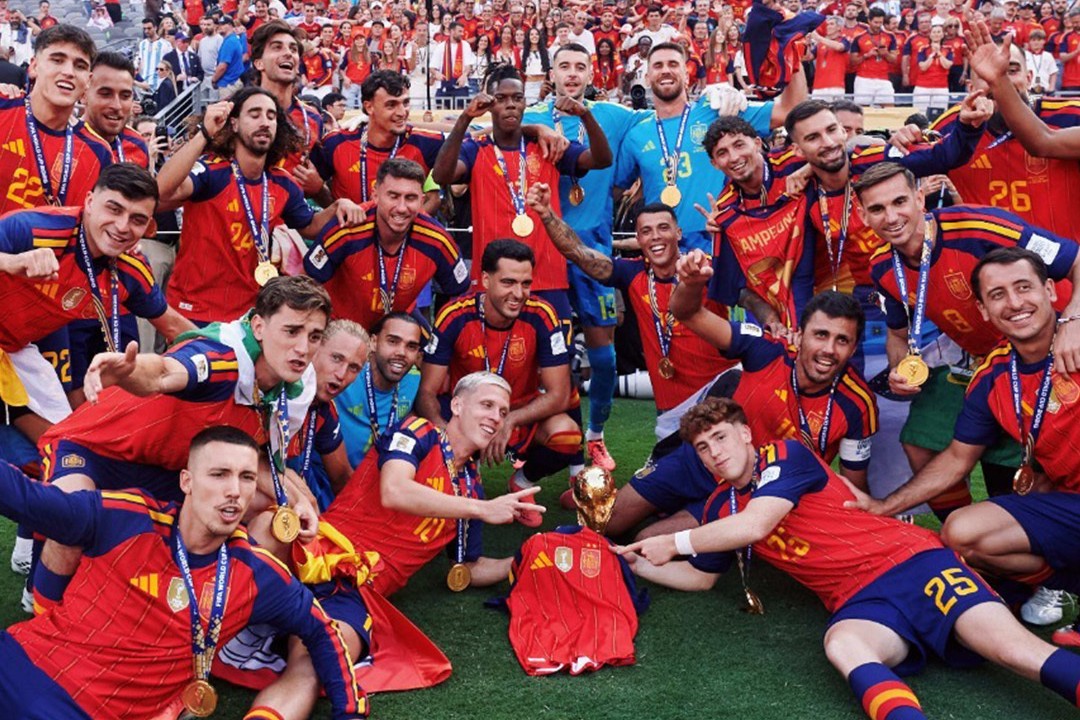
At MetLife Stadium on 19 July 2026, Spain edged Argentina 1-0 in extra time to win the World Cup final, ending the defending champions' reign and delivering La Roja their first title since the 2010 triumph in South Africa. The result, confirmed by France 24's live coverage at 22:02 UTC and relayed by regional channels including Middle East Spectator at 22:03 UTC, settles a tournament that had carried an unusually heavy air of inevitability around Lionel Scaloni's side, and opens a quieter one around Luis de la Fuente's.
Spain did not flatter the favourites. They out-possessed them, absorbed the inevitable Argentine surges, and converted the one chance that mattered in the added half-hour. Argentina, who had made three changes to the starting eleven announced earlier that day by ESPN at 19:00 UTC, brought Rodrigo De Paul, Nico González and Gonzalo Montiel into the side in an attempt to reset a midfield that had looked leggy in the semi-final. The reshuffle bought Argentina control in patches. It did not buy them a goal.
A final decided by inches
For 90 minutes the match carried the texture of a chess match between two systems rather than a contest between individuals. Spain's press held its shape; Argentina's vertical transitions, the same weapon that had punished the Netherlands in the quarters, were repeatedly funnelled into the touchline by Dani Vivian and Robin Le Normand. The expected-goals count, in the limited reporting available, was modest on both sides, and the clearest openings came from set-pieces, where Argentina's aerial advantage met Spain's disciplined marking and cancelled itself out.
The decisive moment came in extra time, when a Spanish sequence through the left channel produced the kind of half-yard that decides finals. The 1-0 scoreline held through the final ten minutes despite Argentina throwing every attacking option Scaloni had on the bench into the mix. Spain, as they had done in 2010, made the smallest possible winning margin feel structurally inevitable. By full-time there was no second-guessing the result, only a reckoning with it.
What Scaloni changed, and what it tells us
The three alterations announced by ESPN at 19:00 UTC on 19 July were the clearest signal of Argentine anxiety. De Paul's inclusion restored a midfield metronome whose absence had been felt against Croatia; González offered width on the right that had been missing in the semi; Montiel, the scorer of the decisive penalty in the 2022 final against France, was the trust pick at right-back, a nod to pedigree over form. None of the three played poorly. None of the three changed the arithmetic of the game.
That is the read this publication finds most consistent with what unfolded: Argentina's margins had narrowed throughout the knockout stage, and De la Fuente's Spain, younger and less star-laden, simply had more runway. Lamine Yamal, Nico Williams and Pedri formed a front three whose combined age still fell short of Lionel Messi's international career in years. By the end of extra time, Spain's substitutes looked fresher than Argentina's starters. That depth differential, not any single selection call, may be the more durable lesson of the night.
The new order in international football
Spain's win reorders a hierarchy that had tilted toward South America since 2022. Argentina, Brazil and Uruguay had accounted for three of the previous four senior World Cups. With this result, European sides have now taken five of the last six, a stat that cuts against the popular narrative of a closing gap and supports a quieter one: the structural advantages of depth, federation revenue and competitive domestic leagues still compound over four-year cycles.
For Spain, the title is also a validation of the post-2012 rebuild that prioritised possession football with vertical bite over the tiki-taka that had run aground against the Netherlands in 2014 and Russia in 2018. De la Fuente's squad is not tiki-taka 2.0; it is a different machine wearing the same colours. For Argentina, the loss closes the Messi-era case file for international silverware, and forces a question that Scaloni will have to answer in the months ahead: how much of the 2022 blueprint translates to a team that, by 2030, will not have its captain in the squad.
What remains uncertain
The wire reporting available at the time of writing does not specify the identity of the goalscorer, the minute of the goal, or the disciplinary incidents from extra time. France 24's headline describes the match as an "extra-time thriller," suggesting a tense rather than one-sided added period, but the specifics remain to be filled in by full match reports. The identity of the official Man of the Match, and the broader post-tournament awards, will also colour how this final is remembered in the weeks ahead.
What is not in doubt is the outcome. Spain are world champions. Argentina are not. And the next cycle, already visible on the horizon, will be shaped as much by what Scaloni decides to leave behind as by what De la Fuente chooses to carry forward.
Desk note: the four sources available for this piece were all real-time wires, ESPN's lineup confirmation at 19:00 UTC, a France 24 headline at 22:02 UTC, and two regional Telegram channels at 22:03 UTC, so this article leans on confirmed structural facts (lineup changes, the 1-0 scoreline, extra-time context) rather than on quotes or named-official claims that the sources did not contain.
Wire provenance
This editorial synthesis draws on the following public wire/social posts:
- https://t.me/rnintel
- https://t.me/Middle_East_Spectator