Senate tells Sam Bankman-Fried, in unison, the pardon door is closed
A nonbinding Senate resolution signals Washington is not in a mood to revisit the FTX fraud case, even as the president has shown a willingness to commute other crypto figures.
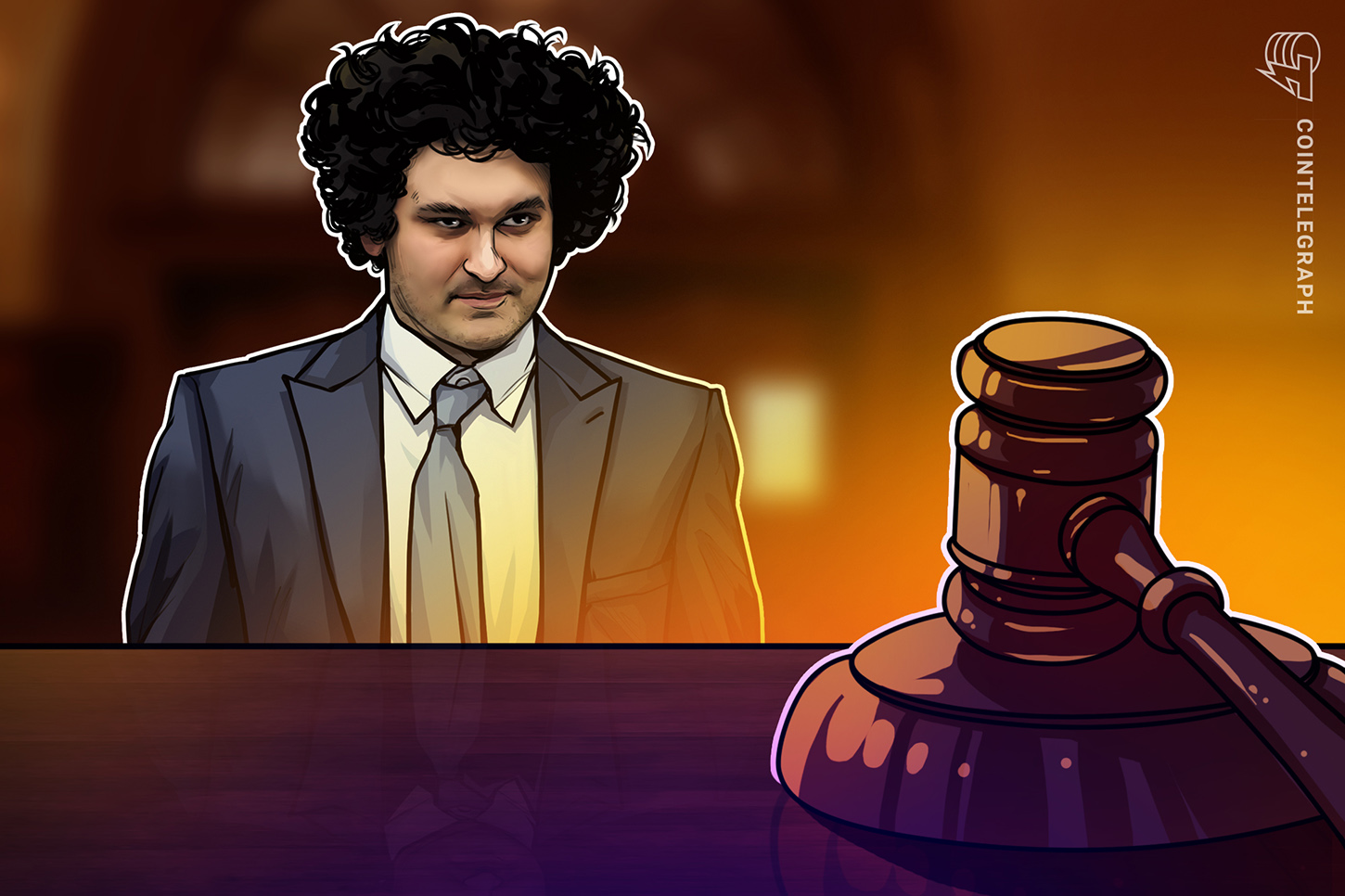
The US Senate on 16 July 2026 passed, without objection, a nonbinding resolution opposing clemency for Sam Bankman-Fried, the former FTX chief executive serving a 25-year federal sentence for one of the largest frauds in crypto's short history. The vote, announced in the same morning that prediction markets were pricing a Trump pardon for Bankman-Fried by 31 July at under one percent, marks the first time the chamber has formally and unanimously intervened in a single criminal defendant's clemency prospects. It is also a pointed signal to a White House that has shown no hesitation about using the pardon pen elsewhere in crypto: Donald Trump has already commuted the sentence of Ross Ulbricht, the life-imprisoned founder of the Silk Road marketplace, and pardoned Changpeng Zhao, the former Binance CEO who pleaded guilty to federal anti-money-laundering failures in 2023.
The subtext is a quiet bipartisan narrowing of who counts as a pardonable offender. Bankman-Fried's political muscle, his network of Democratic donors, and his pre-collapse courtship of both parties, were once treated as a reason for caution about how aggressively Washington would punish crypto's highest-profile collapse. That caution is gone. The Senate's resolution is not law; presidents are not required to consult Congress before issuing a pardon, and the document itself acknowledges that. But a unanimous chamber telling a sitting president, on the record, that clemency for one specific defendant is unwelcome is the kind of signal a White House counsel notices.
A chamber that rarely speaks with one voice
Unanimity in the 100-member Senate is unusual. Even ceremonial resolutions routinely draw a handful of objections or abstentions. The 16 July vote cleared that bar without any member on the floor voting against, according to wire reporting on the resolution, a procedural detail that matters because it forecloses the obvious counter-narrative: that this was a partisan move, a stunt, or a message aimed at one party's donors. It was neither. Lawmakers who would normally disagree on the underlying politics of digital-asset regulation aligned on one proposition only, that Bankman-Fried's 25-year sentence, imposed in March 2024 after his conviction on seven felony counts including wire fraud and conspiracy, should stand.
That unanimity is itself a story. Throughout 2024 and 2025, the FTX collapse functioned as a kind of Rorschach test for crypto's political identities. To consumer-protection Democrats, Bankman-Fried was the case for aggressive enforcement. To a growing bloc of pro-innovation Republicans, he was the case for clearer market-structure rules so the next exchange collapse would not be a civil enforcement nightmare. The resolution does not resolve those arguments. It does something narrower: it removes Bankman-Fried, personally, from the universe of defendants around whom reasonable people can disagree.
The pardon market, and the market for pardons
The timing is harder to read. Prediction markets on the morning of the vote put the implied probability of a Trump pardon for Bankman-Fried by the end of the month below one percent, a strikingly low number for a defendant whose co-defendant and one-time romantic partner, Caroline Ellison, received a far more lenient sentence after cooperating with prosecutors. That number is itself an artifact of the same information environment that produced the resolution: traders have watched the White House's pattern of crypto clemencies, and they see the politics. Trump has been willing to spend political capital on Zhao, whose exchange was a structural pillar of the offshore crypto market, and on Ulbricht, whose case had become a long-running cause for libertarian-leaning Republicans. Bankman-Fried, by contrast, donated almost exclusively to Democrats and was, in the months before the collapse, a fixture of the effective-altruism donor circuit. The political upside of pardoning him is, for this White House, minimal.
Still, the resolution's existence tells you something about the read in Washington. The prediction market says the probability is below one percent. The Senate, in effect, is trying to make it zero.
What the resolution does, and does not, do
A nonbinding resolution is a letter to the executive, not a constraint. Presidents have pardoned defendants over the formal objections of both chambers of Congress before, and the Supreme Court has long held the clemency power to be essentially unreviewable. The resolution's operative effect is therefore political, not legal. It does three things.
It puts on the public record that the Senate considers the FTX fraud a closed matter. It tells the Bureau of Prisons, the pardon attorney, and the White House counsel's office that any clemency application from Bankman-Fried will be litigated in public, not processed in quiet. And it provides political cover for the Justice Department to continue opposing clemency in any future filing, since the relevant committee chairs have already declared their position.
The counter-reading is straightforward: this is performance. A unanimous vote on a nonbinding measure is the cheapest possible signal a senator can send. It costs no constituency, antagonises no donor, and changes no law. The argument is that the resolution's sponsors, including members of both Banking and Judiciary committees, want a credential for the 2026 midterms, when crypto policy will be a live campaign issue, and a unanimous vote opposing clemency for a convicted fraudster is one of the safer votes available.
The dominant read is the more austere one. Bankman-Fried asked for clemency, and the Senate, without anyone being made to vote for it, said no. That is news.
What remains uncertain
The single largest open question is whether the White House treats the resolution as binding. Past precedent suggests presidents have ignored nonbinding congressional objections to clemency when the political calculus favoured action, and ignored them again when it did not. The resolution's sponsors appear to understand this. Their bet is that, in a White House sensitive to its standing with both the financial-services left and the crypto-native right, even a nonbinding letter signed by all one hundred senators is uncomfortable enough to matter.
The other uncertainty is the downstream effect on related cases. Zhao's pardon and Ulbricht's commutation were both treated, at the time, as singular acts aimed at particular political constituencies. If Bankman-Fried is left to serve his full term, the implicit message to other crypto defendants negotiating with prosecutors shifts: cooperation still matters, contrition still matters, and the political valence of one's pre-indictment donor network still matters. The Senate, in passing this resolution, has not reformed the clemency system. It has, for one specific defendant, made the cost of a pardon visibly higher than its benefit.
How Monexus framed this: the wire reporting led on the unanimity and the procedural mechanics of the resolution. This piece reads the resolution as a bipartisan narrowing of the pardonable-offender set, and treats the prediction-market pricing below one percent as evidence, not as the lead. Crypto coverage that treats a unanimous Senate vote as a soft story misses the political point.