Saka's hat-trick turns England's best summer since 1966 into a selection argument
A 6-4 win over France in Miami gave England their best World Cup finish since 1966, and revived the argument Bukayo Saka ought to start every knockout match Thomas Tuchel oversees.
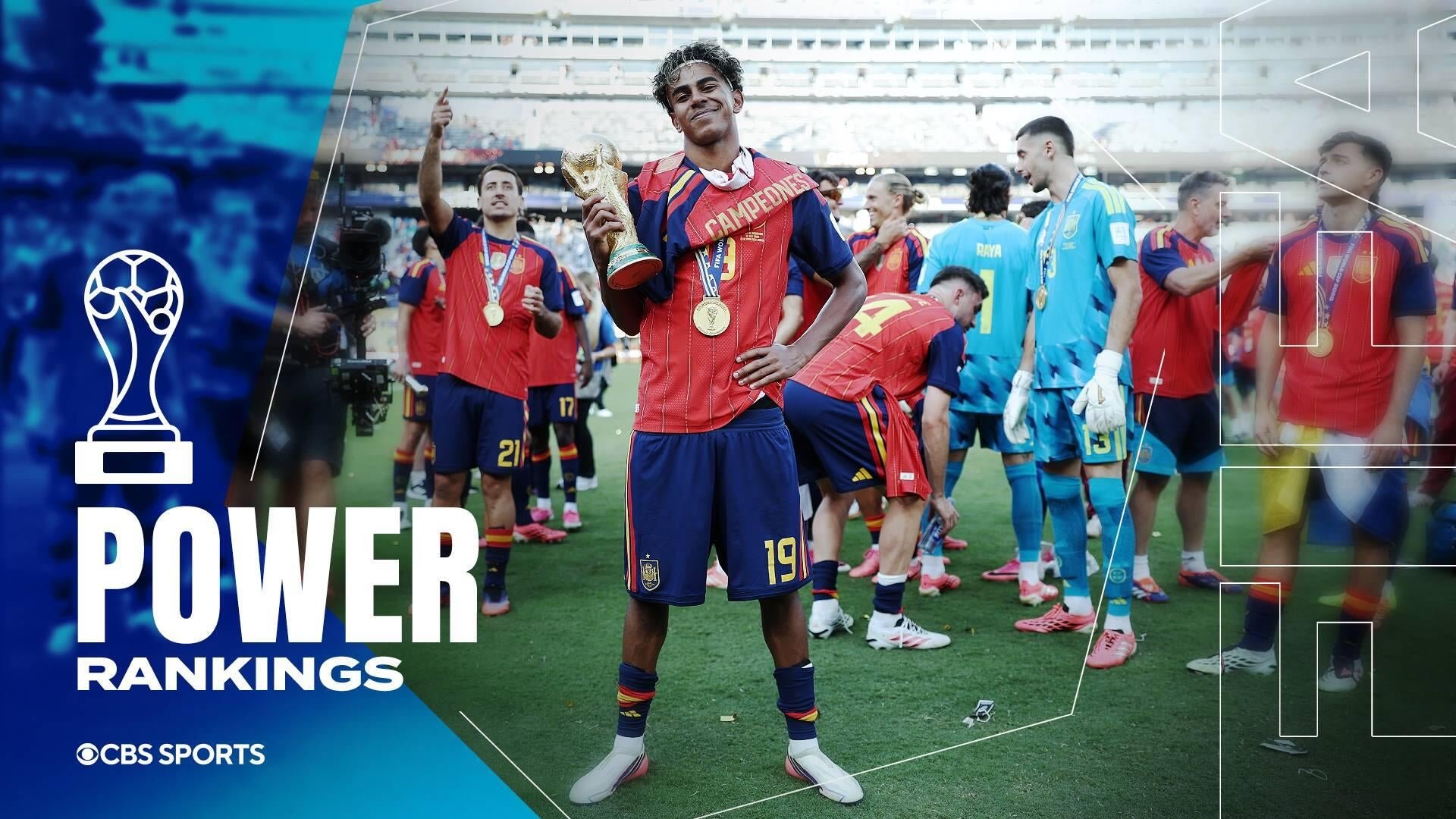
Bukayo Saka scored three times at Hard Rock Stadium in Miami on Saturday evening as England beat France 6-4 in a World Cup third-place playoff that doubled, in one chaotic night, as both a result and a referendum on Thomas Tuchel's selection instincts. The scoring carried the side to its best finish at a World Cup since 1966, and reopened, with maximum volume, the question of how the Arsenal winger had been left out of the semi-final five days earlier.
The result was extraordinary not for the campaign it closed, but for the argument it restarted. England were 4-0 up inside thirty-six minutes and conceded four of the next six to make the closing stages genuinely uncomfortable, the kind of scoreline that flatters the winner and frustrates the loser in roughly equal measure. What it did not flatter was the form of one player who, at the very least, made it harder for a manager who has otherwise been regarded as one of the more thoughtful tacticians of his generation to keep him on the bench.
The comeback that almost became the story
For roughly twenty minutes after half-time the match belonged to France. England led 4-0, the stadium had the air of a procession, and a generation of English supporters were pricing themselves out of future tournaments on the assumption their team had finally arrived. Then the structure dissolved. France pulled one back, then another, then a third, and at 4-3 the question of the night stopped being about legacy and became about whether England could simply hold what they had built. They could. They could not, however, hold it comfortably, and the 6-4 scoreline reflects a match that conceded as much about defensive concentration as it did about attacking quality.
The structure of the collapse will land on Tuchel's desk more awkwardly than any of Saka's goals. A side leading by four at the interval conceded three within a window that converted a procession into a problem, and only a fifth and then a sixth steadied the night back into something the staff could actually manage on the touchline.
The selection question that did not need asking again
The lineup against France was, of course, not the lineup against the side that knocked England out of the tournament proper. Saka was recalled for the third-place match and responded with a hat-trick that was at least as much a referendum as it was a performance. The BBC's report on Saturday noted that the hat-trick "reignited the selection debate" that Tuchel's semi-final decision had begun, and Sky Sports and the wider British press carried the same point in matching headlines within minutes of full time. The argument is not whether Saka is talented enough to start a World Cup knockout game. The argument is how a manager who arrived with the reputation of someone who thinks more carefully than most about his forward line ended up leaving out the player who, on the available evidence, was the most dangerous attacker in the squad.
There is a counter-reading, and it is worth airtime. Saka has had a complicated injury history across the last two seasons, and managers are entitled to weigh freshness as well as form. The side that lost to the eventual finalists was configured differently, and the conditions that produced the 6-4 were not necessarily the conditions that produced the elimination. But the counter-reading sits more comfortably before a hat-trick than after one, and the gap between the two readings is the space this England now has to manage.
What a bronze medal is actually worth
England had not finished third at a World Cup since Mexico in 1970. Sixty years is a long time to wait for a result that nobody particularly wanted to be playing, and the worth of the bronze is, by tournament economics, modest. There is no trophy. There is no extra allocation of seedings for the next cycle, no qualification dividend, no entry into anything other than the tape. What the result does buy is a kind of tonal closure. The squad flies home having lost one game at the tournament, having beaten the side that lost the other semi-final, and having watched an attacker at the height of his powers announce, with three goals in ninety minutes, that the next selection meeting will not be a quiet one.
Michael Olise, across the same evening, drew attention of a quieter kind. The Crystal Palace winger started and finished without a goal on a night when others around him were scoring freely, and his goallessness is the kind of detail that stays on a manager's notepad longer than the man of the match presentation does. The transfermarkt wire picked both threads up within hours of the final whistle.
The argument Tuchel now takes into August
The manager's task through the autumn is not, in the narrow sense, about restoring confidence. England scored ten. Their best attacker got three. Their worst fears, in the shape of a four-goal collapse inside twenty minutes, surfaced and were survived. The task in the broader sense is to settle, in private, the question he did not settle before the semi-final: what the team looks like when Saka starts, and what it looks like when he doesn't. Saturday answered the first. The 1966 comparison, deployed at headline speed by outlets from the BBC to Sky, will answer the second only if Tuchel allows it to.
Club football resumes in a matter of weeks. Saka returns to Arsenal with a hat-trick at a World Cup in Miami and a question mark that travels with him. Tuchel returns to his squad with the same question mark and the knowledge that, in the noisy hours after a 6-4 in Florida, the answer the public has already written for him is the one he declined to write himself five days earlier.
Desk note: Monexus framed this as a selection argument, not a coronation. The result deserved a paragraph; the 1966 comparison, surfacing in nearly every wire headline, deserved an asterisk. The unresolved question is whether Tuchel treats the hat-trick as evidence or as the kind of form that any winger can carry into a single game.
Wire provenance
This editorial synthesis draws on the following public wire/social posts:
- https://t.me/transfermarkt