Mariinsky brings St Petersburg to Sirius as Russia’s cultural diplomacy courts a new audience
Valery Gergiev’s orchestra, opera and ballet companies open a three-day residency at the Sirius Concert Hall, a rare move outside the country’s cultural capitals.
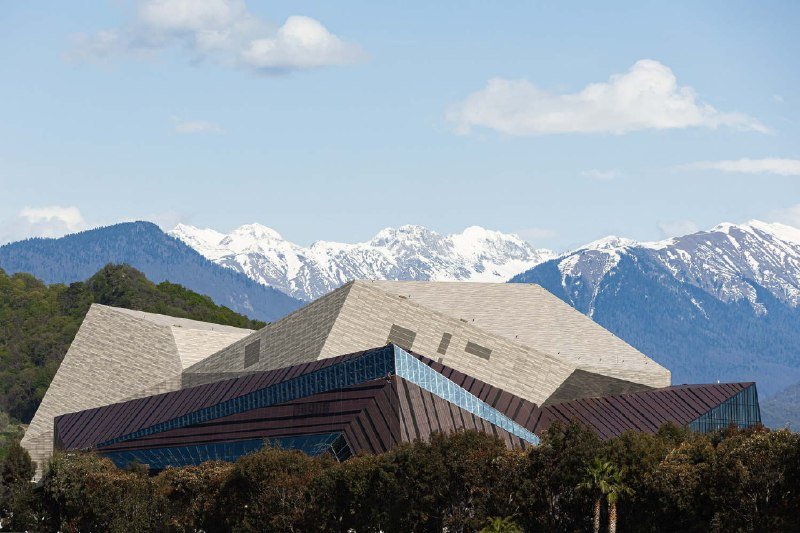
The Mariinsky Theatre Symphony Orchestra, Opera and Ballet companies, conducted by Valery Gergiev, open a three-day residency at the Sirius Concert Hall on the Black Sea coast on 19 July 2026, in one of the company’s rarer forays outside Russia’s cultural capitals since the country’s near-total isolation from Western classical-music circuits. The Classical Music News Telegram channel, which covers the Russian classical scene closely, announced the run on 18 July 2026, listing performances on the main stage of the Sirius hall through 21 July 2026. The venue sits inside the Sirius federal territory, a purpose-built education and science cluster carved out of Sochi’s Adler district in 2019 and designed to project a soft-power footprint beyond Moscow and St Petersburg.
The tour is small in scale but pointed in geography. Sirius was conceived as Russia’s answer to Silicon Valley-style talent pipelines, with a school, a university and concert infrastructure built on federal land. Putting the Mariinsky, Russia’s flagship imperial-era company, on its main stage amounts to a state-backed fusion of cultural prestige and the country’s flagship science city, the kind of pairing that has been harder to assemble in Europe since 2022, when most Western venues severed ties with Gergiev over his public alignment with the Kremlin. The residency is therefore less about filling a hall than about reclaiming one.
A company in search of a circuit
For two decades the Mariinsky under Gergiev was a regular fixture in London, New York, Milan and Paris. The cancellation wave that followed the full-scale invasion of Ukraine in February 2022 emptied much of that calendar. The company has responded by deepening its domestic touring, leaning on post-Soviet and Asian venues, and increasingly on Russian federal sites that were themselves designed as showcases. Sirius, with its concert infrastructure built into the federal territory’s master plan, is a natural fit. The three-day run announced for 19 to 21 July 2026 reads as a soft opening for what Russian state-aligned cultural programming is likely to become during the country’s ongoing estrangement from Western institutions: fewer foreign stages, more carefully staged home ones.
The programme itself has not been published in the Telegram announcement beyond the confirmation of symphony, opera and ballet forces on the same stage. Classical Music News, a Telegram channel that aggregates Russian concert listings, is one of the few channels still reliably broadcasting such schedules to a non-Russian audience, and its posts have taken on a quasi-diplomatic function, advertising where the Mariinsky can still be seen by international ticket-holders willing to travel.
Sirius as showcase
The Sirius federal territory sits a few kilometres inland from Sochi’s Olympic Park. Built around the legacy of the 2014 Winter Games, it was given its own administrative status in 2019 and now houses the Sirius University of Science and Technology, a chain of boarding schools, and the Sirius Concert Hall, which opened in 2021 and seats around 1,200. Russian federal authorities have marketed the territory as proof that the country can still deliver world-class research and cultural infrastructure at speed, an argument that carries domestic political weight. Hosting the Mariinsky for a three-day residency slots neatly into that narrative: an imperial theatre performing inside a federal showcase, in a venue designed for exactly this kind of televised moment.
The pattern is familiar from other sanctioned or partially sanctioned cultural producers. The Bolshoi has leaned on tours to Abu Dhabi and Beijing. The Mikhailovsky has worked the Caspian circuit. The Mariinsky’s choice of Sirius over, say, Minsk or Bishkek signals where Russian cultural diplomacy currently wants to point: inward, federal, on camera.
What the tour does, and what it does not
The residency will not, on its own, restore the Mariinsky’s Western calendar. European and North American presenters who dropped Gergiev have not signalled any return. Insurance and reputational risk still weigh heavily on promoters in jurisdictions that have sanctioned Russian state-linked institutions, and the conductors who replaced Gergiev on major Western rosters have, in most cases, settled in. What a Sirius residency can do is preserve rehearsal discipline and stage time for a company whose international bookings have thinned, and it can give Russian audiences a Mariinsky experience without the cost of a flight to St Petersburg.
There is also a counter-read worth taking seriously. Critics of Russian state cultural policy argue that residencies inside federal territories are less about soft power than about insulating the company from foreign audiences who might disrupt or question the artistic choices on display. Under that reading, the Mariinsky is being preserved in a controlled acoustic: technically active, internationally visible only on Russian terms, and useful to the state as a backdrop rather than as a bridge.
Stakes for the wider circuit
For Western institutions, the practical question is whether the Sirius-style residency is the new floor of Russian cultural outreach or a temporary plateau. If more Russian federal sites follow the template, the country’s flagship companies will continue to perform at a high technical level, just on a stage that the global touring circuit rarely reaches. For the post-Soviet and Central Asian venues that have hosted Mariinsky appearances since 2022, the Sirius run is a reminder that Russia still has domestic platforms capable of absorbing a full symphony-plus-opera-plus-ballet deployment on short notice. For audiences who used to see the company in London or Milan, it is a quiet signal that the cheapest way back to a Mariinsky pit is now a flight to Sochi.
The remaining uncertainty is straightforward: the three-day Sirius programme has not yet been detailed publicly beyond the announcement, and whether the company returns for a longer run later in 2026 will depend on federal-territory budgets that are not visible from outside. The schedule, in other words, is real; the broader trajectory is still being negotiated.
This publication framed the Sirius residency as a soft-power event first and a concert second; the wire coverage available at the time of writing treats it as a routine tour date.
Wire provenance
This editorial synthesis draws on the following public wire/social posts:
- https://t.me/classicalmusicnews