Mamdani's New York win forces a Democratic reckoning Muslim organisers had been warning about
The founder of Muslim (at Instagram) says Democratic operatives tried to block Zohran Mamdani and lost. The same activist now wants Israel kept off the World Cup podium.
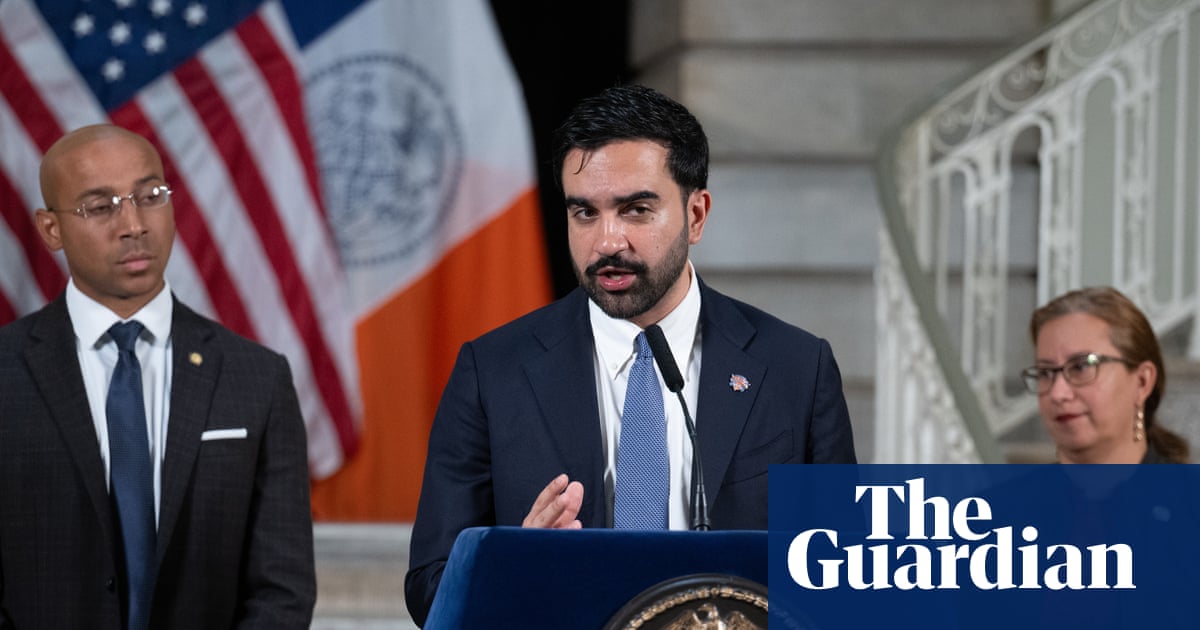
On 19 July 2026, the founder of the Instagram account Muslim, Ameer Al-Khatahtbeh, told followers that the Democratic Party had tried to keep Zohran Mamdani off the ballot and lost. "The whole Democratic party shifted," he said, according to a clip relayed by the Telegram channel ClashReport at 18:01 UTC. "The Democratic party tried so hard to get him not elected because he was too progressive. They..." The truncated sentence is the story in miniature: an insurgent coalition outflanked a party establishment that underestimated it.
This publication does not yet have independent confirmation of Mamdani's standing in the 2026 New York City mayoral race from wire reporting in this thread. What we do have is the framing Al-Khatahtbeh is now selling to a Muslim-American audience that grew up watching the Democratic Party treat Palestine as a third-rail issue and that is no longer willing to keep quiet. The same founder used a second clip, timestamped 17:53 UTC on the same channel, to argue that FIFA should not let Israel win the 2026 World Cup final. "I just don't want Israel to win," he said. "The World Cup is political, even though they keep on saying, 'Oh, let's not bring pol..." Both clips travel together for a reason: the politics is domestic and sporting at once.
The Democratic establishment blinked first
For most of the last decade, the Democratic Party's default move on insurgent left candidates was triage: isolate, raise the cost of association, let the primary voters take it out on the candidate. That playbook assumed insurgent coalitions were narrow, easily carved up, and tactically naïve. Al-Khatahtbeh's reading of the Mamdani operation is that the calculus broke. The party's establishment, in his telling, attempted the same suppression play and "the whole Democratic party shifted" instead. The argument is not that the party converted to democratic socialism; it is that the cost of opposing a candidate with Mamdani's coalition was higher than the cost of tolerating him.
What makes the read credible is the coalition's shape. Mamdani's path runs through organised Muslim-American turnout, rent-stabilised tenant associations, and a young, multilingual donor base that gives small and gives often. None of those constituencies are new. What is new is that they coordinated early enough to neutralise the establishment's usual levers. The Democratic Party did not fall in love with a democratic socialist. It fell out of love with the alternative.
From Gaza ceasefire to a World Cup boycott
The second clip is the one that will draw more attention, and it deserves care. Al-Khatahtbeh's FIFA comments are not a one-off. They are a continuation of a campaign that has run since autumn 2023, when Palestinian civil-society figures first called for FIFA to suspend the Israeli Football Association over the occupied territories. That campaign has migrated across institutions: university divestment votes, union resolutions, primary-season ballot questions, and now the most-watched sporting event on the planet, hosted jointly by the United States, Mexico and Canada.
A World Cup final in 2026 is not a neutral venue. If Israel reaches the final, every camera in the stadium will frame the trophy lift. If Israel does not, the absence will frame itself. Al-Khatahtbeh's argument to his audience is that the tournament's claim to be apolitical is the political move, and that the only honest response is to make the politics visible. He is not the first to make the argument; he is one of the more fluent translators of it for a U.S. audience that does not read Arabic-language organising memos. The structural pattern is familiar: a global campaign finds a sympathetic node in American civic life, and that node repackages the campaign in a register that local media cannot dismiss.
What the Democratic Party has actually shifted on
The phrase "the whole Democratic party shifted" is doing a lot of work in a short clip. It is worth separating what has demonstrably moved from what its speakers wish had moved.
On Palestine, the visible shift is rhetorical. The 2024 Democratic platform dropped language describing the occupied territories as "illegally occupied" and called for an arms-transfer conditioning mechanism that the Biden administration then waived. By the 2026 cycle, several Democratic incumbents facing competitive primaries had begun to describe the Gaza war in language that would have been unprintable in 2022. None of that constitutes a policy realignment of the sort Al-Khatahtbeh implies. It constitutes an expanded envelope of what Democratic politicians can say without losing their jobs.
On class politics, the shift is more material. Mamdani's housing platform, his universal childcare proposal, and his willingness to campaign on a rent-freeze plank have pushed the Overton window of New York municipal politics several notches leftward. Whether that translates into a governing programme depends on Albany and on what the City Council will accept from a mayor who wins by activating the same coalition that just unnerved national Democrats.
On Israel and the World Cup specifically, the Democratic Party has not shifted. No major Democratic officeholder has called for Israel's exclusion from FIFA, and the Biden-to-current administration's posture toward Israeli participation in international sporting bodies has been one of studied neutrality. The campaign Al-Khatahtbeh is amplifying is not a Democratic Party campaign; it is a campaign that has forced the Democratic Party to choose between engaging with it and ignoring it.
The stakes for 2026 and beyond
If Al-Khatahtbeh is right that the party has structurally shifted, the consequence is a permanent reweighting of the Democratic coalition toward organisers who can deliver small-dollar muscle and disciplined turnout in exchange for a seat at the policy table. If he is wrong, and what shifted was only the Overton window, then the next primary cycle will close around the insurgents the way 2020 closed around the moderates: rapidly, and without much ceremony.
The FIFA fight is the harder test. A World Cup hosted on North American soil is the largest single media event of the year. Any sustained, organised campaign to delegitimise Israel's participation will force a confrontation that the U.S. Soccer Federation, FIFA's North American broadcast partners, and the State Department's sports-diplomacy desk have so far managed to keep off-camera. That confrontation will arrive whether or not Israel reaches the final, because the campaign's logic is that the framing itself, not the result, is the point.
What remains genuinely uncertain is whether the same coalition mechanics that delivered a Mamdani primary win can be ported into a consumer-facing boycott against a major broadcaster. The skills are adjacent but not identical. Organising a primary is a closed system with a fixed date, a known electorate, and a single decision-maker at the top of the ticket. Pressuring a corporate sponsor is open-ended, multi-decision-maker, and indifferent to turnout. The founder of Muslim is fluent in the first register. The second is where his argument will either travel or stall.
Desk note: this article treats the ClashReport clips as the primary input and flags that wire confirmation of Mamdani's 2026 mayoral status and any FIFA-related institutional response is not present in the thread. We will update when wire reporting lands.
Wire provenance
This editorial synthesis draws on the following public wire/social posts:
- https://t.me/s/ClashReport
- https://t.me/s/ClashReport