Ladakh's hunger strike ends on conditions Delhi has not yet accepted
Sonam Wangchuk will end his fast on Sunday only if detained protesters are released and the march to Delhi is allowed to resume, his wife says, sharpening a standoff that has already spilled into Mumbai's Shivaji Park.
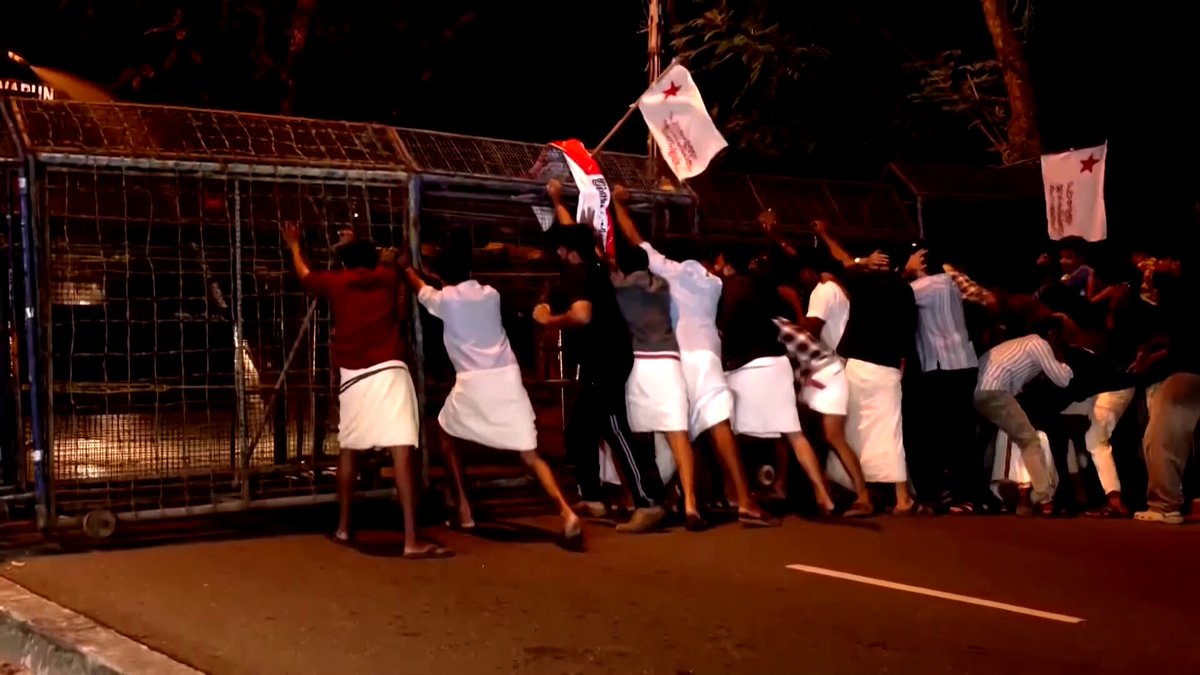
On 19 July 2026, after sixteen days without food in the Ladakh cold, the engineer-turned-activist Sonam Wangchuk agreed to break his fast, but only on two conditions that New Delhi has not publicly accepted. Speaking on his behalf, his wife told The Indian Express that the climate campaigner would end the strike on 20 July if every protester detained since the march began is released and if the activists are permitted to resume their walk to the national capital. The terms set a tight, concrete deadline on a confrontation that has, until now, been allowed to drift.
Wangchuk's fast was conceived as a non-violent lever on a single demand: statehood for Ladakh, with the constitutional protections that would prevent the region from being demoted to a Union Territory in everything but name. The conditions attached to its ending shift the fight from a moral posture to a procedural one. Release the detainees. Let the marchers walk. The framing of those two asks matters: each one is verifiable from a press release, a court order, or a route map. That is deliberate. It forces the central government into a yes-or-no that can no longer be deferred behind committee minutes.
What the second city did
By Saturday afternoon the protest had acquired a second capital. Crowds gathered at Mumbai's Shivaji Park under the banner of the Citizens for Justice and Peace, a civil liberties formation long associated with the Indian Muslim activist Tehseen Poonawalla and the wider post-Babri network of minority-rights groups, according to The Indian Express. The Mumbai turnout matters for two reasons. First, it is geographically distant from the Himalayan theatre where the fast is happening, which means the dispute has stopped being a Ladakh question and started to look like an Indian one. Second, Shivaji Park is the kind of ground in Indian civic memory that confers seriousness: the same lawns that hosted the Samyukta Maharashtra movement in 1956, the same park where Bal Thackeray held his last major rally.
The Indian Express reported that speakers at the Mumbai gathering framed Wangchuk's detention in language the government has studiously avoided. They called him a prisoner of conscience, and said the case should be read against the grain of India's shrinking civic space rather than as an ordinary law-and-order incident. The shift in register is important. Ladakh's climate demands are technical and dry. A prisoners-of-conscience frame is international, sympathetic, and hard to neutralise through the routine bureaucratic channel of a press release from the Ministry of Home Affairs.
The counter-frame Delhi can deploy
The state has a counter-narrative it can lean on, and it is not wholly without foundation. Wangchuk's march, the argument runs, has at points edged into the language of regional grievance in a Union Territory that borders hostile nuclear-armed neighbours, and the security services cannot be expected to stand aside when marchers approach the capital's perimeter. Detentions, in that reading, are preventive, not punitive. New Delhi can also point to the procedural exhaustion already on the public record: years of dialogue with the Ladakhi leadership, the formation of high-powered committees, the partial concessions on employment quotas for local youth. The hunger strike, in this telling, bypasses those channels and forces a binary.
There is some substance to the second claim. The Indian Express has documented that earlier rounds of negotiation did produce interim gains on hill councils powers and on a measure of representation in employment. But the structural objection that Wangchuk's movement raises is precisely that the gains stop where constitutional status begins. Statehood is not a procedural upgrade; it is a reordering. The argument that every previous fast has been answered with committee minutes is the argument that those minutes were the answer the government wanted, not the one Ladakh was asking for.
What remains unresolved
Two things are unresolved as of 19 July. The first is the content of the two conditions themselves. The Indian Express reports them via Wangchuk's wife; the government has not, in the reporting available so far, conceded either. Whether 20 July produces a release order and a route clearance, or whether it produces an unaddressed ultimatum and a worsening fast, is the next forty-eight hours. The second is the question of scale. The Mumbai turnout suggests the protest has stopped being an upper-Himalayan pressure point and started to read as a stress test for civic protest in general. If the government concedes to one detained activist-engineer on a hunger strike, it sets a precedent for the next group of marchers who decide that a fast is faster than a committee. If it does not concede, it absorbs the cost of an internationally photogenic prisoner-of-conscience story. Neither option is free.
The pattern is familiar from India's recent political history: an instrumental demand, a moral vehicle, and a state apparatus that prefers procedure until procedure stops working. What is new is the speed. Sixteen days, a second city, a parliamentary-style ultimatum. The window the government had to manage this on its own clock is closing faster than the press releases are being drafted.
Monexus framed the Ladakh fast as a civil-society standoff over verifiable procedural asks, not as a regional autonomy dispute in isolation. The wire line emphasised Wangchuk's conditions; this piece reads them against New Delhi's procedural track record and the spillover into Mumbai.