Kindiki moves to lock Mt Kenya as Kenya's 2027 map firms up
Kenya's deputy president is publicly rallying the Mt Kenya region as Ol Kalou's parliamentary by-election hands his camp a low-cost platform to test 2027 coalition math.
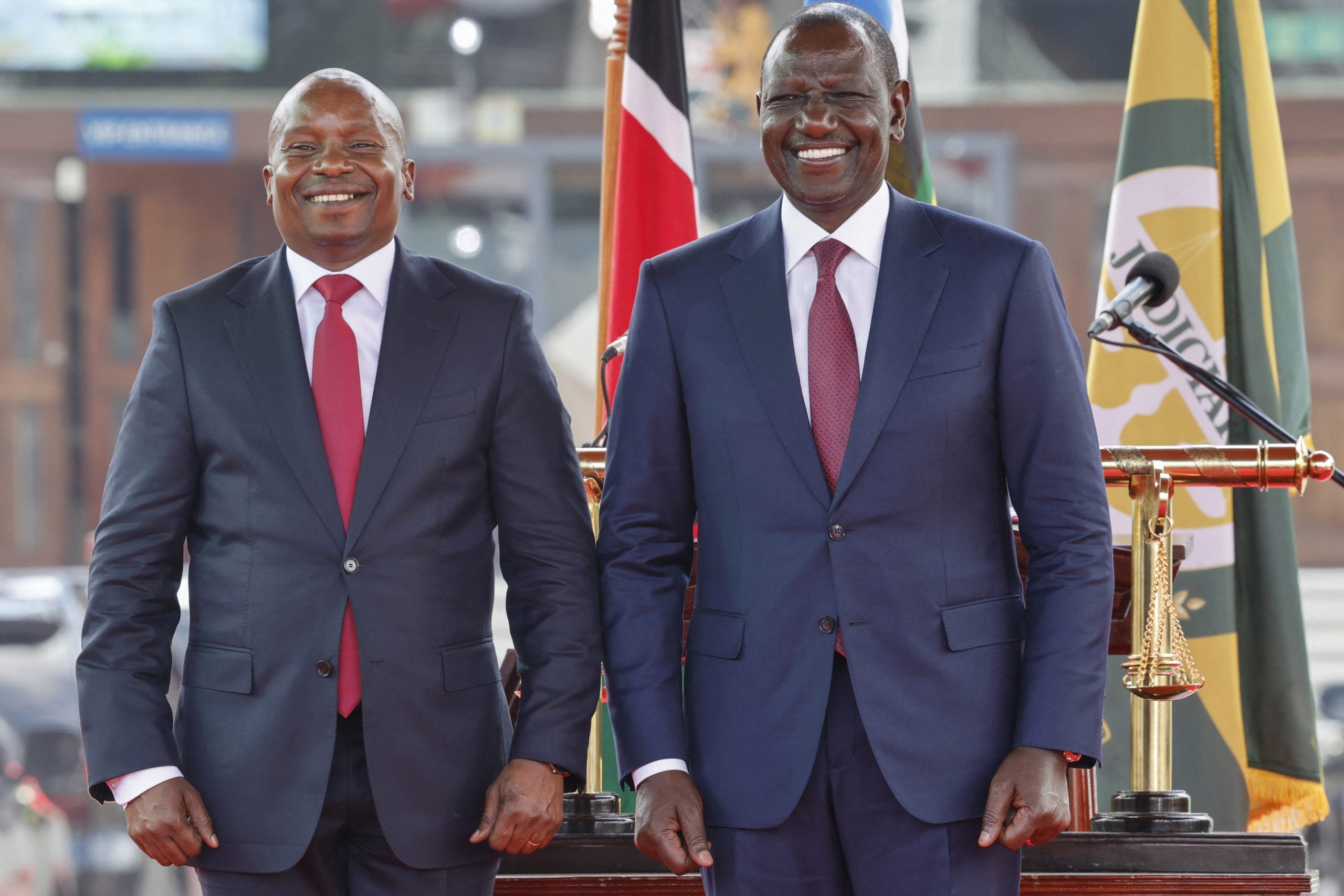
Kenya's deputy president walked into Ol Kalou on 16 July 2026 with a single message: the people of Mt Kenya are one community, and the country is one Kenya. Three days later, on 19 July, he returned to the same register, declaring he would not allow any attempt to "scuttle" the unity of the region he is paid to help govern and is widely expected to need in 2027.
The two appearances are modest in isolation: a congratulatory call to a candidate the deputy president's office had already endorsed, and a unifying homily in a region that has spent two decades being treated as a kingmaker bloc. Read together, they sketch the scaffolding of the next presidential cycle. Ol Kalou is not a national election. It is a stress test: the first by-election of the campaign proper, fought in a constituency inside the Mt Kenya vote bank, and resolved in favour of a candidate the deputy president's camp had openly backed.
What Kindiki is buying in Ol Kalou
The seat fell vacant in the normal way parliamentary seats fall vacant in Kenya: a vacancy, a by-election timetable, a short campaign. What made it political was not the seat itself but the visitors' gallery. Deputy President Kithure Kindiki moved early to endorse Sammy Douglas Waweru Kamau and treated the campaign as a low-cost opportunity to project influence across the Mt Kenya region, the central Kenya vote belt that has produced two of Kenya's last three presidents and a plurality of parliamentary seats in the lower house. In a statement reported on 16 July, Kindiki congratulated Kamau on what he called his "imminent victory" and urged him to focus on uniting residents once sworn in.
The arithmetic is what a regional party boss would call a pilot programme. A win validates the endorsement machinery and gives Kindiki a usable phrase ("I told you so") inside Mt Kenya coffee meetings. A loss is contained because the seat is a single parliamentary constituency, not a national poll. The risk-reward tilts hard toward participation, which is why so many heavyweight figures, those with national ambitions and those whose survival depends on national alignment, show up to these races even when they pretend not to.
The contest was not, on the surface, a referendum on President William Ruto's administration. It was a referendum on who inside the broad Kenya Kwanza coalition gets to speak for Mt Kenya when the cameras are pointed somewhere other than State House.
Unity as a brand, faction as a product
Three days after the by-election, Kindiki returned to the message. "We are one community and one Kenya," he said on 19 July, framing any talk of faction within Mt Kenya as the work of outsiders and promising to resist it. The phrasing is deliberate. Mt Kenya's political history is a history of internal splits that produced both the presidency and the opposition; the region's MPs have, at various points, acted as government, as a balancing caucus, and as a spoiler. A deputy president who can claim the "unity" label at will is a deputy president who owns the right to define who is, and is not, inside the tent.
It is also a defensive posture. Mount Kenya East and Mount Kenya West have moved on different rails in this administration. Cabinet representation, the location of mega-projects, and the war of words between rival political families have all run along those rails. By moving first to define unity, Kindiki is trying to make any rival reading of the region's mood sound, by definition, divisive.
What the sources do not tell us
The Star Kenya dispatches are short and do not record the vote share, the turnout, or the names of the losing candidates. The 16 July wire congratulates Kamau on an "imminent victory"; the 19 July wire reports the unity message without disclosing the by-election result. A reader looking for the margin, and for evidence that the endorsement actually moved votes rather than merely ratifying a likely outcome, will not find it in this thread. The framing therefore rests on a single observable: Kindiki chose to make these statements, in this sequence, in this region, in this calendar window.
That is enough to report. It is not enough to claim a political realignment. The honest reading is that Kenya's deputy president is performing the standard pre-cycle moves of a regional heavyweight with national ambitions: lock down the home base early, define the brand ("unity"), and make any future splinter inside the region legible as deviation from a settled consensus.
Stakes into 2027
The 2027 general election is the horizon against which every Kenya Kwanza decision is now being read. Ruto is term-limited; the succession question inside his coalition is open. Kindiki's rivals inside the coalition, and outside it, in the Azimio-aligned formations that have spent the last two years reorganising around young, ethnically balanced presidential hopefuls, have their own Mt Kenya strategies. Some of those strategies depend on the region fragmenting along familiar lines. A deputy president who successfully markets himself as the region's unifier forecloses at least some of those strategies and converts Mt Kenya's kingmaker habit into a single-vote-bloc habit.
If the Ol Kalou result is reproduced in the larger parliamentary battle of 2027, the move pays for itself many times over. If Mt Kenya splits anyway, Kindiki will own the failure visibly and publicly, because he made "unity" his brand. That is the wager being placed in two Telegram-length statements over three days in July.
Forward view
The next dates to watch are the official by-election result announcement, the swearing-in of Kamau, and any cabinet or principal-secretary reshuffle that follows. Each is a small signal. Together, they will tell readers whether the unity message travelled beyond the podium or stayed where the deputy president left it. Either outcome is reportable; only one is currently visible. The other is what the next ninety days will decide.
Monexus framed Kindiki's twin appearances as the start of a 2027 regional-consolidation play rather than a one-off by-election courtesy, on the view that timing, location, and language were all unusually deliberate for a routine message.
Wire provenance
This editorial synthesis draws on the following public wire/social posts:
- https://t.me/TheStarKenya
- https://t.me/TheStarKenya