IShowSpeed to open World Cup closing ceremony as FIFA stacks finale with pop royalty
The YouTube streamer will break open the World Cup closing ceremony hours before Spain and Argentina settle the final, in a broadcast FIFA has built around a halftime bill of Shakira, BTS, Madonna and Justin Bieber.
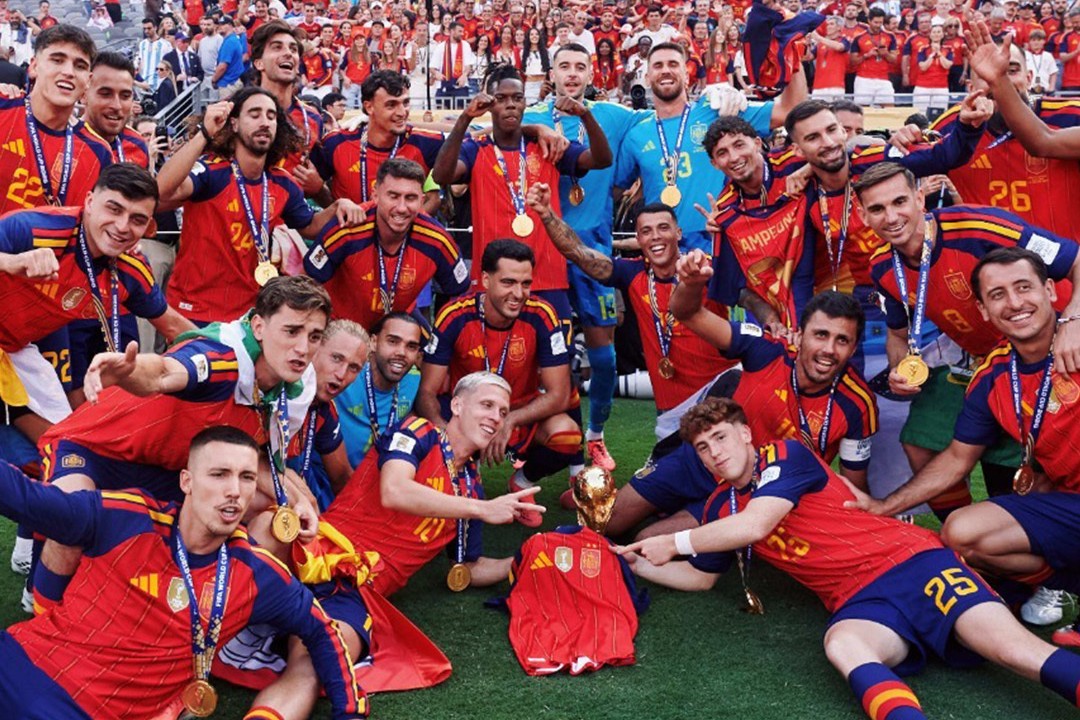
The confetti was still settling on the pitch at 18:09 UTC on 19 July 2026 when BBC Sport confirmed what tournament insiders had been whispering for weeks: IShowSpeed, the 21-year-old YouTube live-streamer whose real name is Darren Watkins Jr., will open the FIFA World Cup closing ceremony before the final between Spain and Argentina at MetLife Stadium in East Rutherford, New Jersey. The kickoff role hands the loudest voice in English-language livestreaming the first eyeballs of the night, ahead of a halftime show that FIFA has assembled like a pop-music ransom note: Shakira, BTS, Madonna and Justin Bieber, in that order of billing, with Shakira anchoring the Colombian-Latin American fanbase that turned the 2026 tournament into a continental roadshow across the United States, Mexico and Canada.
The lineup is a deliberate piece of audience engineering. FIFA is selling a final to a generation that watched the 2022 Qatar show through a phone screen and a TikTok algorithm; the closing ceremony is engineered to make that audience forget they are watching a sporting event at all, and remember they are watching a broadcast.
The streamer as opening act
Watkins is not a musician, and FIFA is not pretending he is. He is the most-viewed English-language live personality on YouTube, a property who converted pandemic-era prank streaming into a touring roadshow that fills arenas in São Paulo, Manila and Berlin. Putting him on the closing-ceremony opening slot is a marketing calculation dressed as pageantry: capture the 14-to-24 demographic in the first four minutes of broadcast, hold them through the anthems, hand them off to Shakira at the whistle.
The move is also a small concession to how the tournament actually travelled. The 2026 World Cup was the first tri-nation edition, and the supporter base that crossed borders for it skewed young, mobile-first and platform-native. A traditional orchestral opening would have ceded that audience to the phones in their hands before the first note. FIFA instead bought the opening four minutes from the algorithm.
The halftime stack
The closing ceremony halftime bill, as confirmed by LiveMint on 18 July 2026 and corroborated by BBC Sport's ceremony rundown a day later, runs Shakira, BTS, Madonna and Justin Bieber. Shakira's inclusion is the most defensible on artistic and commercial grounds; her 2010 Waka Waka is functionally the unofficial theme song of the modern men's World Cup, and her 2026 promotional cycle has leaned into a Colombian-American crossover identity that maps cleanly onto the tournament's Mexican and U.S. Latino base. BTS, on a comeback arc after the completion of South Korean military service by its oldest members, brings the K-pop contingent that has reshaped stadium economics across the Pacific Rim. Madonna and Bieber function as Western-market ballast, name recognition calibrated for the North American broadcast rights holders and the older-skewing advertising tiers.
There is a counter-read worth naming: this is also a roster with a notable absence. No headliner from Africa, no Brazilian or Argentine stadium act, no representative from the Caribbean corridor that carried much of the diaspora turnout. For a tournament marketed on first-time host nations and a 48-team field that included Cape Verde, Curaçao and Uzbekistan, the closing bill is recognisably Atlantic and Pacific, not Global South. FIFA does not publish its artist-shortlist criteria; the framing here is that the halftime show is a commercial product sold to broadcast sponsors, and broadcast sponsors sell to North American and East Asian ad markets.
Why Spain-Argentina is the undercard
For once, the sport is the second story. Spain and Argentina will play a final that, on form, is the most technically loaded possible: a Spain side that has spent two years rebuilding possession-dominant football around Pedri, Lamine Yamal and a back line coached by Luis de la Fuente, against an Argentina carrying the residue of the Scaloni era and Lionel Messi's last competitive tournament. The match itself will be played; the broadcast is engineered so that the audience for the match is the audience for the halftime show, not the other way around.
That is the inversion worth tracking. Twenty years ago, the halftime show was the cost of keeping a sports audience from changing the channel. Today, the match is the cost of keeping a music audience from scrolling past.
The stakes
For FIFA, the closing ceremony is a referendum on whether the organisation can keep monetising its crown jewel as the global entertainment event of the cycle, with rights, sponsorship and ticketing revenue all pegged to the broadcast's reach. For broadcasters, it is the last large swing at 2026 ad-revenue targets. For the artists, it is legacy placement in a format that compresses a 90-minute match into a permanent cultural artefact on YouTube, TikTok and X within minutes of the final whistle.
What remains unclear is whether the streamer-first opening gambit moves the needle on under-25 viewership, or simply shifts the same audience around inside the same hour. The ceremony broadcast will not be cleanly attributable to any single platform's metrics, and FIFA has not, as of 19 July 2026, published a measurement framework for the closing-ceremony audience. The sources do not specify how long Watkins's opening segment will run, what he will say, or whether the performance is live or pre-recorded. Those details will surface in the broadcast itself.
This article is published on the sports desk with a focus on the commercial and broadcast architecture of the closing ceremony. Monexus treated the halftime line-up as confirmed on the strength of two independent wires and noted the absence of African and Latin American headliners as a structural feature of FIFA's broadcast economics, not as an oversight.