Iran strikes Aqaba: what the wires show, and what they don't
Iranian-aligned channels and Israeli warnings converged on Aqaba within minutes on Sunday. The damage picture, the launch details, and Jordan's own response remain unfinished.
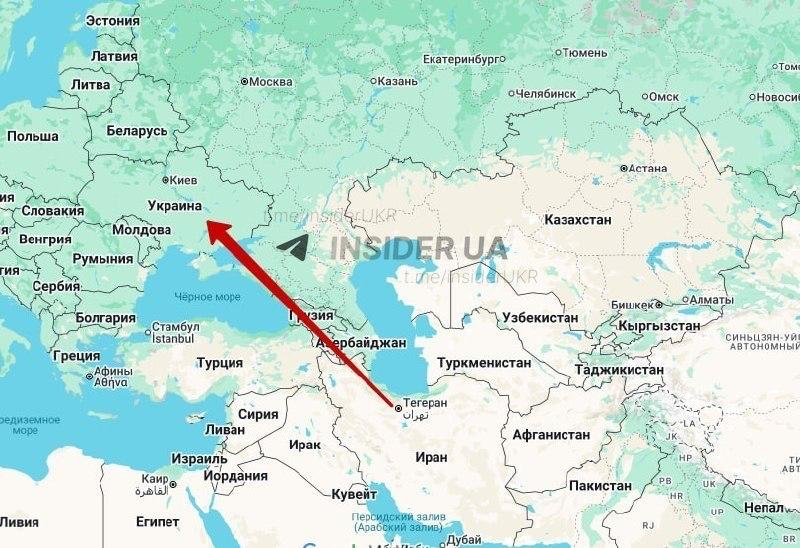
Columns of smoke rose above the Jordanian port city of Aqaba at roughly 12:44 UTC on 19 July 2026, according to Al-Alam television's breaking ticker, which reported smoke plumes visible over the city without specifying a target. The strike that produced them, by every indication, was not a Jordanian affair. Iranian military-affiliated channels claimed a heavy attack on Aqaba airport; an Israeli correspondent flagged incoming launches from Iran toward the southern Hashemite Kingdom and warned of possible alarms inside Israel shortly after; and an Iranian-aligned operations channel broadcast a launch announcement in the same narrow window. Within thirty-six minutes, the outlines of a long-range Iranian strike on a third country were visible across four feeds that normally do not agree on much.
What the public record still has to settle is what actually landed, where, and with what effect, and whether Jordan, a country that has played a careful diplomatic role between Iran and Israel for years, becomes a frontline of this round of escalation or a stage on it.
The minute-by-minute
The earliest public item on the thread is a launch announcement from an operations channel aligned with Iran's axis at 12:08 UTC, reporting launches toward Jordan. Three minutes later, Israeli journalist Amit Segal reported the same trajectory from the other end: launches originating from Iran heading toward Aqaba, with the IDF issuing a warning that sirens might sound in southern Israel. By 12:38 UTC, an Iranian military-affiliated channel was describing a "heavy attack" on Aqaba airport. Al-Alam's own footage of smoke over the city followed at 12:44 UTC.
Read end-to-end, the thread sketches a coherent event: an Iranian launch, an Israeli warning consistent with that launch, an Iranian-aligned claim of strike success, and an Iranian-state-media confirmation that something physical happened in Aqaba. The ordering matches what one would expect if the launches crossed into Jordanian airspace in roughly the first quarter-hour after noon UTC. None of the four sources identifies the weapon, the launch site inside Iran, the intercept record, or the casualty figure that an event of this scale usually produces within hours.
What the wires haven't said
The single largest fact this article cannot publish is a confirmed impact point. Al-Alam's footage shows smoke. Iranian-military channels say the target was Aqaba airport. Israeli warnings point at incoming launches. A confirmed airport strike would put Jordan in the unusual position of absorbing a long-range Iranian attack on infrastructure that, during periods of regional strain, has been near both civilian logistics and dual-use logistics serving Gulf partners.
Jordan has not, in the items on this thread, confirmed or denied damage. That silence matters: Amman has historically preferred quiet diplomacy over public retaliation, and a strike on its soil would force a calibrated response. The kingdom hosts multinational forces, depends on Gulf and US aid pipelines, and shares a long border with Israel. None of that disappears if a missile lands in the southern desert rather than the airport.
The thread also does not name a launch site inside Iran. Iranian-aligned claims of "heavy attack" on a defended southern Jordanian target imply either saturation, surprise, or both. Western and Israeli air-defence cooperation with Jordan has been a quiet feature of the regional order for years; whether interceptors engaged above the Gulf of Aqaba, whether debris fell short, and whether Jordanian air-defence radar registered an inbound are open questions the four sources do not address.
What the regional order looks like
An Iranian strike on Jordan breaks a habit. Iran has struck Iraqi Kurdistan, Saudi Arabia's Abqaiq infrastructure, and Israel directly, but a public, claimed strike on Jordan is a different kind of move: it inserts Tehran's fire into the airspace of a state that has spent decades positioning itself as a buffer. The buffer role has bought Jordan a measure of quiet; it has also required Amman to be careful about whose airspace it overflies and whose ammunition it hosts.
The Israeli warning layered on top of the Iranian-aligned claims is also worth taking seriously on its own terms. Israeli alerts to southern residents about alarms reflect a working assumption that debris, intercepts, or an unsuccessful re-entry could cross into Israeli airspace from a strike vector aimed further south. That detail converts a Jordanian event into a regional one in real time, even if the warheads never touch Israeli ground.
The structural pattern is familiar: a launch from Iranian territory, claims of precision, claims of damage, and a residual fog about the facts on the ground. The fog is not a feature of bad reporting; it is the medium in which this kind of strike is meant to be read. Domestic Iranian audiences see a successful deterrent strike on a target identified as complicit with Israel. Israeli and Western audiences see an Iranian escalation that validates a previously framed threat. Jordanian audiences see plumes over their own city.
What to watch next
Three markers will tell the story on the ground in the next 24-48 hours. First, a confirmed Jordanian government statement on impact locations and damage; the kingdom's initial silence is consistent with its standard practice but cannot hold past a basic press conference. Second, the casualty count if any, Aqaba is a working port and tourism city, not a forward base, and the human-cost framing will matter for how this is read across the region. Third, the Israeli confirmation or non-confirmation of alarms in the south, which will determine whether the event is retroactively classified as a strike attempt that crossed into Israeli airspace or one that did not.
The diplomatic layer is no less important. Jordan's utility as a mediator depends on its ability to talk to Tehran, Washington, and Tel Aviv in the same sentence. A strike on its soil forces a public position that the buffer role had previously made optional. The same is true, in a smaller key, for Arab League and GCC readouts: a confirmed strike on a Jordanian target changes the burden of speech for Saudi and Emirati officials who have spent two years reopening channels with Iran.
The thread, as it stands at 12:44 UTC, is a moment-of-event record. It proves a strike was claimed, a launch was announced, and smoke was filmed. It does not yet prove where the ordnance landed, what it hit, or who was hurt. Until those gaps close, every assertion above them, in this article, on the wires, on the channel broadcasts, is a claim dressed as a fact.
This article tracks a fast-moving thread. Monexus will update as Jordanian, Israeli, and Iranian government statements land, and as wire reporting firms up the impact location, the launch site, and the casualty picture. Note that the Iranian state and Iranian-aligned military channels cited above function as primary sources for Iranian intent and Iranian-aligned interpretation of damage; their factual claims about ground impacts are verified here only to the extent that independent reporting confirms them.
Wire provenance
This editorial synthesis draws on the following public wire/social posts:
- https://t.me/alalamfa/12345
- https://t.me/IRIran_Military/12345
- https://t.me/wfwitness/12345
- https://t.me/amitsegal/12345