Iran's neighbours draw lines in the sand
Within an hour on 19 July 2026, Kuwait blamed Tehran for a strike on civilian infrastructure and Amman summoned Iran's envoy. Two Arab capitals are publicly testing the limits of Iranian deniability.
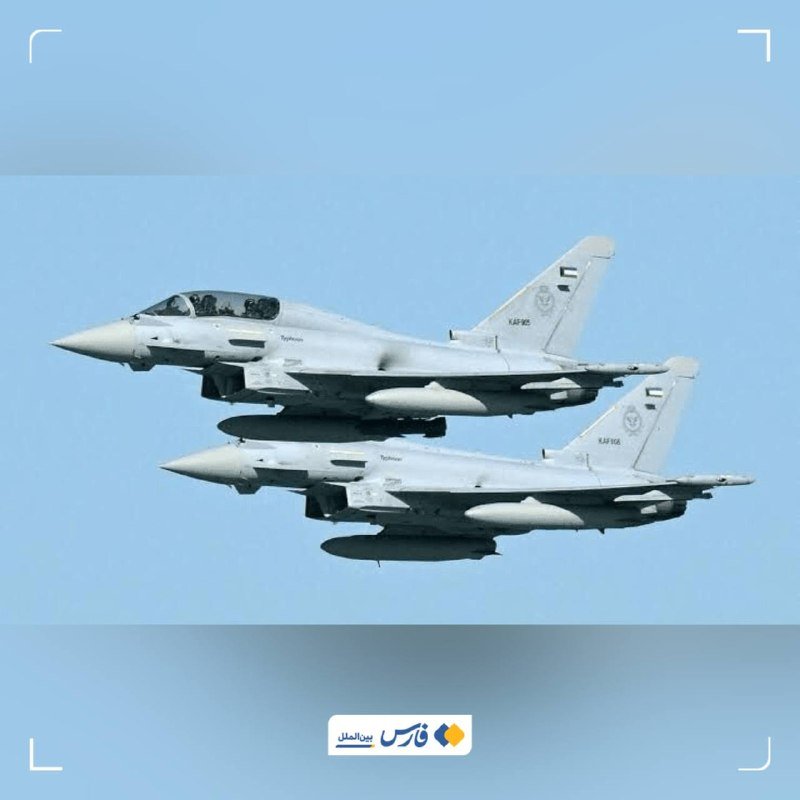
At 17:14 UTC on 19 July 2026, two Gulf monarchies did something quieter than firing back, and louder: they named Iran on the record. Kuwait declared that Iran "bears full responsibility for the attack on civilian infrastructure," condemning a strike on an electricity and water desalination facility. Within the same hour, Jordan summoned Iran's ambassador, telling Tehran that the kingdom's security and sovereignty are a "red line." The synchronisation is the story.
Both statements arrive at a moment when the regional norm of ambiguity, the habit of absorbing an Iranian-linked strike without a public attribution, is wearing thin. Two Arab capitals, neither of them formal adversaries of Tehran, are now putting their names on the blame. The question is whether this is rhetorical pressure or the early stage of a diplomatic rupture with real cost.
What Kuwait actually said
The Kuwaiti statement is unusually direct for a Gulf state that has spent decades balancing US security guarantees against a shared Shia-majority neighbour across the water. It named Iran as responsible, not "Iran-backed groups" or "non-state actors"; and it named the target, a civilian electricity and desalination facility, which strips out the usual buffer that lets Gulf ministries leave attribution in the conditional tense.
That matters because desalination is the Gulf's single point of failure. A single facility offline in midsummer is not a local inconvenience; it is a public-health event that can move populations. Iran knows this. Naming it publicly is Kuwait's way of telling Tehran that the cost of plausible deniability has gone up.
What Amman is signalling
Jordan's move is more conventional in form, an envoy summoned, a "red line" delivered in private and leaked in public, but the timing converts it into a deliberate echo of Kuwait's statement. The two readouts circulated within minutes of each other on open-source intelligence channels, which suggests coordination at the level of diplomatic press machinery if not at the level of policy itself.
Amman has the least to gain from escalation with Tehran. Its border is the longest of any Arab state with Iraq, and Iraqi territory is the principal transit corridor for Iranian weapons shipments to Syrian and Lebanese clients. Yet Jordan is the country that absorbed the last decade of US-led counter-terrorism operations on its soil, and it has the strongest interest in the post-2024 regional order being treated as enforceable. A "red line" that is not enforced is just punctuation.
The structural read
What we are watching is the slow unbundling of the Iranian deterrent posture. For years, Tehran's regional strategy rested on the assumption that no Arab state, on its own, would bear the diplomatic cost of naming Iran as the source of a strike, because the alternative was being cut off from de-escalation channels with Washington. That assumption is now visibly fraying. The Gulf states that normalised ties with Iran after 2023, and the Levantine states that maintained quiet channels, are discovering that a working back-channel does not absolve them of having to publicly denounce attacks on their own grids.
The shift also tells us something about Washington's posture. The fact that two US-allied Arab states feel safe enough to issue public attributions on the same hour suggests, at minimum, that they do not expect to be contradicted by the State Department. That is a quieter change than a missile strike, and a more durable one.
What remains uncertain
The sources circulating these readouts are open-source intelligence aggregators on Telegram, not the official Kuwaiti or Jordanian government communications portals, which means the precise text of the condemnations cannot be independently verified against primary government press releases in the materials available to this publication. The underlying event, a strike on a Kuwaiti electricity and desalination facility, and the summons of Iran's envoy in Amman, are reported uniformly across the two readouts, but casualty figures, facility names, and the exact wording of the "red line" language are not in the public source set. Treat the directional story, two Arab states publicly attributing blame to Iran on 19 July 2026, as confirmed; treat the granular detail as not yet corroborated.
The threshold question is whether this is the day the Gulf's ambiguity regime ended, or simply another entry in a longer cycle of condemnations followed by quiet resumption. The next 72 hours will tell: if either Kuwait or Jordan follows the public attribution with a concrete diplomatic action, a downgrade, a recalled envoy, a UN complaint, the framing hardens. If not, today's statements join the long archive of Gulf statements that did not.
Desk note: Monexus frames this as a synchronised diplomatic attribution by two Arab states, not as a military escalation; the source set supports the former and is silent on the latter.
Wire provenance
This editorial synthesis draws on the following public wire/social posts:
- https://t.me/s/osintlive
- https://t.me/s/osintlive
- https://t.me/s/osintlive