The bunker that wasn't: Iran's strikes on a US air shelter in Jordan expose a missile gap Washington cannot ignore
Iranian missile and drone strikes destroyed a hardened aircraft shelter at Jordan's Mawafaq Salti Air Base, according to WSJ and NYT, days after Tehran demonstrated a new way to slip past US missile defense.
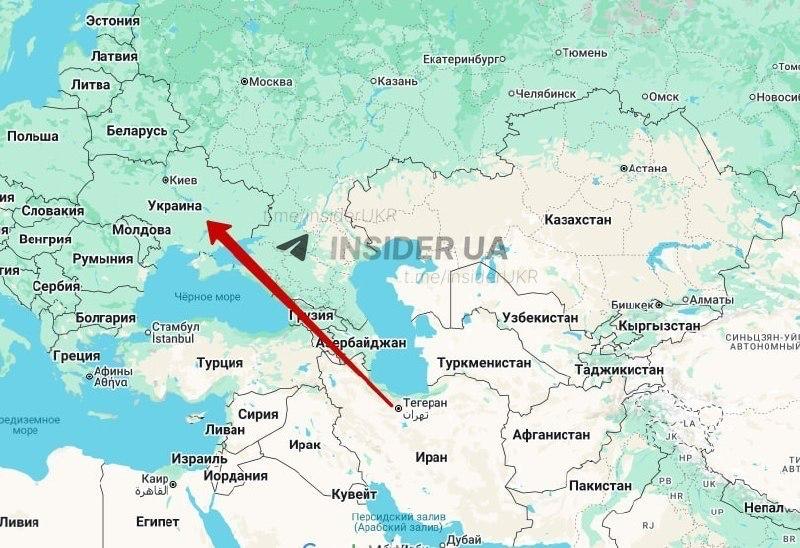
A hardened aircraft shelter at Jordan's Mawafaq Salti Air Base was destroyed overnight, Iranian and Iranian-aligned outlets reported between 18 and 19 July 2026, with the Wall Street Journal and the New York Times both citing American officials as the source for the account. The strike is the most concrete confirmation yet that Iran's missile and drone campaign across the preceding five days did not merely harass regional US assets but broke one.
The reporting matters because it couples two technical claims. First, that Iran has built a method of slipping past US missile defence; second, that the same method was used, in practice, against a base where US aircraft live. The two stories were always related. They are now, on the available evidence, the same story.
What American officials are now saying
The Wall Street Journal, quoted in translation by al-Alam Arabic, the Fars News Agency English service, and Tasnim between 18 and 19 July, reported that Iran has developed new methods to bypass American missile defence systems, citing American officials. The same account was carried by the New York Times in a piece picked up by Fars on 19 July 2026 at 01:48 UTC, in which American officials described the details of Iran's attacks on the Jordanian base over the past five days. The Tasnim wire at 01:51 UTC confirmed the destruction of several American military aircraft in the strikes.
The reporting is consistent enough across the two papers and the three Iranian-aligned channels that the underlying American source is unlikely to be a single off-hand briefing. The shape is familiar: a Washington paper gets an on-the-record-from-anonymous official account, the account leaks across the wire, and regional outlets pick it up and amplify it. The added wrinkle this time is that Tehran's own channels are using the same line to argue that US air power in the region is no longer safe from Iranian missiles.
The shield that did not hold
A US Patriot or THAAD battery is designed to intercept ballistic missiles at predictable midcourse and terminal trajectories. The WSJ account, as translated by the Iranian channels, says Iran has begun using missiles that compress or alter the predictable profile: manoeuvring re-entry vehicles, low-observable drone swarms, or saturation tactics in which the defender runs out of interceptors before the salvo runs out of warheads. No US official quoted in the available reporting names a specific system by name, and the available fragments do not let a reader tell which of those tactics was used at Mawafaq Salti.
What the available fragments do say is that the shelter was destroyed and that several aircraft were lost. A hardened aircraft shelter is not a soft target. It is, in dollar terms, the most expensive piece of real estate at any forward airbase outside the continental United States. If Iranian ordnance reliably reaches one, the cost calculus of forward-deployed US airpower in the Levant changes. The aircraft, the crews, the spare parts, the political liability of visibly losing frames on a US ally's soil, all of it moves.
The framing fight
Iranian state-aligned channels have an obvious interest in the story. Tasnim and Fars have spent the better part of a decade arguing that US air power in the region is a paper tiger constrained by politics and ageing hardware. They will read Mawafaq Salti as proof. The Wall Street Journal, by contrast, has spent the same period arguing the opposite: that US air dominance, while expensive, remains the operational backbone of any Western response to Iran. The same set of facts is being recruited into two opposed narratives, and the public cannot tell, from the reporting on offer, which narrative is closer to true.
A third framing deserves airtime and rarely gets it. If Iran has, in fact, found a low-cost way to destroy US airframes on the ground, then the regional balance shifts in a direction that hurts Iran's rivals, not its allies. Gulf states who host US aircraft are suddenly the most exposed actors on the map. Israel's ability to project airpower through Jordanian and Iraqi airspace is now contingent on whether the same Iranian methods can reach further. The story is not, on the available evidence, a US defeat or an Iranian victory in any clean sense. It is a regional re-pricing of risk.
What to watch before the next briefing
Three things will tell us whether the WSJ and NYT account holds. First, satellite imagery of Mawafaq Salti within the next week. A destroyed shelter leaves a footprint that commercial imagery services will see. Second, the Pentagon's daily readout. If the official line tightens from "we are aware of reporting" to a specific denial or a specific confirmation, the picture sharpens. Third, the flight line. US aircraft rotate between bases for maintenance and political reasons, and a sudden thinning of the US presence at Salti would be its own kind of confirmation.
The hard floor on the story is that two American newspapers, citing American officials, are now on the record saying Iranian missiles hit a US air shelter in a US ally's country and that several American aircraft were destroyed. Even if the framing of the leak is partisan on every side, that sentence survives the partisan wash. Washington has, in effect, confirmed a regional military setback through its own press. The conversation now is over how to respond, not over whether it happened.
Monexus framed this as a structural shift in forward US airpower vulnerability, not as a partisan scorecard. The wire coverage is sourced to American officials; the Iranian channels amplify and contextualise; the picture that emerges belongs to neither framing and to both.
Wire provenance
This editorial synthesis draws on the following public wire/social posts:
- https://t.me/alalamfa/142857
- https://t.me/tasnimplus/214903
- https://t.me/FarsNewsInt/198442
- https://t.me/farsna/376021
- https://t.me/tasnimplus/214911