Fifa's $15bn World Cup windfall rewrites the geopolitics of hosting
Fifa is set to announce a record $15bn in revenues from the 2026 World Cup, a figure that turns the tournament into a piece of strategic infrastructure and revives talk of pairing the United States with China for a future edition.
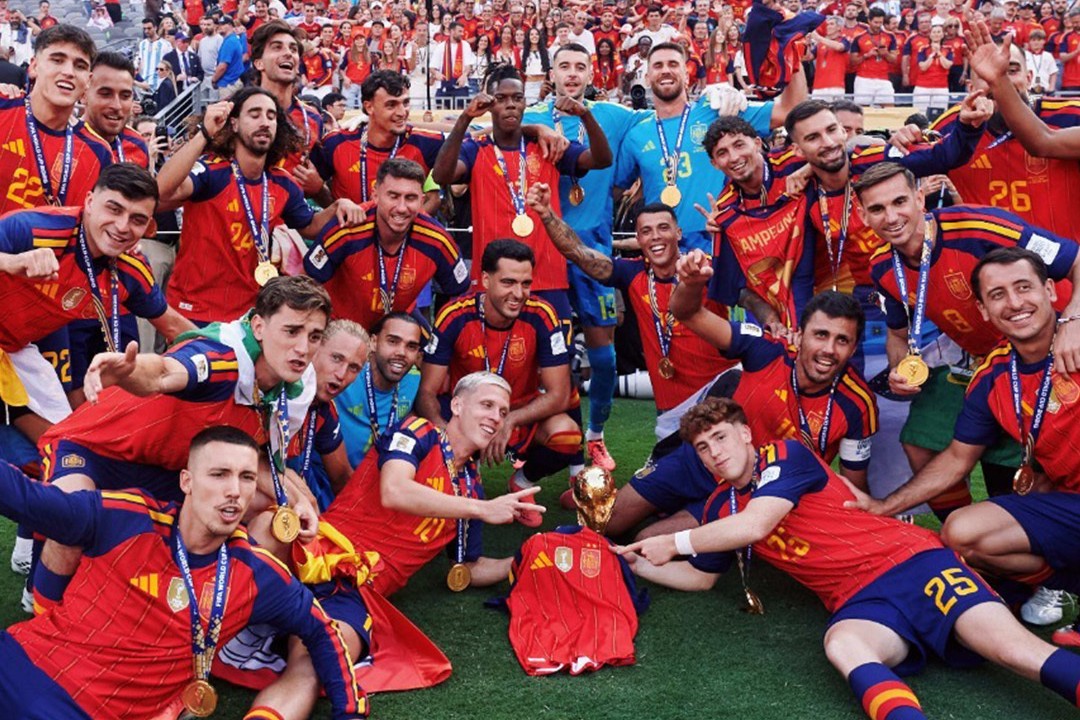
Fifa will on Sunday 19 July 2026 unveil revenue of roughly $15bn (£11.2bn) from the 2026 World Cup, according to a person briefed on the figures, a total that comfortably outstrips the governing body's pre-tournament projections and confirms the United States-hosted edition as the most lucrative single sporting event ever staged. Hospitality packages and a roaring secondary ticket market, where face-value seats changed hands at multiples of their original price on the open market, did most of the heavy lifting, alongside the standard mix of broadcast rights and sponsorship inventory sold off a now-familiar 48-team, 104-match template.
The headline number matters less for what it says about football than for what it says about the federation that runs it. A decade after Gianni Infantino took office promising to make Fifa richer than the clubs and confederations it regulates, the balance sheet now backs the boast. The $15bn print also lands at a moment when global sport is being re-priced around a small number of asset-hungry buyers, and when the United States is treating its 2026 footprint as a permanent platform rather than a one-off show.
A balance sheet, then a foreign policy
Inside Fifa, the windfall is read as a vindication of Infantino's centralising project. A federation that in 2015 was synonymous with Swiss federal prosecutors, extradited executives and a culture of backroom envelopes now files revenue numbers that would look respectable at a sovereign wealth fund. The windfall also gives Infantino political cover at a moment when his bid for re-election, and his taste for close relationships with Gulf and Asian state guests, are under more scrutiny than at any point since his first term.
The scale of the haul will not, however, sit quietly inside Zurich. The same week as the revenue announcement, the US Treasury and the Saudi Public Investment Fund both moved to expand their respective footholds in global sports assets, and the White House signalled, in its customary indirect way, that it views 2026 as a soft-power dividend rather than a one-off. Sport, in the language of the new Washington, is now 'critical infrastructure' in all but name.
The China question, served on a plate
The second thread from the post-tournament media tour is the more provocative one. According to a widely shared report from 18 July 2026, Infantino told associates that he had floated, half in jest, pairing the United States with China for a future World Cup, on the argument that players would enjoy the 'nice, short flight in between games'. The joke is older than the man telling it: co-hosted tournaments are the federation's preferred escape route whenever a single bidder cannot carry the cost of 48-team expansion, and a US-China axis would be the most politically charged co-hosting arrangement the federation has ever attempted.
Read straight, the gag is logistical: trans-Pacific flights are brutal on player welfare, and bundling North America with East Asia solves the problem. Read in context, it is something more pointed. A US-China World Cup would put the world's two largest sports economies on the same bid document, force both governments into the same broadcast rights conversation, and pull the People's Football Association deeper into a tournament infrastructure currently dominated by the United States, Mexico and Canada. Beijing's appetite for a coming-out party of this scale is an open question; that Fifa is now publicly sound-pegging the idea tells you how far the centre of gravity in the global game has already shifted.
A new map of who pays, who watches, who decides
The structural pattern here is not about Infantino, and it is not about the United States. It is about the re-pricing of attention. The broadcast rights for 2026 were sold into a market in which streaming platforms now bid against traditional networks, and in which the audience is no longer predominantly European; the largest single bloc of declared interest came from North America, the second from East Asia. The hospitality product, which drove a chunk of the new revenue, is essentially a dollar-priced luxury good sold to a globally mobile executive class, with all the geopolitical signalling that class carries with it.
The counter-read is straightforward: $15bn is a lot of money for a federation that, until recently, was the textbook case of how not to govern a global sport, and the windfall will be spent. The next World Cup is already on the calendar. The expansion of the Club World Cup, Infantino's pet project, has stretched the calendar in ways that are openly unpopular with the major European leagues and with FIFPro, the global players' union. More revenue means more room to ignore them. Critics will argue that the figure masks a federation ever more remote from the supporters who actually fill the lower tiers, and that the windfall will accelerate, not moderate, the conversion of the international game into a privately captured broadcast and hospitality product.
What the $15bn actually buys
Three things to watch in the next 18 months. First, whether Fifa uses the surplus to underwrite the 2030 centenary edition, which is already a six-country sprawl across Morocco, Spain and Portugal with three South American one-off matches in Argentina, Paraguay and Uruguay, a political compromise that the new balance sheet makes easier to finance. Second, whether the bidding for 2034, locked in to Saudi Arabia after a process widely described as a formality, accelerates infrastructure spending in the Gulf, and whether that in turn reshapes the Asian broadcast map. Third, whether the Infantino China joke hardens into a serious feasibility study, and which side of the Pacific asks for it first.
The honest caveat: the $15bn number is a federation self-report, due to be ratified in the coming days rather than signed off by an independent auditor at the time of writing, and the secondary ticket revenue in particular is an estimate rather than a settled line item. The shape of the post-2026 cycle is now legible even if the precise figure is still moving.
This piece leans on the financial framing of the World Cup as a piece of strategic infrastructure rather than a sporting fixture, an angle that most wire coverage has so far treated as a footnote to the trophy lift.
Wire provenance
This editorial synthesis draws on the following public wire/social posts:
- https://t.me/sport_analytics/2078569449133834241
- https://x.com/unusual_whales/status/2078569449133834241