Explosions in Erbil: what three wire dispatches actually say about the 19 July strikes
Three Telegram channels carried parallel reports of blasts and a consulate alarm in Erbil on 19 July 2026. The claims outrun the evidence, and that gap is itself the story.
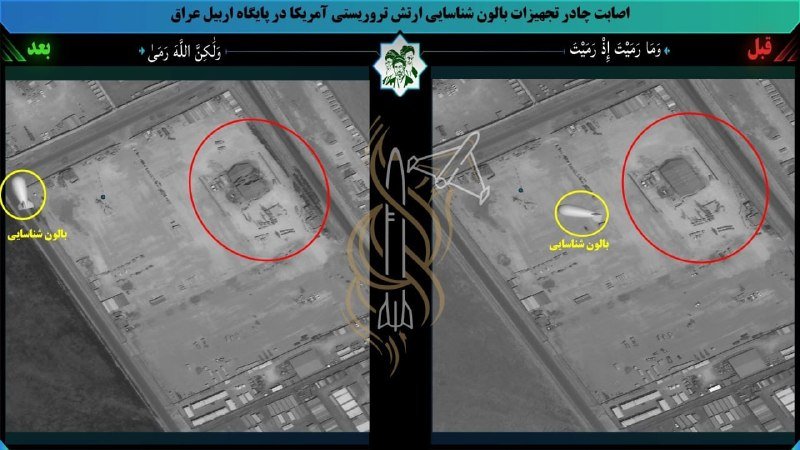
Heavy explosions were heard across Erbil, in the Kurdistan Region of northern Iraq, between 20:47 and 21:48 UTC on 19 July 2026, according to parallel dispatches carried by three Iran-aligned Telegram channels. The reports describe strikes against "separatist group positions" and a separate alarm raised at the United States consulate inside the city.
The claim that fits the pattern sits beneath the noise: an Iran-aligned actor, a US diplomatic presence, and an Iraqi Kurdish city that has hosted both since the 2003 invasion. What does not fit, on the evidence available within ninety minutes of the blasts, is any independent corroboration, any casualty count, or any party claiming responsibility. The story, in other words, is as much about how the initial wire picture is being assembled as about the strikes themselves.
What the three wires actually said
The earliest public message in the cluster is dated 20:47 UTC on 19 July 2026, when Tasnim News Agency, the Iranian state outlet closely associated with the Islamic Revolutionary Guard Corps, reported simply that "heavy explosions were heard in Erbil in northern Iraq." No target, no source, no toll.
A minute later, at 20:48 UTC, Al-Alam Arabic, the Arabic-language sister channel of Iranian state television, framed the same event more sharply: "Urgent – media sources: heavy explosions sounded in Erbil, northern Iraq." The phrasing "media sources" is the regional shorthand for unattributed claims recirculated up a Telegram graph.
An hour later, at 21:48 UTC, Fars News Agency, another Iranian state outlet, added two further claims. The first named "positions of separatist groups in Erbil" as the apparent target. The second reported that "alarm bells sounded in the American consulate in Erbil," citing "Iraqi sources." No Iraqi outlet, official or otherwise, appears in the cluster, and Fars did not name its Iraqi interlocutor.
The pattern is familiar. Tasnim and Fars operate as functionally interchangeable relay points for Tehran-aligned security narratives; Al-Alam extends that signal to an Arabic-speaking audience; the phrasing "separatist groups" is a standard Iranian code for Kurdish-Iranian opposition groups, several of which have, at various times, maintained a presence in the Kurdistan Region of Iraq. The consulate framing slots into a separate, longer-running Iranian complaint that US facilities in Iraqi Kurdistan host intelligence and liaison personnel beyond their declared diplomatic complement.
The counterweight, and what is missing
The cluster contains no claim of responsibility, no footage of impacts, and no official statement from the Iraqi federal government, the Kurdistan Regional Government, the US Embassy in Baghdad, the consulate in Erbil, or any Kurdish opposition group that might plausibly be described as a target. Reuters, the Associated Press, the BBC and Al Jazeera English are not yet in the record at the time of writing. That absence is itself diagnostic: in any strike on Erbil of meaningful scale, at least one Western wire would have moved a push alert within thirty minutes. The cluster's silence on that front suggests either that the blasts were smaller than first reports implied, or that the framing being constructed ahead of the facts is doing more work than the facts themselves.
The most plausible alternative read is that the event was a routine Iranian strike against an Iranian Kurdish opposition target, of the kind Tehran has conducted periodically in the Kurdistan Region since at least the 1990s, and that the "consulate alarm" line is a parallel narrative intended to signal Iranian awareness of the diplomatic compound rather than to describe any damage to it. That reading is consistent with Iran's stated doctrine of reserving the right to strike opposition infrastructure abroad, and with the past pattern of such operations producing loud regional coverage without US military retaliation.
The structural frame, in plain language
For roughly two decades, Erbil has functioned as the operational hinterland of three overlapping conflicts. It is the capital of an autonomous Kurdish region that sits inside a federal Iraqi state. It hosts US, Turkish and Iranian diplomatic and intelligence footprints within a few kilometres of each other. And it is the rear base, by long-standing Tehran's accusation, of Iranian Kurdish opposition groups that have carried armed campaigns into the Islamic Republic itself. Strikes inside the city therefore sit inside a recognised pattern, not an outlier: Iran signals that it will not tolerate what it calls separatist infrastructure on its western border, the US signals that it will not be deterred from a regional presence it considers legitimate, and the KRG absorbs the pressure while trying to keep its own internal politics out of the firing line.
The fresh ingredient in this round is not the geography but the framing race. Telegram channels associated with the Iranian state moved within minutes; Western wire confirmation was not visible in the cluster; and the most specific claim, about an alarm inside the US consulate, was attributed to unnamed "Iraqi sources." When the fastest reporting on an event in a city hosting the world's largest embassy footprint is being done by one side's official outlets, the consumer of the news is reading the first draft of one side's interpretation before anyone else's facts have been filed.
Stakes, and what to watch next
Three trajectories follow from the 19 July event, and they diverge sharply. If the blasts were an Iranian strike on an Iranian Kurdish opposition target, the regional reaction is likely to be muted: Baghdad will protest, the KRG will protest, Washington will issue a calibrated statement, and Ankara will quietly approve on the grounds that Iranian Kurdish groups have, at times, cooperated with the PKK's broader network. If the consulate was genuinely affected, the reaction will be louder and more procedural: a diplomatic note, a security review, a public statement from the State Department. If the event turns out to have been smaller than the initial framing implied, the Iranian-aligned narrative will recede within forty-eight hours and no Western wire will have moved beyond a paragraph.
The single most useful fact to watch is whether the US Embassy in Baghdad, the Kurdistan Regional Government's Council of Ministers, or any of the named Iranian Kurdish opposition groups issue a substantive statement before midnight UTC on 20 July 2026. Their silence, or their language, will tell readers more about what happened in Erbil on Sunday evening than any of the three dispatches now in the record.
This article relies on three Telegram-channel dispatches from 19 July 2026. Where Western wire confirmation has not yet appeared in the available record, this publication has said so rather than inferred around the gap.
Wire provenance
This editorial synthesis draws on the following public wire/social posts:
- https://t.me/JahanTasnim
- https://t.me/alalamarabic
- https://t.me/farsna