Eight Nights Over Iran: What the Strike Cadence Actually Tells Us
A week and a day of consecutive strikes against Iranian coastal and air-defence infrastructure has settled into a rhythm. Reading that rhythm honestly means admitting what the official line still will not.
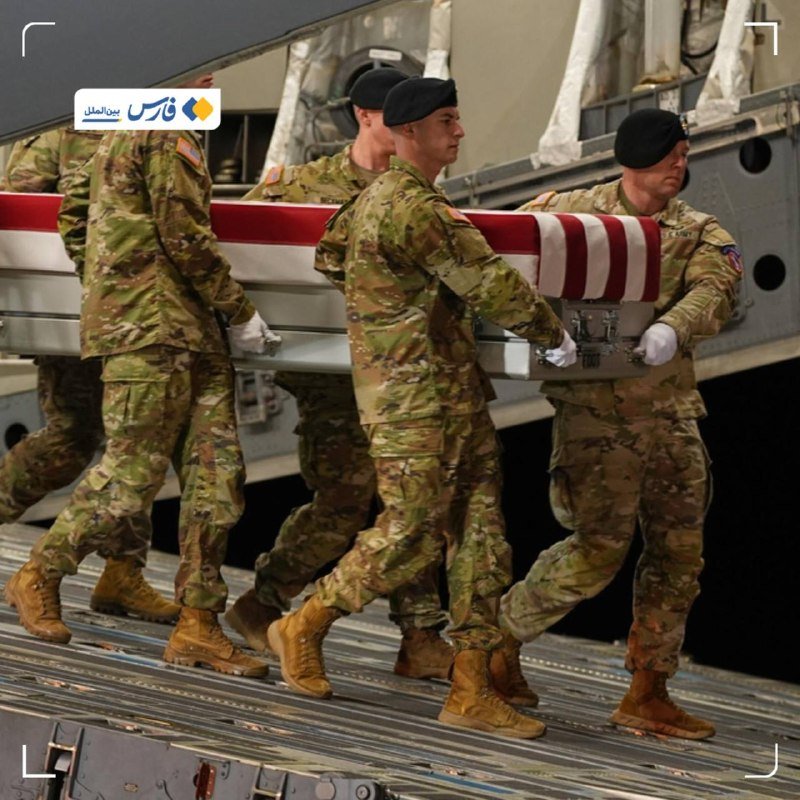
At 23:30 ET on 18 July 2026, U.S. Central Command finished its eighth consecutive night of strikes against Iranian military coastal-surveillance and air-defence infrastructure. The cadence, not the targets, is the story.
For roughly a week and a half, Washington has been hitting Iran on a clock. Strike at dusk, statement before midnight, repeat. CENTCOM's own announcements, republished in full on 19 July by the open-source channels tracking the campaign, read almost identically night after night: forces struck at the Commander in Chief's direction, the round completed, the targets were surveillance radars and air-defence nodes along the coast. A reader who only saw one press release could mistake it for the next. The repetition is doing political work; it is also doing analytical work, and the second part is where most coverage is dropping the ball.
What the official line actually says
The framing out of CENTCOM is surgical and narrow: retaliatory strikes, military targets, calibrated scale. The wording matters. Retaliatory places Iran as the originating actor; military targets rules out dual-use infrastructure and energy; calibrated leaves room for de-escalation without committing to it. Each announcement ends with a near-identical summary of what was hit, which lets the administration claim cumulative damage without ever offering a cumulative ledger of casualties, destroyed platforms, or strategic effect. This is the press release as deniable escalation: maximal target ambiguity, minimal political exposure.
There is a second layer, too. The targets named publicly, coastal surveillance and air-defence, are exactly the systems that would matter most if Iran attempted to close the Strait of Hormuz or interdict commercial shipping. Read narrowly, that is defensive signalling. Read structurally, it is the slow dismantling of Iran's ability to project conventional force into the waterway through which a significant share of global seaborne oil moves. Either reading is consistent with the press releases.
What the cadence implies that nobody on the brief said
A single retaliatory round is a message. Eight rounds in a row is a campaign. The shift from message to campaign is the part that has not been adequately interrogated in the Western coverage so far. A campaign has an objective, a trajectory, and an end-state. None of those have been articulated by the administration in a form the public can verify. What has been articulated, repeatedly, is the act of striking.
The open-source channels tracking the announcements, including OSINTdefender and the BellumActaNews re-post, have been the cleanest record of the campaign's tempo. Mainstream wires have lagged, leaning on Pentagon pool reporting that confirms the strikes after the fact but rarely surfaces the strategic question a literate reader is already asking: at what point does a campaign of retaliation become a campaign of regime pressure, and who decides?
Where the Iranian counter-frame lives
Iranian state media, predictably, has read the campaign as unprovoked aggression, a framing that does not survive contact with the record but is not empty either. The harder, more useful counter-read sits in independent regional outlets and in the work of analysts who note that Iran spent the spring and early summer rebuilding exactly the coastal-surveillance architecture now being struck. If that rebuilding is accurate, the strikes are not creating a new wound; they are reopening one. That distinction matters for any diplomatic off-ramp: you cannot de-escalate from a wound you have just inflicted twice.
There is also a structural point almost no Western coverage has made. The strike campaign is being run against Iranian assets that exist, in part, to deter the very kind of campaign now being executed. Whichever side you credit with original escalation, the loop is closed. Both Tehran and Washington have spent the last several months acting on the assumption that the other side is preparing to do what they are now doing.
The stakes, named plainly
If the strike cadence holds through August, three things become likely. First, Iran's coastal air-defence network degrades to the point where credible deterrence of a Hormuz closure becomes a question of submarine and missile forces, not radar coverage. Second, the diplomatic space for a face-saving pause narrows, because each round raises the domestic political cost on both sides of stopping. Third, the global oil market, which has so far absorbed the news cycle with measured price drift, loses the ability to do so as shipping insurance and route planning begin to price in a real, not theoretical, closure risk.
The serious case against the campaign is not that it is unjustified. It is that its objective has not been stated, its end-state has not been defined, and its success metrics are invisible. Eight nights in, that is no longer a transitional phase. It is the operating posture.
This publication reads the CENTCOM announcements as they are written and as the open-source record preserves them. Where the framing diverges from the underlying tempo, this publication says so.
Wire provenance
This editorial synthesis draws on the following public wire/social posts:
- https://t.me/osintlive
- https://t.me/BellumActaNews
- https://t.me/osintlive