Drake's $1.5M World Cup Bet Lands on a Final That's Already Reshaping Sports Prediction Markets
Drake has put $1.5 million in USDT on Argentina to beat Spain in Sunday's final, with a potential payout north of $5.17M. The wager lands on the first World Cup final hosted across three countries and on a halftime-show era the sport's old guard never planned for.
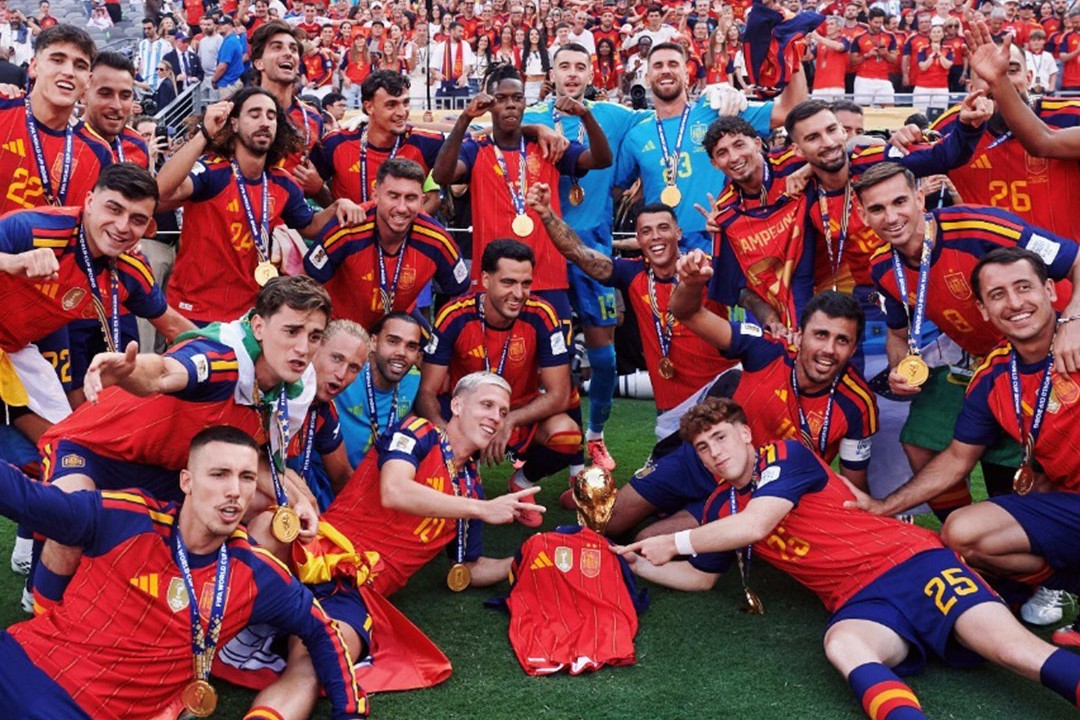
Drake has staked $1.5 million in USDT on Argentina to defeat Spain in the 2026 FIFA World Cup final, according to a WatcherGuru post at 15:11 UTC on 18 July 2026. At the posted price, a winning wager would return roughly $5.175 million, a 3.45x payout on the rapper's stake. The bet lands five days after the tournament's expanded 48-team format delivered its first truly global final, with the showpiece scheduled for MetLife Stadium in East Rutherford, New Jersey, on Sunday 19 July 2026.
The wager is small next to the underlying market it touches. Sports prediction platforms have absorbed more than $1 billion in volume on this tournament alone, according to industry estimates circulated since the group stage, and crypto-native venues now price match outcomes in seconds rather than the minutes that used to define in-play trading. Drake's slip, posted the day before the final, is not the story. The story is what it tells us about a financial layer of professional sport that didn't exist a decade ago and now sets the tempo.
A final that already broke format
The 2026 tournament is the first World Cup staged across three host nations, the United States, Canada and Mexico, and the first to include a halftime show, an overture to American broadcast economics that the traditional football federations have treated warily. WIRED's how-to-watch guide, published 09:00 UTC on 19 July 2026, frames the final as a moment when the sport's centre of gravity has visibly shifted toward the North American broadcast product. Spain–Argentina is the kind of fixture that doesn't need ornamentation, but the halftime show now joins the trophy ceremony as scheduled television. Argentina, chasing a third star and a defence of the title it won in Qatar in 2022, faces a Spain side whose possession-based midfield has been the tournament's most-watched tactical project.
The bet, the rails, and the price of fame
USDT, the dollar-pegged stablecoin issued by Tether, has become the default unit of account for celebrity wagers and offshore sports books in the last 24 months. That shift has nothing to do with consumer preference and everything to do with settlement: a stablecoin transfer settles in minutes, crosses borders without correspondent-banking friction, and arrives at the book already dollar-denominated. Drake's choice of rail is itself the news; the choice of side is a function of which team the global fan economy has already priced as the favourite.
Prediction markets, both regulated exchanges and offshore books, currently price Spain as a narrow favourite. Argentina sits at longer odds, which is why Drake's stake would return $5.175 million on a victory rather than the $2.4 million a similar wager on Spain would have paid. The implied probability embedded in the Argentine price suggests the market sees the Albiceleste as roughly a 29% chance, a discount that reflects Spain's group-stage dominance and Argentina's injury-softened attacking line.
What Drake's slip reveals about the new sports economy
Celebrity wagering has evolved from novelty to a parallel promotional layer. A high-profile push on a major final does three things at once: it liquidates the bookmaker's position into a global audience, it advertises the stablecoin rail, and it manufactures a narrative that travels further than any official broadcast clip. Drake has done this before, with mixed results; the Streak, as his betting record is sometimes called, has produced enough high-profile losses that his picks now move odds on their own.
The structural read is simpler. A $1.5 million position is not material to any serious prediction venue; it is meaningful as a signal. Platforms reward that signal by promoting the bet to retail flow, and retail flow follows celebrity endorsement more reliably than it follows injury news. The result is a feedback loop in which a single Telegram post moves handle odds on a final watched by an estimated two billion viewers.
Stakes beyond the scoreboard
If Argentina wins, the payout flows back through the same stablecoin rail that funded the stake, a circular settlement that leaves no bank in the middle. If Spain wins, the position expires worthless and the USDT stays with the counterparty, almost certainly a crypto-native book operating outside the United States. Either outcome ratifies a market structure in which the largest single-game wagers on the planet clear without touching the dollar payments system.
For regulators in Washington, Brussels and Buenos Aires, the question is no longer whether these flows exist but whether to integrate, tax or quarantine them. The first World Cup final with a halftime show will also be among the first whose most-publicised individual wager was denominated in a token rather than a currency. The result will be filed somewhere on a blockchain within hours of the final whistle; the regulatory response will take rather longer.
Wire provenance
This editorial synthesis draws on the following public wire/social posts:
- https://t.me/watcherguru