Three dead in two days: what the CENTCOM communiqués actually tell us
Within 36 hours, U.S. Central Command confirmed two soldiers killed and one missing in Jordan and a third killed in northern Iraq. The wire reads it as two stories. The pattern reads as one.
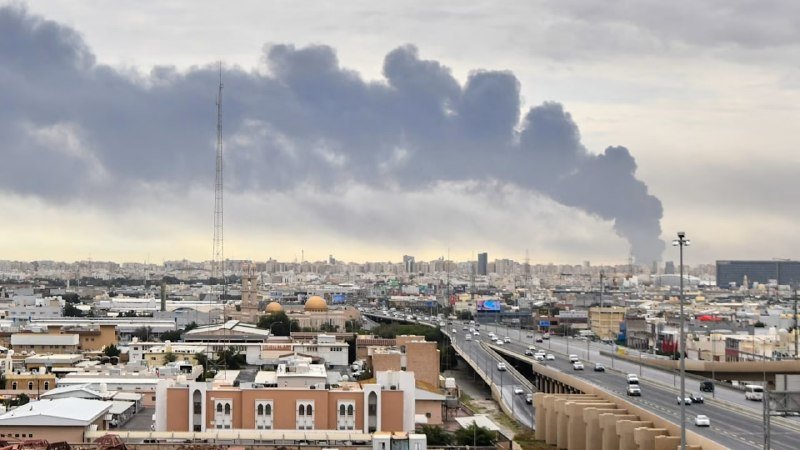
Two U.S. soldiers were killed and a third went missing in Jordan on 17 July during what U.S. Central Command has now confirmed was an Iranian drone and missile attack. By 19 July 2026, CENTCOM had recovered the remains of the missing service member in Jordan and disclosed a separate fatal incident in northern Iraq the previous day. Three Americans dead in 36 hours, on two fronts, in a week the White House has spent insisting the file is contained.
The shape of the next forty-eight hours will be set less by the casualties themselves, which are small by the standards of America's post-2001 footprint in the region, than by the gap between Washington's de-escalation script and the rate at which Iranian-aligned forces are still able to test it. That gap is the story.
What CENTCOM has confirmed, in order
The official timeline, as reconstructed from the CENTCOM statements relayed by Reuters and Middle East Spectator on 19 July, runs like this: on 17 July, Iranian drones and missiles struck a U.S. position in Jordan; two service members were killed, a third was listed as missing, and search operations were launched. On 18 July, a separate service member was killed in northern Iraq. On 19 July, CENTCOM announced that unidentified remains had been recovered in Jordan, that they are undergoing forensic identification, and that the death in Iraq is now formally confirmed.
Reuters, citing U.S. Central Command, reports that the service member killed in Iraq was the third soldier whose body was recovered under the rubble in Jordan, per a separate CENTCOM statement circulated by Al-Alam Arabic on 19 July. Read flat, the wire says two dead in Jordan, one dead in Iraq. Read in the order CENTCOM actually released the updates, the sequence is closer to: two in Jordan, then a third body recovered in Jordan, then a fourth disclosure in Iraq. The discrepancy is small, but it is exactly the kind of detail that gets smoothed over in cable-news edits and sharpened in the subsequent investigation.
The framing contest
U.S. officials, on the record via CENTCOM, are calling the Jordan incident an Iranian attack. Tehran has not, in any of the items circulating on 19 July, publicly claimed the strike. That asymmetry matters. American framing treats the 17 July engagement as Iranian aggression; Iranian state-adjacent channels treat it as a battlefield outcome against "the American enemy," a phrase Al-Alam Arabic uses in relaying the CENTCOM statement itself, not in any claim of responsibility. The Middle East Spectator bulletin goes further, attaching an Iranian flag to the U.S. Central Command announcement.
Until Tehran acknowledges the strike, the dominant Western framing rests on attribution work done by U.S. intelligence and on the pattern of past incidents. That pattern is real: Iranian proxy strikes on U.S. positions in Syria and Iraq have been a recurring feature of the regional file for two years. But pattern is not proof, and the press should be careful to mark which sentences in this story are CENTCOM's assessment and which are established fact.
What the cadence tells you
Three confirmed deaths in roughly 36 hours, across two countries, against the backdrop of a diplomatic track that the Trump administration is publicly confident about. The tempo is the tell. A negotiated de-escalation should, on its own logic, suppress this tempo. The fact that it has not suggests either that the negotiating track is narrower than the public read, or that Iranian decision-makers have decided the cost of low-level probing is still tolerable.
There is a third reading, less flattering to the White House script: that the strikes are not probing but retaliatory, calibrated responses to an Israeli or U.S. action that has not yet been publicly attributed. The sources circulated on 19 July do not name such a trigger, and this publication will not manufacture one. The reading is on the table because the diplomatic record contains unaccounted-for Israeli strikes in Syria and Lebanon over the same window, and because neither Tehran nor Washington has any incentive to disclose the chain publicly.
What to watch by Tuesday
The forensic identification of the Jordan remains will close one loop. A formal U.S. attribution memo, if one is produced, will close another. Until then, three things are worth tracking: any Iranian foreign ministry statement that names the strikes; any change in the disposition of U.S. forces in Iraq and Jordan (the kind of force-protection step that, in this corridor, has historically preceded escalation); and whether the Iraqi government requests a public accounting under the U.S.-Iraq framework agreement, which it has done twice before after incidents on Iraqi soil.
The dead are not abstractions. Three American families are now navigating the same bureaucratic choreography that has followed hundreds of similar notices since 2003. If the de-escalation script holds, their names join a list that does not change policy. If it does not, the tempo that produced them is the one the next story will be written about.
Desk note: Monexus treats the 17–19 July CENTCOM disclosures as a single operational window rather than two unrelated stories, and flags that Iranian attribution rests on U.S. assessment until Tehran itself speaks.
Wire provenance
This editorial synthesis draws on the following public wire/social posts:
- http://reut.rs/4fmcVbd
- https://t.me/alalamarabic
- https://t.me/alalamarabic
- https://t.me/Middle_East_Spectator
- https://t.me/wfwitness