Three names, two borders, one unanswered question
CENTCOM has now named three dead American service members across Iraq and Jordan. The harder question, the one Washington is not yet answering, is what comes next.
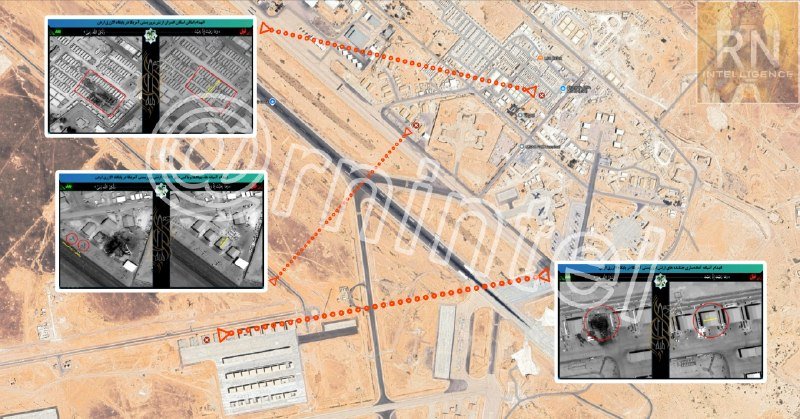
Three American service members are now confirmed dead across two countries in a 24-hour span. U.S. Central Command said on 19 July 2026 that two U.S. service members were killed in action in Jordan and that a third, previously listed as missing, is now accounted for through "unidentified remains" that are being examined and verified. A fourth U.S. service member was killed, and one wounded, in a separate incident in Iraq's Kurdistan region during what CENTCOM described as a "controlled" operation that drew Iranian drone fire, according to wires circulating on Telegram channels Disclose.tv and OSINT Live. The Iraqi strike came a day after the Jordan incident.
The news cycle will move on by Tuesday. The structural problem will not. Three flag-draped transfers on three different runways will not, on their own, force a recalibration of U.S. posture in the Levant or Mesopotamia. They will, however, become the prompt for one.
What the wires actually say
Strip the cross-talk and the picture is narrow but specific. CENTCOM's 19 July update, carried by Disclose.tv on X and by the osintlive and megatron_ron Telegram channels, identified two service members killed in Jordan and one previously missing whose "unidentified remains" are now being processed. A second CENTCOM advisory, surfaced by rnintel on Telegram at 20:12 UTC, reported a U.S. service member killed in northern Iraq's Kurdistan region by an Iranian drone strike, with the incident occurring the day prior. That makes at least three confirmed U.S. fatalities inside 24 hours across two theatres that Washington, for domestic-comms purposes, insists are not one war.
The bare facts leave the larger questions blank. CENTCOM has not named the units involved, has not released the deceased, has not specified whether the Iraq strike was an active operation, a logistics convoy, or a forward operating base hit. Iranian state media have not, as of the time of writing, claimed either incident. The Jordan attack's attribution also remains officially unresolved: no Iranian proxy has stepped forward.
The framing the Pentagon is reaching for
The institutional instinct is containment. Two incidents, two theatres, two sets of next-of-kin notifications. One set of remains that requires DNA. One investigation that may never produce a public finding. The political grammar is designed to keep these from collapsing into a single narrative, because a single narrative has a name, and that name usually comes with a vote in Congress.
Containment is a perfectly defensible operational posture. It is also the framing that has produced every drift of the past two decades. Each Iranian-aligned strike on a U.S. position, from the 2023 tower incidents in Syria to the 2024 drone attack that killed three at Tower 22 on the Jordanian border, has been absorbed as a discrete event, mourned as a discrete event, and answered, if answered at all, by a discrete retaliation. The pattern is not new. What is new, on this July evening, is that the pattern has now crossed two sovereign borders inside a single news cycle.
The case the official silence is hiding
The harder, less convenient read is that the events of 18 and 19 July cannot be processed as three separate tragedies without ignoring the operating reality. Iran-aligned militias in Iraq and Syria have, for three years, run a calibrated pressure campaign against U.S. positions: drones one week, rockets the next, a "warning" attack the week after, designed to probe air defences and to test Washington's pain threshold without crossing it. The Jordan incident does not obviously fit that pattern. Tower 22 in January 2024 did. The drone that hit northern Iraq on 18 July, if the CENTCOM read holds, fits it more cleanly still.
What the official silence is hiding is the cumulative answer. The U.S. posture in Iraq and Syria has been, for two administrations, a hold-the-line posture, justified as a counter-ISIS mission that long ago ceased to require the force levels deployed. The troops are there because leaving would be read, by Tehran and by every militia in its orbit, as withdrawal. Staying has a price. The price, this week, is three names.
What it means, and what it does not
The hawkish conclusion is that deterrence has failed and the response should escalate. The dovish conclusion is that the only way to stop the meter running is to bring the force posture home. Both reads misread the structural fact. The U.S. presence in Iraq and Syria is not a deterrent in the strategic sense; it is a tripwire, and tripwires have a defined function. They register a breach. The question, which the Pentagon is not yet answering in public, is what registers as the breach that pulls the trigger.
That is the work the next 72 hours will do, whether or not anyone in Washington chooses to speak on camera. The release of the names of the fallen, the medical evacuation of the wounded, the family notifications, and the first CENTCOM after-action read will arrive in sequence. None of them will resolve the structural question. They will, however, narrow the field of what the policy response has to look like.
Three names, two borders, one unanswered question. The next sentence belongs to the Pentagon. The sentence after that will belong to whoever, in Tehran or Baghdad or Amman, decides what the answer is worth.
Monexus framed this as a structural question about U.S. posture in Iraq, Syria and Jordan rather than as a casualty story. The wires are carrying it as the latter. The harder read is the former.
Wire provenance
This editorial synthesis draws on the following public wire/social posts:
- https://t.me/disclosetv
- https://t.me/osintlive
- https://t.me/megatron_ron
- https://t.me/rnintel