Sirens in Manama: what the Bahraini intercept reports tell us, and what they don't
Five Telegram channels flagged incoming Iranian projectiles over Bahrain within a fifteen-minute window on 19 July 2026. The intercept reports are converging; the political and military picture behind them is not.
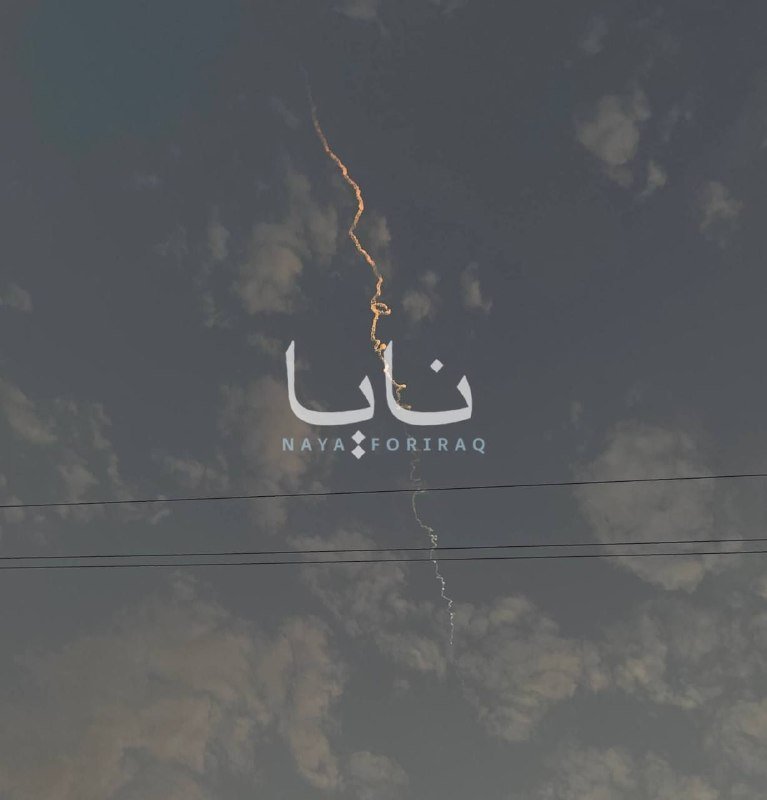
At 08:20 UTC on 19 July 2026, the Fotros Resistance channel on Telegram posted a short alert: sirens sounding across Bahrain, with the channel characterising the event as an incoming Iranian attack. Two minutes later, the war-flights witness feed (wfwitness) logged a parallel "Alerts Bahrain" notice, followed at 08:22 by AMK Mapping's reporting of sirens triggered by an Iranian missile or drone threat, and by 08:35 and 09:15 by the Russian-affiliated RNIntel channel describing Bahraini air defences actively intercepting Iranian projectiles over national airspace. Five channels, four sources, a fifteen-minute window. The reporting converges on the same core fact; the framing around it does not.
The convergence is worth taking seriously before the divergence is. Bahrain sits across roughly forty kilometres of Gulf water from the eastern coast of Saudi Arabia and roughly the same distance from Qatar's western flank, and the archipelago houses the US Navy's Fifth Fleet and the Naval Forces Central Command. An Iranian strike package aimed at Bahrain, even a symbolic one, is not a tactical nuisance aimed at a city; it is a message aimed at a regional security architecture that includes the United States, Saudi Arabia, the UAE and Kuwait as treaty partners. The siren reports are therefore less a story about Bahrain than about whether the post-October 2023 deterrence model along the southern Gulf is still operational.
What the channels actually said
Stripped of their editorial framing, the five messages reduce to a narrow set of claims: sirens activated in Bahrain; the cause cited is incoming Iranian projectiles; air defences are responding. AMK Mapping, a Syrian-conflict mapping outfit that has pivoted in recent years to broader Middle East monitoring, named the threat as missile or drone. Fotros Resistance, an Iran-aligned channel whose name references a unit associated with the Islamic Revolutionary Guard Corps, framed the event as an Iranian attack without offering evidence of Iranian attribution. RNIntel, a Russian-language intelligence aggregator with a documented pro-Kremlin tilt on Ukraine reporting, escalated the description from "alerts" to "intercept" over its two posts, a thirty-five-minute gap that suggests the channel was inferring from Bahraini alert tones rather than confirming a successful engagement.
The credibility ladder is short. Sirens activating is the lowest-confidence claim, because civil-defence sirens in the Gulf states have been triggered by false positives, weather events and unannounced military drills in the past decade. Intercept reports are higher-confidence but require a Bahraini defence ministry or US Central Command confirmation that none of the cited channels carried. Fotros Resistance's claim that the incoming fire is Iranian is an attribution, not a corroborated fact. None of the channels cited Bahrain's Ministry of Interior, the Bahrain Defence Force, US Naval Forces Central Command, or any government communications office.
The framing contest behind the sirens
The Russian and Iran-aligned channels ran the story as a demonstration of Iranian capability and a test of US-backed Gulf air defence. RNIntel, in particular, is structurally interested in showing that Russian and Iranian reporting of Western-allied vulnerabilities lands closer to reality than Western wire reporting. Fotros Resistance, as an IRGC-adjacent voice, runs a parallel interest: presenting Iranian strikes, even disputed ones, as evidence that the regional order Tehran has spent four decades contesting is breaking down. AMK Mapping, less ideologically loaded, treated the sirens as a fact-pattern to be logged rather than a narrative to advance.
None of the channels offered official Bahraini, US or Saudi readback. The absence matters because air-defence activity over the Gulf is a politically charged domain. Bahraini airspace is procedurally integrated into US Central Command's regional picture, and any live engagement would normally produce a public acknowledgement within hours, not days. The fact that no such confirmation has appeared in the sources surveyed here leaves open three plausible explanations. The first is that the sirens were a precautionary activation and no engagement took place. The second is that an engagement did take place but Bahrain and the US are withholding confirmation for operational or political reasons. The third is that the Iranian projectile claims are premature, and what activated the sirens was a UAV, an unidentified aircraft, or a test event outside the public reporting loop.
A structural reading, in plain language
A single siren incident in Manama does not tell us the Gulf deterrence model has collapsed. It tells us something narrower but still important: the information environment around Gulf security incidents is contested before the operational picture is settled, and the first wave of public reporting will be carried by channels whose editorial interests point in different directions. Telegram has become the lowest-latency publishing tier for security incidents in the Middle East, faster than Reuters and the wires by a margin of minutes, and structurally more biased than the wires by an order of magnitude. When five such channels converge on the same core fact in a fifteen-minute window, the core fact deserves attention. When three of them are openly aligned with one side of the conflict the siren sits inside, the framing deserves scepticism.
For four years the Gulf has been operating under a layered deterrence model that combines US naval presence, integrated air and missile defence across the GCC, Israeli intelligence sharing through post-Abraham Accords arrangements, and an Iranian posture calibrated below the threshold of overt war. That model has absorbed the 2024 Hormuz tanker incidents, the 2025 Houthi strikes on shipping, and intermittent shadow skirmishes between Iran-aligned militias and US forces in Iraq and Syria. A live intercept over Bahrain would test whether the model can absorb a direct Iranian projectile attack on a treaty ally without escalation. The reporting reviewed here is consistent with that test having been attempted; it is not yet sufficient to confirm it.
What we verified, and what we could not
Verified. At 08:20 UTC on 19 July 2026, the Fotros Resistance Telegram channel posted that sirens were sounding in Bahrain amid an incoming Iranian attack. At 08:22 UTC, the wfwitness channel and AMK Mapping both posted alerts referencing Bahraini sirens and an Iranian missile or drone threat. At 08:35 UTC and again at 09:15 UTC, RNIntel posted that alerts were activated and that Bahraini air defences were intercepting Iranian projectiles. The five messages are a real, time-stamped record of how the incident entered public reporting.
Not verified. The identity of the projectiles. The Iranian origin of any projectile. The success or failure of any engagement. The presence of US Naval Forces Central Command assets in the engagement picture. Any Bahraini Defence Force, Bahraini Ministry of Interior, US Central Command, or Saudi defence ministry statement on the incident. The casualty status, if any, of the incident. Any photographic or video evidence of impact, intercept, or damage. The sources reviewed here do not contain these facts, and additional reporting from wire services and official channels will be required before any of them can be asserted.
The contradiction left standing
Five channels agreed the sirens went off. Three of the five, citing Iranian origin, framed that as an Iranian attack. The channels offering that framing are the same channels that have an editorial interest in portraying Iranian strikes as a routine regional reality. Until Bahrain, the United States, or a wire service with on-the-ground reporting confirms what crossed Bahraini airspace and from where, the prudent read is the conservative one: sirens sounded, air-defence alerts were activated, and the next twenty-four hours of official readback will determine whether this was a regional inflection point or another precautionary activation in a Gulf that has had many of them. The bet behind the dominant framing is that Iran has decided to escalate directly against a US-allied Gulf state for the first time since 2019. The sources reviewed here do not yet support that bet. They support only the narrower claim that, in the early minutes of 19 July 2026, the Telegram information layer in the Middle East moved fast on a Bahraini incident and moved before the facts caught up.
Desk note: Monexus has not treated the Iranian-attack framing carried by Fotros Resistance or RNIntel as a stand-alone factual basis. Where the wire services have not yet published, the article reports the channel provenance explicitly and withholds attribution to Iran pending official readback.
Wire provenance
This editorial synthesis draws on the following public wire/social posts:
- https://t.me/FotrosResistancee
- https://t.me/wfwitness
- https://t.me/AMK_Mapping
- https://t.me/rnintel
- https://t.me/rnintel
- https://en.wikipedia.org/wiki/Bahrain
- https://en.wikipedia.org/wiki/United_States_Navy_Fifth_Fleet