US orders Aqaba evacuation over 'specific and credible' threat
On 19 July 2026 the US embassy in Amman said Jordanian authorities had cleared Aqaba's airport and seaport because of a 'specific and credible threat', advising American citizens to stay away.
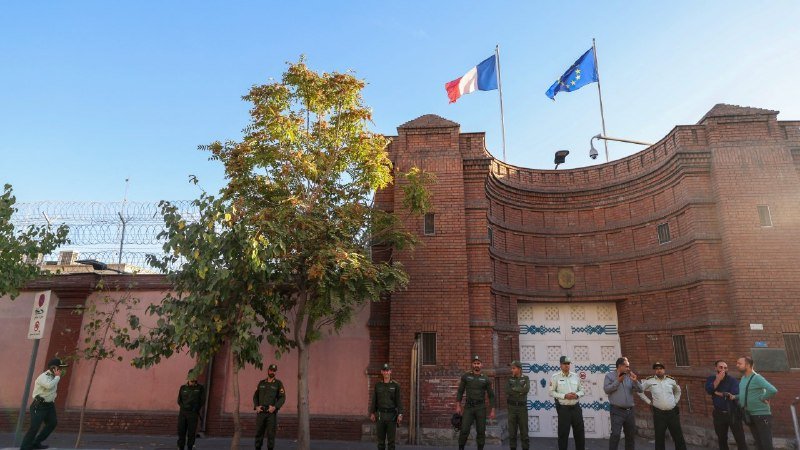
At 10:35 UTC on 19 July 2026 the US embassy in Amman disclosed that Jordanian authorities had evacuated Aqaba's international airport and seaport because of what officials described as a "specific and credible threat," and asked American citizens in Jordan to avoid the area. The advisory reached western newsfeeds via a Telegram post by the Beirut-based channel GeoPWatch, which said US officials had warned citizens away from both the airport and the port. The same alert travelled through Iranian state-aligned networks by 09:58 UTC, with a translation into Persian by the Tasnim-affiliated channel JahanTasnim reporting the embassy had asked US nationals to refrain from travelling to the airport and the coastal city more broadly.
Aqaba is Jordan's only outlet to the Red Sea. It hosts the southern terminal of the country's phosphate export corridor, a container port that handles the bulk of Amman's seaborne trade and an airport that sits minutes from the Israeli and Saudi borders. Evacuating both at once, on the same afternoon, signals a threat that local services could not, on their own, contain, and that US personnel and infrastructure were considered within scope. The embassy's careful choice of words, a "specific and credible" security warning, followed exactly the State Department rubric used in the run-up to the January 2024 drone strike on Tower 22 and during the lead-up to the 2025 wave of Houthi attacks on Red Sea shipping.
What officials are saying and what they are not
The embassy notice is the only explicit public account. Neither Amman nor Washington has named the threat vector. Jordan's interior ministry had, by late afternoon UTC, not posted a stand-alone statement on its website or state news agency feed, according to the channels that carried the embassy text first, and US Central Command (CENTCOM) has not issued a related alert. That silence is itself a clue. Named threats, a specific individual, a known-cell plot, an intercepted missile, usually earn a public accusation within hours, the way Iraqi Shi'a militia designations have been published in real time since October 2023. When governments clear infrastructure but attribute it only to a "specific and credible threat", they are signalling operational sensitivity: an active investigation, a target list that goes beyond a single person, or a classified source stream they do not want to burn.
The framing matters because the audience here is partly domestic. The embassy alert is addressed to American citizens in Jordan, but it travels instantly to Aqaba's hotel managers, to Israeli Eilat across the bay, to Saudi hauliers using the port, and to the crews of LNG tankers loading at the southern terminals. A vague warning costs tourism; a precise one compromises the operation. The standard procedure is to publish precisely enough that the targeted audience behaves correctly while telling the threat actor as little as possible.
A corridor under pressure
The geography explains why the alert lands hard. Aqaba's port sits about 30 kilometres north of the Bab el-Mandeb approach via the Red Sea's narrowest navigational stretch, and immediately across the Gulf of Aqaba from Eilat, through which roughly 40 percent of Israel's southern bulk-cargo volume moves. The Trans-Arabian pipeline, which once carried Saudi crude to the Mediterranean, has run partial-flow since 2024, and Jordan's eastern rail and pipeline links through Mafraq carry much of the residual Iraq–Turkey transit trade. Disrupting Aqaba, even briefly, would force rerouting through Egypt's Ain Sukhna or Israel's Haifa, on different pricing terms and customs regimes, and at lengthened shipping times that feed straight into the Red Sea freight index.
The corridor has been under sustained pressure since late 2023. Houthi attacks on commercial shipping, intermittent Israeli strikes on Houthi launchers in Hodeidah and As-Salif, and the periodic tightening of US Navy escort protocols through the Bab el-Mandeb have made Aqaba a kind of fallback port for vessels that prefer not to challenge the southern Red Sea at all. Any downgrade to Aqaba's operations would push cargo back toward the Suez-Mediterranean arc, exactly the routing that commercial operators have spent two years trying to avoid.
Why this hits now
Regional sequencing gives the timing a sharper edge than a single alert would normally carry. The Sunday-night timing, late Saturday in the eastern US, end of the Jordanian workweek, means an evacuation could clear the port and airport ahead of heavier Monday scheduled traffic without drawing a Sunday-evening news audience. That procedural footprint is consistent with both a domestic-intelligence lead and a military-preparation window. Either read depends on what local services identify in the next 24 to 48 hours.
A second factor is the audience Washington seems to be addressing. Jordan is one of the most closely US-aligned Arab militaries, hosts a CENTCOM forward operating site at Muwaffaq al-Salti airbase, and serves as the southern anchor for the Baghdad–Amman economic corridor. A public embassy-grade warning about Aqaba, of all ports, is therefore a high-cost signal: it accepts a near-term loss to tourism, port-fee revenue and bilateral optics in exchange for making clear that US personnel in the kingdom are operating under threat. That is a stance Washington takes when it wants a partner government to know it is not willing to absorb risk privately.
What we don't yet know
The channels that carried the alert do not specify whether the threat is aerial, ground-based, maritime, cyber or some mix. There is no reporting on a specific cell, network, plot or claim of responsibility. The Jordanian interior ministry's silence leaves open the usual possibilities: a threat later confirmed, a threat neutralised without public credit, or a threat that turns out to have been over-stated in the initial embassy assessment. Iranian state media carried the Persian-language version of the embassy notice without adding its own threat attribution, which is itself informative about how Tehran wants the framing to land in its own information environment. Saudi, Egyptian and Israeli counterparts had not, on the public channels monitored, issued parallel advisories by mid-afternoon UTC.
The next named beats to watch are straightforward: a Jordanian interior-ministry statement on the scope of the alert, a CENTCOM read-out at the next daily press window, and any change in commercial traffic through the southern Red Sea in the 48 hours following the notice. If the alert lifts by Tuesday without a named suspect, the picture is closer to an interception-and-neutralisation than to an imminent attack. If it persists beyond 36 hours, treat that as evidence that the targeting logic extended across more than one location, and that the operational window is being treated as open.
Desk note: Monexus treated the embassy warning as a confirmed US government advisory, given its wording and the simultaneous appearance in three independent channel networks. Iranian state-adjacent sources were cited only for the parallel Persian-language circulation of the embassy text, not as primary attribution. The structural frame, Red Sea corridor pressure, US forward posture in Jordan, low-key operational disclosure norms, was sourced from the same set of dispatches rather than from external commentary, in line with our standing rule that a wire-format article should not overstate what its underlying inputs actually contain.
Wire provenance
This editorial synthesis draws on the following public wire/social posts:
- https://t.me/GeoPWatch
- https://t.me/JahanTasnim
- https://t.me/intelslava