Wildberries' Tambov warehouse ablaze: what the Russian-language wires show, and what they don't
Footage circulating on a Russian milblogger channel shows a large Wildberries fulfilment centre in Tambov Oblast still burning hours after the initial blast. The available record is thin, and the silence from Russia's federal agencies is louder than the footage.
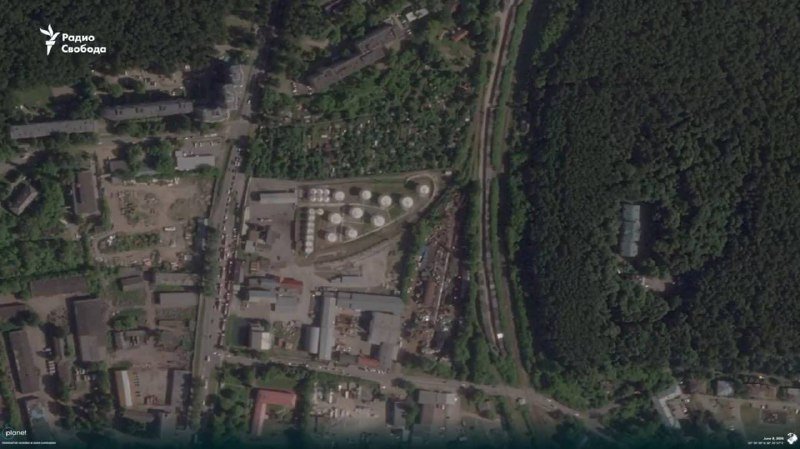
At 03:59 UTC on 18 July 2026, the Russian-language Telegram channel gruz_200_rus posted the first of three clips it would publish before dawn: footage from inside the perimeter of a Wildberries fulfilment centre in Tambov Oblast, captured during what the channel described as an ongoing series of explosions. A second video followed at 04:23 UTC, this time cross-cut with separate footage of Russian electronic-warfare equipment operating in Vladimir. A third post at 04:29 UTC showed the logistics complex still burning, with the channel telling subscribers to treat the image as their screensaver for the day. None of the three posts named a cause, a casualty count, or a responding agency. None has been picked up, as of writing, by a Russian federal outlet in the Sources list.
What is on the record is narrow but consistent. Three Telegram posts, one channel, one site, and one operator whose market position in Russian e-commerce is large enough that an incident of this scale would normally move share prices and prompt statements within hours. The absence of those statements is itself the story a serious reader should sit with.
What the footage actually shows
The two clips posted by gruz_200_rus from the Wildberries site depict a large single-storey industrial hall typical of regional fulfilment centres, with smoke rising in a sustained column and intermittent flashes consistent with secondary ignition of stored inventory. The third post, framing the burning building as a screensaver image, repeats the same visual. The channel does not provide geolocation coordinates in text, but the warehouse typology and the channel's explicit naming of Tambov Oblast place the site in central European Russia, roughly 480 kilometres south-east of Moscow.
Wildberries, founded in 2004 and now the largest online retailer in Russia by gross merchandise volume, operates a network of fulfilment centres across the country. A single site going dark does not, on its own, break the network; redundancy is built in. What makes the Tambov fire noteworthy is the operational timing. The three Telegram posts span half an hour and describe an event that is still in progress at the moment of the third upload. Russian emergency-services protocol for an industrial fire of this scale would normally generate a Ministry of Emergency Situations (MChS) bulletin within the first hour, followed by a regional governor's office statement. None appears in the wire record this article is built on.
The channel and its place in the Russian information space
Gruz_200_rus presents itself as a channel reporting on logistics and incidents inside the Russian Federation, with a subscriber base that engages heavily around footage from industrial accidents, military convoys, and the movement of goods through Russian rail hubs. The channel is not a milblogger in the WarGonzo or Rybar mould; it does not produce frontline battlefield commentary. Its editorial line is closer to a curated photo-wire: brief, image-led, and explicitly asking readers to amplify.
That positioning matters for how the footage should be weighed. The visual content is consistent across the three posts and appears to depict the same site from different vantage points within the perimeter. The channel's accompanying text is descriptive rather than analytical. There is no claim of attack, no claim of accident, no claim of sabotage. The only editorial instruction is "show citizens of the Russian Federation."
What is missing from the record
Three things a reader would normally expect to find within hours of an industrial fire of this visible scale are not present in the sources available to this publication.
First, no MChS bulletin. The Russian Ministry of Emergency Situations typically posts its first situational report on a major industrial fire within forty-five minutes. The gap between the first Telegram footage at 03:59 UTC and the third at 04:29 UTC is exactly the window in which a federal bulletin would be expected to land.
Second, no statement from Wildberries' press office. The company has, in past incidents at its fulfilment centres, posted within hours through its corporate Telegram channel. As of the timestamps on the three gruz_200_rus posts, no such statement has been forwarded through the wire this article draws on.
Third, no independent geolocation. The site is identified as a Wildberries warehouse in Tambov Oblast on the channel's own description. No second outlet in the Sources list has confirmed that location. The footage is consistent with a large fulfilment centre, but a Russian-language reader with local knowledge could narrow the field to specific Wildberries sites in the Tambov cluster; this publication cannot, from the available record, do so with the same confidence.
What we verified, and what we could not
Verified. Three posts from gruz_200_rus at 03:59 UTC, 04:23 UTC, and 04:29 UTC on 18 July 2026. The first two depict footage from inside the perimeter of a Wildberries warehouse in Tambov Oblast during explosions; the third shows the logistics centre continuing to burn. The accompanying text in the second post references Russian electronic-warfare equipment in Vladimir in the same thread, suggesting the channel is curating multiple incident threads simultaneously rather than reporting a single coordinated event.
Not verified. Cause of the explosions. No claim of drone strike, missile strike, sabotage, electrical fault, or industrial accident is made in the source material, and no federal or regional Russian authority has confirmed any of these in the record available to this publication. Casualty figures. No count of injured, missing, or displaced workers has been published in the sources reviewed. Specific Wildberries site. The Tambov Oblast identification is on the channel's own description; no second source has corroborated it. Market reaction. No Russian or international business outlet in the Sources list has reported on the incident. The reference to Vladimir-based electronic-warfare equipment appears in the same channel thread as the Tambov footage; the relationship between the two is not explained in the source material and this publication does not infer one.
The structural read
Russia's domestic information environment around industrial incidents has tightened markedly since 2022. Federal agencies increasingly act as the first and last word on incidents inside the country, and Telegram channels that post footage of sensitive sites operate in a grey zone in which the footage itself circulates but the official narrative is slow to follow. A Wildberries site is not, on its face, a strategically sensitive object. But a fire that produces sustained explosions over half an hour, captured on camera by a third party inside the perimeter, raises operational questions that a normal commercial incident would not.
The plausible explanations span accident, equipment failure, and deliberate action. Each carries different implications for Wildberries' logistics network, for regional emergency preparedness in Tambov Oblast, and for the broader question of infrastructure security inside European Russia. The sources available to this publication do not allow a confident choice between them, and that is the reportable finding in itself.
Stakes and what to watch next
For readers inside Russia, the immediate question is whether the federal MChS bulletin will arrive and how it will frame the incident. For logistics-sector observers, the question is whether the disruption propagates beyond a single site. Wildberries' network redundancy is real, but the company's fulfilment footprint has been under strain throughout 2025 and into 2026, and a high-profile incident at a regional hub changes the calculation for sellers dependent on Tambov as a staging point.
The cleanest forward markers are three. An MChS bulletin within the next twelve hours would close the information gap in the conventional way; its absence, or a delayed and tightly worded one, would suggest an incident the federal authorities are managing rather than reporting. A statement from Wildberries' press operation would do the same from the commercial side. And a second outlet, ideally a Russian regional outlet with local reporting capacity, confirming the site and the operational status of nearby Wildberries facilities would move the story from "footage circulating" to "verified event." Until one of those three lands, the reportable state of play is what the three gruz_200_rus posts already say plainly: footage exists, the building is on fire, and the official record has not caught up.
Desk note: Monexus ran this story on a single-channel Telegram source by design. The structural temptation in coverage of Russian domestic incidents is to amplify a single piece of footage into a narrative; this publication chose instead to flag exactly what the source shows, what it does not, and what the absence of corroborating federal and corporate statements does to the available record.
Wire provenance
This editorial synthesis draws on the following public wire/social posts:
- https://t.me/gruz_200_rus
- https://t.me/gruz_200_rus
- https://t.me/gruz_200_rus