At 53, he returned to the front: how retired Ukrainian personnel are reshaping the SZCH recruitment debate
A Telegram post from Ukraine's Strategic Communications centre has put a human face on a quiet debate: who, exactly, is being drawn back into service four years into the invasion, and what the SZCH is for.
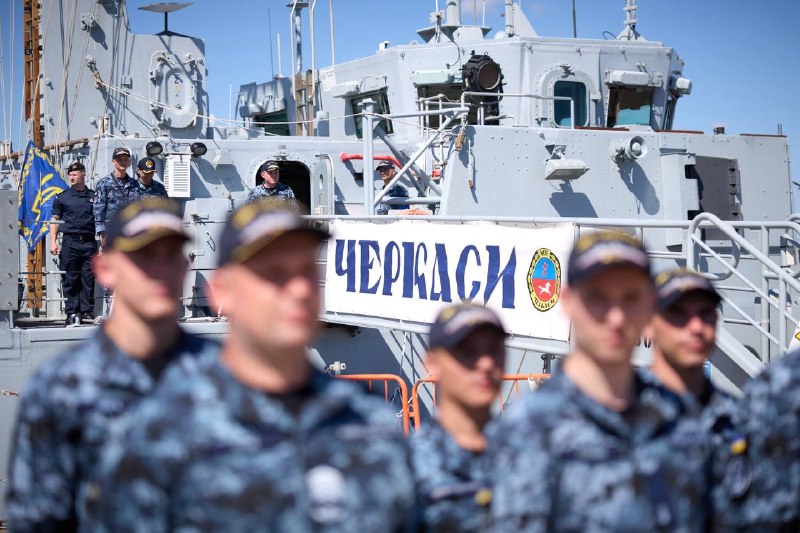
A 53-year-old retired Ukrainian serviceman named Mr. Volodymyr, who left the military in 2018, was back in uniform within hours of the first explosions on 24 February 2022, according to a Telegram post published at 07:32 UTC on 18 July 2026 by the AFU Strategic Communications centre. The post, which carries the deliberately double-edged title "SZCH IS A WAY TO NOWHERE", is the latest in a string of person-by-person recruitment vignettes the centre has used to make an argument about the future of civil-defence formations.
The argument is that the SZCH (the Armed Forces' territorial-defence reserve) has a structural problem the rhetoric of mobilisation is hiding: the people still willing to serve at 53 are not the people the state is most efficiently asking to serve. The framing matters because Ukraine's war economy is now entering its fifth year with no visible end-point and a defence ministry that has spent much of 2026 publicly wrestling with how to refresh the manpower base without lowering standards or triggering the kind of draft-dodging backlash that has defined Ukrainian domestic politics since the autumn of 2023.
The post, read closely
The Telegram item is short and pointed. It names "Mr. Volodymyr", gives his age as 53, identifies him as military personnel who retired in 2018, and notes that on 24 February 2022 he did not look for excuses: within hours of the first explosion he was back. The strategic communications centre, which sits inside the broader information architecture of the Armed Forces and has been the most reliable institutional channel for the public-facing side of the recruitment debate, frames the vignette as evidence of something and as a warning about something else.
The "evidence of" is straightforward: the pool of experienced, non-conscript personnel willing to return voluntarily is finite, and it is being drawn down fastest among the over-50s. The "warning about" is the headline itself. "SZCH IS A WAY TO NOWHERE" is not a neutral slogan. It is a one-line policy critique directed at the reserve formations, suggesting that the SZCH channel is being treated as a destination rather than a way station, and that the centre believes this is wrong.
The choice of a 53-year-old as the human illustration is itself the argument. Below a certain age the centre's posts would have read differently: a 27-year-old software engineer or a 35-year-old medic would have signalled youth, transferability of civilian skill, and a long remaining runway of service. A 53-year-old retired serviceman signals the opposite: an institutionally competent volunteer whose remaining service horizon is short, and whose recruitment tells the public less about the SZCH as an institution than about the demographic ceiling the volunteer pool has hit.
What the counter-narrative looks like
The defence ministry line, when officials have spoken on the record, has been that the SZCH is functioning as designed: a deep reserve in which trained personnel cycle between civilian life and short rotations of service, freeing the regular forces for forward deployment. Read this way, the post is not a confession of failure but a recruiting pitch aimed at over-50s with prior service.
Two things pull against that reading. First, the headline. A centre inside the Armed Forces' own information architecture does not publish "IS A WAY TO NOWHERE" about a healthy institution as a routine recruitment tactic; the phrasing is a tell. Second, the volunteer-age profile implied by a steady drumbeat of vignettes featuring retired personnel is consistent with what Ukrainian and Western-allied reporting has described for more than a year: that the easy demographic for voluntary mobilisation has been largely exhausted, and that the harder conversations about lowering the draft age or tightening enforcement against evasion are being deferred rather than resolved.
The honest reading is that both things are true simultaneously. The SZCH is functioning, and it is functioning because experienced older personnel are propping it up at the cost of their own finite reserve of years. The centre's post is not choosing between those readings; it is asking the reader to hold both at once.
The structural picture, in plain language
Ukraine's manpower problem is best understood not as a recruitment shortfall but as a recruitment mix problem. Four years into a full-scale invasion, with no conscription-age lowering and no large-scale return of working-age male refugees from the EU, the marginal volunteer coming through the SZCH channel is older, more experienced, and closer to retirement than the marginal volunteer coming through it two years ago. That is not, by itself, a scandal. It is what happens when a country fights a long defensive war and chooses, for defensible political reasons, not to lower the draft age.
The structural cost is hidden in two places. The first is readiness: an SZCH staffed by 53-year-olds can hold ground, but it cannot easily expand, and it cannot easily absorb the casualties of a high-intensity rotation cycle. The second is signalling: when the institutional face of voluntary recruitment is a 53-year-old retired man, the implicit message to the younger cohort is that voluntary service is what older patriots do, not what their generation is being asked to consider. The strategic communications centre, by publishing the post under the headline it did, is pushing back against that signalling without quite saying so.
The larger pattern this sits inside is one Monexus has tracked since 2025: the war's centre of gravity is shifting from the frontline to the institutions that feed it. The fighting is in Donbas and Kherson and the northern border; the contest is in Kyiv, in the cabinet, and inside the AFU's own bureaucratic chart, where the question of who serves, at what age, under what rules, and for how long is being renegotiated one Telegram post at a time.
What to watch before the next mobilisation cycle
Three markers will tell readers whether the SZCH debate is moving toward resolution or toward a quiet crisis. The first is whether the average age in centre vignettes drifts further upward; a shift to 55- and 58-year-olds in the autumn posts would be a clearer signal than any official statement. The second is whether the defence ministry publishes updated SZCH retention figures, which it has not done consistently; the absence of those numbers is itself information. The third is any movement on the draft-age question, which has been politically frozen since 2024 and which the SZCH volunteer pool is currently, silently, substituting for.
The Telegram item from 18 July does not resolve any of this. It does something smaller and more useful: it names the dilemma, attaches a human face to it, and refuses to pretend the dilemma is not there.
Desk note: Monexus frames this as an institutional-internal debate inside the Armed Forces, sourced directly from AFU Strategic Communications, rather than as a political fight between government and opposition, which is how most Western wires have covered Ukrainian mobilisation in 2026. The post is news because of what its own author chose to publish, not because a third party reported on it.
Wire provenance
This editorial synthesis draws on the following public wire/social posts:
- https://t.me/AFUStratCom