Kyiv and Warsaw step past the row: what Ukraine and Poland actually announced
After a public falling-out, Kyiv and Warsaw have announced new bilateral steps. The details released on 18 July 2026 are thinner than the headlines suggest.
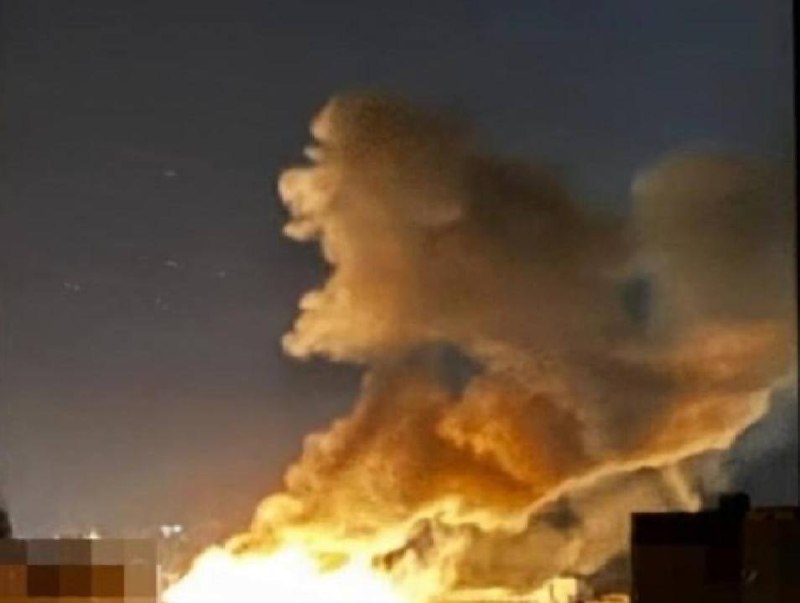
On 18 July 2026, Ukraine and Poland put the worst of a recent diplomatic row behind them with a new set of bilateral steps, according to a TSN briefing distributed at 07:14 UTC. The headline ran like a reset: after a high-profile conflict, both governments said they were moving forward together. The substance, on the evidence available so far, is more modest than the framing suggests, and the timing matters as much as the content.
The dispute in question played out earlier in July. Warsaw and Kyiv traded sharp public exchanges over matters tied to the border, the movement of people, and the politics of wartime solidarity. Polish officials insisted their concerns were about order at crossings, not about Ukraine's European trajectory. Ukrainian officials insisted the same. The argument briefly threatened to crowd out the longer story of how two frontline states have learned to cooperate under the pressure of a full-scale invasion next door. The 18 July announcement is, in effect, a face-saving formula that allows both governments to declare the matter closed without either side publicly conceding the underlying point.
What was actually agreed
The TSN item, published at 07:14 UTC on 18 July 2026, refers to "new steps" rather than a signed treaty or a joint communique with annexed text. That is the first thing to flag. In diplomatic reporting, "steps" is the word used when the two sides have agreed to keep talking, or to do something jointly in the next weeks, rather than when they have signed a binding instrument. A reader looking for the legal text will not find it in the announcement; a reader looking for a political signal of reconciliation will.
The second thing to flag is what the announcement does not specify. It does not name a working group, a date for the next intergovernmental consultation, or a concrete deliverable. It does not quantify any change in border-throughput targets, customs procedures, or consular arrangements. On the available record, the "new steps" are a framework for renewed contact, not a deliverable. The pattern is familiar in Eastern European diplomacy: a public row is followed by a public reset, and the real work happens in the working groups that neither side bothers to name in the press release.
Why the row happened at all
The proximate cause sits inside the bilateral relationship that has been under continuous stress since the start of Russia's full-scale invasion in February 2022. Poland hosts the largest Ukrainian refugee caseload in the European Union and has been the most consistent land-route conduit for Western military and humanitarian aid to Kyiv. The two governments have shared intelligence, coordinated logistics at the Medyka and Korczowa crossings, and aligned their positions in Brussels on sanctions packages. That density of cooperation creates friction as well as alignment: every operational decision is also a domestic political decision in both countries.
In Poland, the politics of wartime hospitality have shifted. Polish public opinion, broadly supportive of Ukraine through 2023 and 2024, has grown more complicated as the cost of accommodation has become visible in municipal budgets and in competition for housing and schooling. In Ukraine, the politics of dependency are sharper still. Ukrainian officials are alert to any signal from Warsaw that the transit of aid could be slowed or politicised, because the country's defensive effort runs on Western matériel moving through Polish territory. The row earlier in July sat squarely on that fault line. Neither side wanted to break the relationship; both sides wanted the other to acknowledge that the cost of maintaining it was not zero.
What to watch in the next four weeks
The structural frame is straightforward. Ukraine and Poland are not equals in this relationship and never have been. Poland is a member of the European Union and NATO, with a defence budget an order of magnitude larger than Ukraine's pre-war spending, with a logistics network that Kyiv's wartime economy cannot replace, and with a population that absorbs most of the cross-border movement of people. Ukraine is the invaded party, dependent on its neighbour's goodwill for the day-to-day functioning of its defensive effort. Any analysis that treats the two governments as symmetric negotiators misreads the balance of incentives.
Within that asymmetry, the 18 July reset is still a meaningful event. It restores the channel that the public row risked freezing. It tells the working-level bureaucracies in Kyiv and Warsaw that they have political cover to keep meeting. It tells the European Commission in Brussels that the Polish-Ukrainian bilateral remains a manageable part of the EU's eastern policy, rather than a fresh crisis. None of that is trivial; none of it is the same as a binding agreement.
The next four weeks will tell the reader which interpretation is correct. The concrete markers are easy to name. Does a bilateral working group meet, and on what date? Does the volume of cargo cleared at the principal crossings tick back up to the pre-row baseline, and is that figure published? Do Polish and Ukrainian officials use the same language again about the European integration track, or do the two sides settle into a parallel set of talking points that signal distance rather than convergence? Are there further public exchanges between the two governments, or does the press cycle move on to the next row inside the EU? Each of these is a verifiable indicator. None requires a leak or a scoop to track.
What remains uncertain
Three things are genuinely contested or unresolved on the public record. First, the precise substance of the "new steps" is not yet specified in the 18 July TSN item. The headline names a reset; the details will have to come from a follow-up readout, a joint statement, or a press conference in one of the two capitals. Second, the underlying disagreement that produced the row is not addressed in the announcement as reported. If border-management was the friction point, a reset that does not name a border-management outcome leaves the friction point in place. Third, the role of the European Union as a mediating or amplifying factor is not clarified by the bilateral framing of the announcement. Brussels has historically been a junior partner in this particular relationship, but the EU's own eastern policy, including the accession process and the financial assistance framework, sits in the background of every exchange between Warsaw and Kyiv. Whether the EU will stay in the background is a question the 18 July announcement does not answer.
The honest read of the moment is that Kyiv and Warsaw have decided, on the evidence, that the cost of a frozen relationship exceeds the cost of accepting each other's political constraints. That is a real and consequential decision. It is not, however, a structural change in the relationship. The structural frame is the one that has held since 2022: a frontline state and an invaded state, locked in cooperation by an aggressor's war, managing the friction that cooperation produces. The 18 July steps are a reminder that both governments know how to manage that friction when they choose to. The next test is whether they choose to next month.
Desk note: Monexus treated the 18 July TSN item as a framing document and read it for what it specifies and what it does not. Where the wire headline implies a binding agreement, this publication finds the underlying language closer to a political signal than a signed instrument. The piece holds Ukraine as the invaded party throughout, treats Warsaw as a sovereign capital with its own legitimate concerns, and avoids framing the reset as either a triumph or a failure until the working-level follow-through is on the record.
Wire provenance
This editorial synthesis draws on the following public wire/social posts:
- https://t.me/TSN_ua
- https://t.me/TSN_ua
- https://en.wikipedia.org/wiki/Ukraine%E2%80%93Poland_relations
- https://en.wikipedia.org/wiki/Polish%E2%80%93Ukrainian_border