Twenty children dead: a study-trip bus crash and Uganda's road-safety reckoning
A bus carrying pupils on a study trip left the road in eastern Uganda, killing at least 20 schoolchildren and one adult, and reopening a national argument about the country's chronic transport safety record.
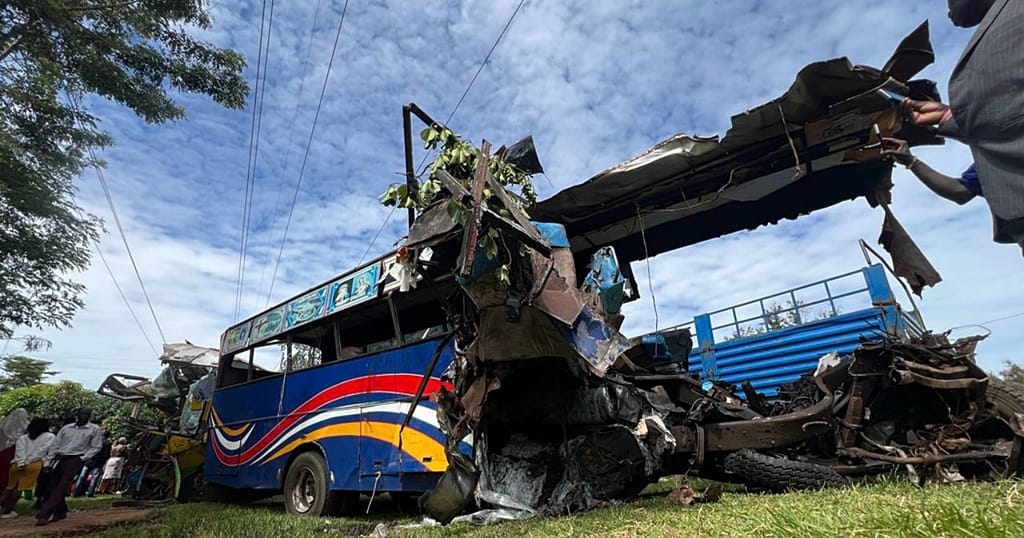
A bus carrying schoolchildren on a study excursion left the road in eastern Uganda on 17 July 2026, killing at least 20 pupils and one adult, according to local officials cited by The Star Kenya. Dozens of others, including members of school staff, were reported injured as emergency crews worked through the wreckage in the Busoga sub-region. The scale of the toll, almost all of it children, has put the country back inside a debate it has failed to settle for two decades: how a fast-growing economy with new highways and a swelling fleet of long-distance buses keeps losing schoolchildren on roads it has the money to make safer.
The crash fits a pattern Ugandans know by heart, and that outside observers tend to discover only when the next obituary is written. The victims were not commuters on a dilapidated matatu, the battered minibuses that dominate urban East African headlines; they were primary-school pupils in a chartered coach on a planned trip. That detail matters because it punctures the easy explanation that road deaths in the region are mainly a problem of unregulated urban transport. The risk extends to the chartered, supervised, school-organised end of the market, where the passengers are supposed to be safest of all.
What is known about the crash
The Star Kenya's update, dispatched at 10:10 UTC on 17 July 2026, identified the bus as carrying pupils on a study trip and put the immediate death toll at 20 children plus one adult, with dozens of additional injured, including school staff. Local officials were the named source for both the casualty count and the framing of the bus as a school excursion rather than a regular service. The dispatch did not name the school, the operating company, the route, or the immediate suspected cause, all of which are likely to be filled in by follow-up reporting from Ugandan outlets and the police Traffic and Road Safety directorate in coming days. The Star Kenya's reporting is the only thread item available to Monexus at the time of writing; the lede and the running toll therefore rest on a single wire, and any revision in the official count will need to be read against it.
The geographic anchor is eastern Uganda. Busoga, the sub-region east of the Nile along the border with Kenya, is one of the country's most populous areas and a corridor for both cross-border trade and long-distance passenger buses running between Kampala, Jinja, Mbale and the Kenyan frontier. Roads in the area range from recently rehabilitated trunk highways to poorly maintained feeder roads, and the mix is part of what makes casualty patterns difficult to generalise.
The wider road toll
Uganda's road-safety statistics are not a marginal story. The World Health Organization's most recent global status report on road safety placed Uganda among the higher-fatality countries in sub-Saharan Africa, with rates well above the regional average and a stubbornly high share of victims among pedestrians, cyclists and bus passengers. The Ugandan police have, in successive annual crime reports, recorded thousands of road deaths a year, with passenger buses involved in a disproportionate share of multi-casualty incidents. None of those aggregate figures can be attributed to a single crash, but they explain why a bus of schoolchildren overturning in Busoga registers as a national event rather than a local one.
The recurring causes are familiar to anyone who has reported on long-distance transport in the region: speeding on highways designed for higher speeds than the vehicles and drivers using them are rated for, overtaking on blind crests, mechanically tired coaches, and the casual enforcement of rest-period rules for drivers on overnight runs. School-trip coaches are not exempt. Charters are typically tendered to whichever operator offers the lowest price, with limited oversight of vehicle condition, driver fatigue, or compliance with seat-belt and capacity rules for child passengers. The economics of the charter market reward thin margins; the safety case rests on a regulatory regime that has never been adequately staffed to police it.
A question of accountability
The argument this crash is likely to provoke, and that it deserves, is not about whether one driver lost control on one road. It is about why a country that has spent two decades building new tarmac, registering more vehicles and welcoming more cross-border trade continues to record bus casualties at a rate its own agencies describe as a crisis. The standard response, a police press conference, an interdiction of the operator, a presidential condolence message and a review committee, has been run so many times that it has become a genre. The harder question, whether the licensing regime for passenger coaches, the inspection regime for vehicles, and the enforcement regime for driver hours are fit for purpose, gets raised, debated briefly, and shelved until the next crash.
There is a counter-narrative worth taking seriously. Uganda's road network has expanded faster than the institutions meant to police it. The Uganda National Roads Authority has delivered hundreds of kilometres of paved trunk road in the past decade, and vehicle stocks have grown sharply, while the Traffic Police directorate's capacity has not kept pace. By that read, the problem is not negligence but a state expanding its infrastructure footprint ahead of its regulatory one, with predictable, tragic lag. The two readings are not mutually exclusive. A state that has chosen to celebrate ribbon-cuttings on new highways has also chosen, by omission, where to spend its oversight budget, and that choice has victims.
What to watch
Three threads are worth following in the next 72 hours. First, the official police update on the crash, which should name the school, the operator, and the immediate cause, and which will set the baseline for any subsequent inquiry. Second, the response of the Ministry of Works and Transport, which has in past incidents issued fleet-wide inspection orders; whether such an order is announced and how it is enforced is the test of whether this crash is treated as a one-off or as the trigger for a policy shift. Third, the reaction of the parent associations and the teachers' unions, which in earlier incidents have pushed hardest for compulsory seat-belts on school coaches and for capped driving hours on chartered trips, two reforms that have been on the table for years without implementation.
The death of 20 children on a study trip will not, by itself, change those incentives. Past crashes of comparable scale have not. What it does, again, is put a number on a problem that has been priced into the operating model of Uganda's intercity bus industry for as long as anyone can remember, and remind a country that the price is paid in its children.
How Monexus framed this: the article rests on a single wire (The Star Kenya's 10:10 UTC update of 17 July 2026) and treats the crash as both an immediate tragedy and a structural test of Uganda's road-safety regime. Where official figures later change, Monexus will update; the underlying pattern, an under-regulated charter market meeting a fast-expanding road network, will not.
Wire provenance
This editorial synthesis draws on the following public wire/social posts:
- https://t.me/TheStarKenya