Spain's final training cancelled as World Cup final build-up hits New Jersey storms
Thunderstorms in the New Jersey area forced Spain to abandon their last training session before Sunday's World Cup final against Argentina, leaving Luis de la Fuente's side to manage preparation indoors.
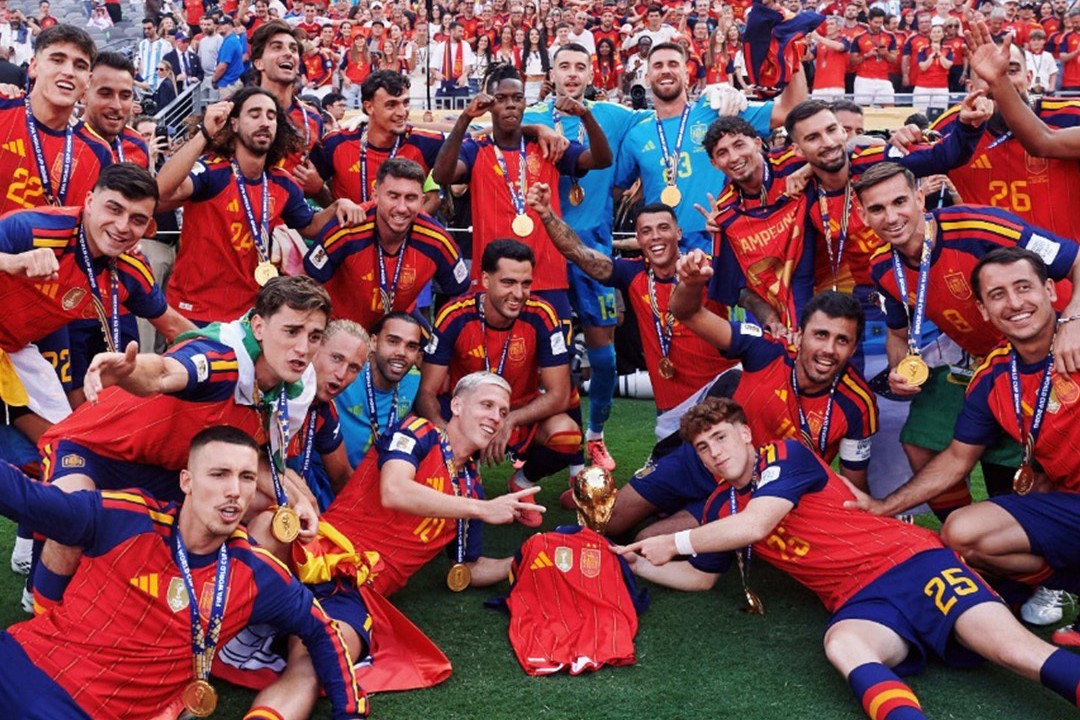
Spain's final training session before Sunday's World Cup final was called off on 18 July 2026 after thunderstorms rolled across the team's New Jersey base, with the cancellation logged by BBC Sport at 17:32 UTC. The disruption lands 48 hours before kick-off against Argentina, the reigning world champions, and forces Luis de la Fuente's squad to adjust their usual day-before-a-final routine of a light pitch session, set-piece work and a final review of the starting XI. The Argentine delegation, training at a separate site, were unaffected by the weather call.
The logistical friction is the kind of detail that tends to be remembered only when it costs something. For now, it has cost Spain one open-air session in conditions that, for a team built on possession and short passing, matter more than the headline suggests. The pitch is where the manager's identity work gets tested, and where the substitutes see the system in person rather than on a screen.
The weather call and what it disrupts
The cancellation came from the Spanish camp itself, BBC Sport reported, not from FIFA or local authorities. De la Fuente's staff made the call once the lightning threat inside the wider New Jersey storm cell crossed the threshold the federation's medical and performance teams had pre-set for outdoor activity. The session was originally scheduled for the late afternoon local time, the slot Spain have used throughout the tournament for final-session work.
The practical loss is bounded. A team at this stage of a World Cup does not need new information installed. They need freshness in the legs, sharpness in the patterns, and a settled sense of who plays. The cancelled session removes one of the few remaining chances for that to happen on grass. Spain will now run a gym-based activation and a video review, in line with the protocols they used after the Euro 2024 qualifiers when weather disrupted preparation in Bilbao.
The Argentine alternative view
Argentina arrive into the final with a longer rest window than Spain, having closed their semi-final a full day earlier than their opponents. Lionel Scaloni's staff used the extra 24 hours to install two specific tactical changes aimed at disrupting Spain's build-up: a higher first line of engagement and a left-sided pressing trap designed to bait Spain's right-back into inverted distribution. CBS Sports flagged the matchup as the key battle of the final in its 14:23 UTC position-by-position breakdown on 18 July, rating Argentina's defence ahead of Spain's on the strength of the semi-final performance but conceding the midfield as the decisive unit on the night.
Spain's Aymeric Laporte, asked on 18 July about what to expect from the Argentine side, returned the kind of answer that doubles as a quiet warning. The Albiceleste, he said, are a team that "likes to leave a mark on their opponents", a reference at once to the foul-count patterns Scaloni's side have built their knockout-stage record on and to the more straightforward reality that Argentina are not a side to be shifted from a settled defensive block.
What Spain still believe they have
The case for Spain rests on collective identity rather than any single player. Former captain César Azpilicueta, writing in his BBC Sport column on 17 July, framed de la Fuente's project as one that has deliberately traded individual stardom for system-level coherence, a bet the squad have been making since the European Championship two years ago. The midfield triangle that has run through the tournament, Rodri at the base, Pedro González and Dani Olmo rotating the eight positions ahead of him, is built to hold the ball under pressure, which is precisely the condition Argentina's pressing trap is designed to manufacture.
The counter-view is straightforward. Argentina have shown in this tournament that they can absorb pressure without conceding quality chances, and have the individual difference-makers to punish the one transition that Spain will concede across 120 minutes if the game goes that far. Spain's defensive record has been strong but not flawless, and Laporte's own partnership with Robin le Normand will face its sternest test against Julián Álvarez's movement.
Stakes and the small things still to settle
A World Cup final reduces to a handful of moments, and preparation is itself one of them. Spain lose a session but keep their structure; Argentina keep their shape and their rest advantage. The team that handles the margins better on Sunday is the team that handles the match. The New Jersey weather is now part of that ledger, an inconvenience rather than a crisis, and one that de la Fuente's squad have the squad depth to absorb.
What remains genuinely uncertain is how Spain's manager uses the indoor window. Whether the cancelled session prompts a tactical tweak, an unchanged XI, or a rotation to manage legs is the kind of detail that will only become visible at the team-sheet announcement roughly an hour before kick-off on Sunday.
Desk note: Monexus framed this as a preparation story, not a weather story. The storm is the mechanism, not the subject.