Milei skips the final for a superstition Trump is happy to break
Argentina's president will watch Sunday's final from Buenos Aires, citing a ritual. The US president has confirmed he will be in East Rutherford. The optics are doing some of the talking.
Argentina will play Spain for the FIFA World Cup on Sunday at MetLife Stadium in East Rutherford, New Jersey, and the most-watched seat in the house will be empty. President Javier Milei will not fly up from Buenos Aires. He will not sit in the VIP tier, will not shake hands on a concourse, will not pose for the cameras that the tournament's organising committee normally lines up for visiting heads of state. According to a 05:29 UTC report on 18 July, Milei has framed the absence as a matter of personal ritual rather than political calculation: he stayed home during the last two Argentina finals because he had gone to the previous ones, and his team won those too, so he has decided the safest move is to keep the streak intact by staying put.
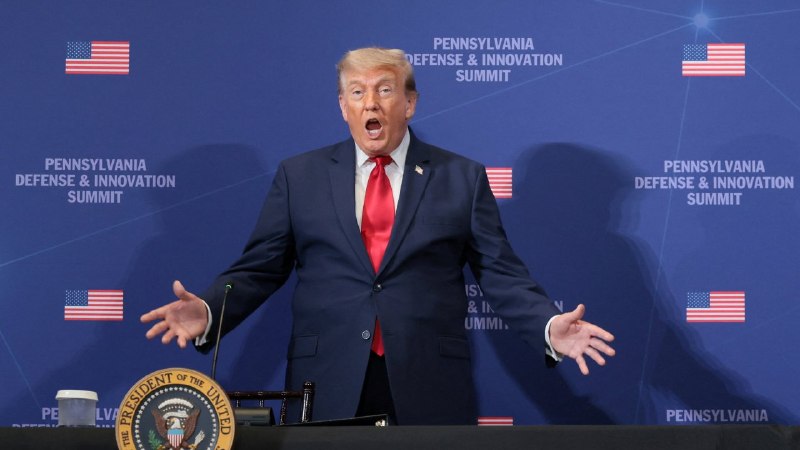
There is a counter-story inside that decision, and it tells you something about the way sport and state now sit next to each other on the international circuit. The final is the highest-prestige audience a sitting US president can buy in 2026. Donald Trump will be there, having confirmed on 17 July that he will attend the match at MetLife. Milei's absence, whatever the motive, leaves the stands weighted toward a single head of state rather than split between two, and that asymmetry is now baked into the visuals the host broadcaster will put to air.
The superstition line, taken seriously
The Argentine framing is unusual because most heads of state would prefer a dignified reason. Milei has chosen, on the record, to cite a superstition: he went to the games Argentina won, he skipped the games they did not, the pattern held, and the rational conclusion is to keep doing what worked. The argument is unfalsifiable and therefore, in a polite sense, unchallengeable. No one can disprove that Argentina would have lost had Milei shown up at the 2014 final in Rio, or that the team's penalty-shootout wins in this tournament have a measurable dependence on who is sitting in which row of the presidential box.
Strip the framing back and the practical effect is simple. Milei gets to be seen as a fan, not a statesman, on the night of the biggest match his country has played in twelve years. Argentine supporters at home will read it as loyalty to the squad. Critics who want him in New Jersey, shaking hands with Trump or the Spanish prime minister, will read it as avoidance dressed up in folklore. Both readings will coexist on Sunday evening, and neither can be settled by the evidence available.
What Trump's attendance actually buys
Trump's confirmed presence is the other half of the picture, and it is the more consequential of the two decisions for the optics of the tournament. A US president at a World Cup final held on US soil is not a neutral figure. The match is the closing ceremony of a tournament the United States co-hosted with Canada and Mexico, and the host federation has spent the build-up treating the final as a coronation for the American sporting brand as much as a football match. Trump at MetLife is the host's welcome mat, rolled out for the world, with the cameras in the building.
It also gives the White House a piece of soft-power theatre that does not require a policy gesture. The Spanish delegation will arrive in New Jersey already navigating a trade relationship with Washington that has swung between threat and accommodation since the start of the second Trump administration. Argentina's libertarian government has spent the same period rebuilding its line of credit to the IMF with active US backing. The trophy lift, the anthems, the flyovers, the VIP handshake on the pitch: each of these will be photographed, and each will carry a freight that has nothing to do with what happens at the kick-off.
The frame that won't be in the broadcast
The standard reading of this tournament will treat the final as a football story: Spain's possession game against an Argentina side rebuilt around a younger generation, played at the end of a long, hot American summer. That reading is correct as far as it goes, and it is the reading the broadcast will optimise for. But it leaves out the political choreography that runs underneath the match.
Sporting federations have spent the last decade learning that hosting a major event is a piece of diplomatic infrastructure, and the bigger the event, the more carefully the seating chart gets drawn. A two-headline final, with a host president flanked by a Latin American counterpart and a European prime minister, would have produced a particular kind of photograph. A one-headline final, with Trump alone in the platform tier and the Argentine flag flying without Milei, produces a different one. The absence is doing diplomatic work whether Milei intends it to or not.
The structural pattern is familiar: a high-prestige fixture becomes a venue for signalling that has nothing to do with the sport on the pitch, and the players, the fans, and the trophy end up as backdrop. Whether that signalling helps or hurts the host country's standing depends on the rest of the week's news cycle, which is why these decisions are usually made weeks in advance and walked back only under pressure.
Stakes on Sunday
For Argentina, the only outcome that matters on the field is the result. A World Cup win would be the third in the country's history, the first since the Mexico 2010 triumph that ended the Messi-era debate about whether he could match Maradona. A loss would not be a national crisis; the team has over-performed its pre-tournament standing already, and the new manager has been given a long runway. The president's superstition, in other words, is a luxury the squad has earned him the right to indulge.
For Trump, the stakes are flatter and the upside is mostly visual. A well-run final, a clean stadium, a handshake on the pitch that does not have to mean anything, and the tournament closes on a note of American competence. For Spain, the stakes are the usual European ones: prove the possession model still travels at the highest level, against a South American opponent who has spent the last two weeks dismantling pressing teams by simply refusing to be pressed. For Milei, the gamble is the smallest of the four and the easiest to defend. If Argentina wins, the superstition is confirmed and the joke writes itself. If they lose, he was never in the building, and the absence is the cleanest alibi a head of state has ever bought with a ritual.
How Monexus framed this versus the wires: the wire stories lead on the personal quirk. The political optics of an unbalanced VIP tier on the tournament's biggest night are the under-reported beat.
Wire provenance
This editorial synthesis draws on the following public wire/social posts:
- https://t.me/s/hindustantimes