Greenhouses and soldiers: an Israeli airstrike tests the framework holding southern Lebanon together
An Israeli airstrike on the agricultural town of Mansouri wounded two Lebanese soldiers and damaged greenhouses, reviving a question diplomats had hoped to leave dormant: is the November framework agreement still operative, and on whose terms?
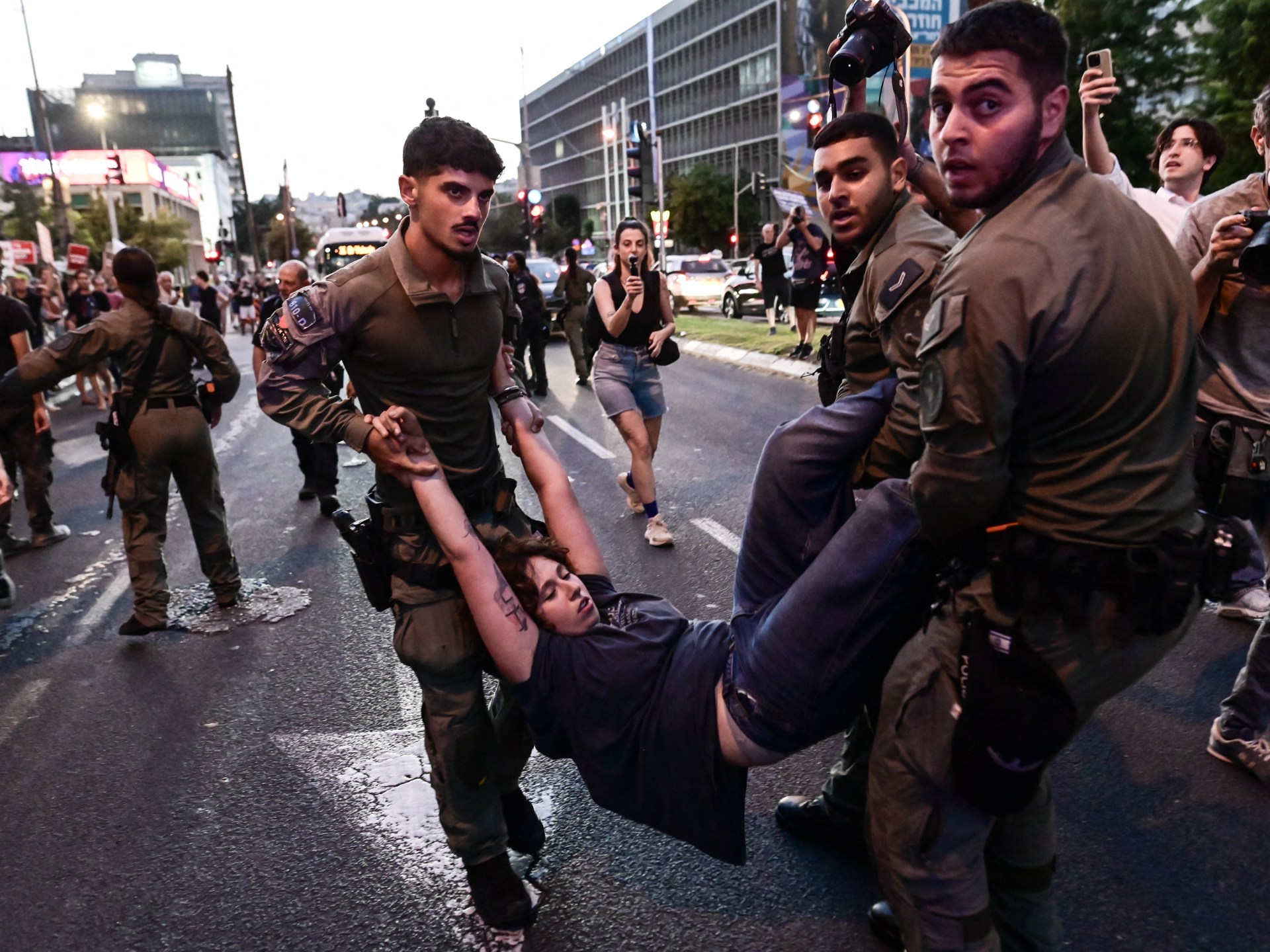
At 09:55 UTC on 18 July 2026, an Israeli airstrike hit the town of Mansouri in southern Lebanon. Within minutes, a second wave struck the same area. By 10:20 UTC, Lebanon's official channels were reporting that two Lebanese army soldiers had been injured, with local accounts suggesting that unexploded Israeli ordnance had detonated as the soldiers moved toward the impact site. Photographic reporting from the ground, published at 10:00 UTC, identified the struck site as agricultural greenhouses on the edge of the town. The damage was small in military terms. The diplomatic weight of the strike was not.
Mansouri sits just outside the zone where the November 2024 framework arrangement between Israel and Hezbollah is supposed to apply. The agreement was negotiated in the closing weeks of the war in Lebanon, brokered by the United States and France, and it traded a cessation of cross-border fire for an Israeli withdrawal from positions inside Lebanese territory. Its text, in the fragments that have been made public, treats the strip up to the Litani River as the area in which Israeli operations are tightly constrained and Lebanese state forces are responsible for security. A strike just beyond that line, hitting civilian agricultural infrastructure and wounding soldiers from the official Lebanese army, lands on the seam where the deal is supposed to be at its thinnest and therefore its most carefully respected.
The story of 18 July is not the strike itself, dramatic as the photographs are. It is what the strike says about the present state of the framework: who is still bound by it, who is performing binding, and what is left when the performing stops.
What actually happened at Mansouri
The sequence of events, drawn from the live reporting on the day, is short enough to recount in full. At 09:55 UTC, an initial Israeli airstrike targeted Mansouri, a town in the Tyre district of south Lebanon, just outside the formal framework zone. Ground imagery published the same minute shows damage to agricultural greenhouses, the plastic frames buckled and the covering shredded across the rows. A follow-up strike, described in the reporting as a second wave against the same town, followed within minutes. By 10:20 UTC, outlets including The Cradle and the South Lebanon witness network wfwitness were carrying Lebanese state-aligned reporting that two soldiers of the Lebanese Armed Forces had been injured, and that the detonation of what local accounts called Israeli munition remnants was the most likely cause. The Cradle and wfwitness are Lebanon-focused and, in their editorial posture, sympathetic to the resistance axis. They are not neutral on the question of who struck first. Their reporting is, however, internally consistent across the two outlets on the basic facts: time, place, target, casualties, and the position of the Lebanese army at the site.
What the reporting does not establish, and what no source available to Monexus on the day establishes, is the Israeli account. The Israel Defense Forces had not, as of 10:20 UTC, issued a confirmation of the strike, a denial, or a statement of operational justification. The Israeli-language press was not yet carrying the incident in the snippets Monexus could verify. That asymmetry is itself part of the story, because the silence from the Israeli side in the first minutes after a strike is usually the silence of either confirmation pending or deliberate non-acknowledgement, and the difference between the two is meaningful for the framework's continued operation.
The framework, briefly
The arrangement often referred to in Western wire reporting as the ceasefire agreement, and in Lebanese and Iranian-aligned reporting as the framework agreement, was concluded in late November 2024 after roughly fourteen months of cross-border war between Israel and Hezbollah that began in parallel with the Gaza war. Its core trade was simple in architecture: Hezbollah would end attacks on northern Israel, and Israel would withdraw from positions it held inside southern Lebanon. In the period between the announcement of the framework and the present, the agreement has held in the sense that there has been no return to large-scale cross-border fire. It has not held in the sense that daily life along the border has normalised. The Israeli side has conducted what it calls precision strikes against what it describes as Hezbollah infrastructure, and the Lebanese side has complained of near-daily Israeli overflights, demolition of homes in border villages, and the killing of civilians in what Lebanon classifies as violations.
Mansouri is the kind of place the framework was supposed to make legible. It is agricultural. It is not, on the evidence of the day's reporting, a known Hezbollah command node, weapons depot, or rocket launcher position. The struck site, according to the witness reporting, was greenhouses. The soldiers wounded were not Hezbollah fighters; they were soldiers of the regular Lebanese Armed Forces, the institution the framework relies on to be the visible security presence in the south. The wounding of LAF personnel in an Israeli strike is, under the framework as it has been publicly described, a categorically different event from the killing of a Hezbollah operative in a targeted strike. The first is a strike on the institution the agreement puts in charge of the territory. The second, however contested, is at least within the logic of the deal.
The Lebanese state's response, in the minutes and hours after the strike, will be the next data point. If the LAF files a formal complaint through the mechanism the framework established, that is one signal. If the complaint is made through back-channel intermediaries, that is another. If no complaint is made, that is a third, and the most concerning of the three for anyone who believes the framework still has a future.
The reading war
There are two plausible readings of the strike, and the choice between them is not a matter of evidence so much as a matter of which evidence one treats as load-bearing. The Israeli reading, when it arrives, is likely to be that the strike targeted a Hezbollah asset in the area, that the LAF presence was incidental, and that the wounding of soldiers is regrettable but does not constitute a violation of the framework. The Lebanese state reading, as carried in the day's reporting, is that the strike hit civilian agricultural infrastructure outside the framework zone, that LAF personnel were injured as a direct result, and that this is a violation. The structural reading, sitting behind both, is that the framework has been degrading for months and that the strike is the latest in a series of small tests rather than a single dramatic breach.
Each reading is internally consistent. The disagreement is about which fact is the controlling fact. Is the controlling fact the location of the strike (just outside the framework zone, in a town described as agricultural), or the alleged target (a Hezbollah asset, if one exists there, regardless of where the strike fell)? Is the controlling fact the identity of the wounded (Lebanese army soldiers, the institution the framework empowers), or the cause of their wounding (residual Israeli munitions, an accident in the cleanup of an otherwise lawful strike)? Every strike along this border has been a contest over which of these facts one is required to consider first.
Monexus finds that the structural reading is the most consistent with the pattern of the past seven months, and therefore the most useful for understanding what comes next. The framework has not collapsed in a single dramatic event. It has been eroded by a series of small ones, each individually defensible, each collectively corrosive. The strike on Mansouri, on the evidence available on 18 July, is one more event in that series rather than a break from it. The break, if it comes, will probably not look like this. It will look like a week in which three or four such strikes happen in rapid succession, and the Lebanese state, or the Iranian axis, decides that the cost of continuing to perform the framework has become higher than the cost of letting it be visibly dead.
What is at stake beyond the border
The framework is, on paper, a Lebanese-Israeli arrangement. In practice, it is one of the more important operational artefacts of the post-October 2023 regional order, and its health is read in several capitals that are not Beirut and not Jerusalem. In Washington, the framework is treated as a deliverable, a piece of evidence that the Biden administration's regional de-escalation strategy was workable. In Tehran, the framework is treated as a constraint on Hezbollah that was extracted under pressure and that the axis can choose to honour or to walk away from depending on its own calculations. In Moscow and in Beijing, the framework is read as a data point about whether US-brokered security arrangements in the Middle East are durable, which feeds into a larger argument about the credibility of the Western-led security architecture in the region. A strike that wounds Lebanese soldiers, just outside the framework zone, is a small event in operational terms. It is a signal in all of these other registers.
The agricultural content of the strike matters in a way that the military content does not. Mansouri is a town in a country whose economy is being slowly suffocated by a financial crisis that has now run for most of a decade. Greenhouse agriculture in the south is a significant source of income and food production in precisely the area where the Lebanese state is supposed to be the only security actor under the framework. Striking it, even by accident, even as collateral damage from a strike on a different target, has a meaning that a strike on a military position does not. It tells the population of the south that the framework's protection, in the form in which the framework was sold to them, does not extend to their livelihood. That is a different kind of message than the one the framework is supposed to send.
What we do not yet know
The reporting on 18 July is enough to establish the basic facts of the strike: where, when, what was hit in physical terms, and who was injured. It is not enough to establish the most consequential question, which is what the strike was intended to hit. The Israeli side had not, in the reporting Monexus could verify, explained the target by 10:20 UTC. The Lebanese side had, in its initial accounts, framed the target as agricultural. Until the Israeli operational account is public, the gap between these two characterisations is the gap in which the next forty-eight hours of diplomacy will be conducted.
The other open question is the response of the Lebanese state. The LAF's institutional position under the framework is to be the security actor of the south. Its soldiers being wounded in an Israeli strike is the kind of event that, under the framework's own logic, requires a formal response. Whether that response comes, and in what form, will be the test of whether the framework is a document the parties still intend to honour or a document they are still willing to be seen holding. The strike on Mansouri, on the morning of 18 July, did not by itself answer that question. The afternoon probably will.
How Monexus framed this: the wire read on 18 July carried the strike as an event on the Israel-Lebanon border. Monexus read it as a stress test of the November 2024 framework, and treated the wounding of Lebanese army soldiers and the targeting of civilian agricultural infrastructure as the controlling facts, on the grounds that those are the facts the framework was designed to make impossible.
Wire provenance
This editorial synthesis draws on the following public wire/social posts:
- https://t.me/thecradlemedia
- https://t.me/thecradlemedia
- https://t.me/wfwitness
- https://t.me/wfwitness
- https://t.me/wfwitness
- https://t.me/wfwitness