Mamdani's litmus test for the Democratic Party
A New York mayoral front-runner has spent one news cycle reframing what a Democrat is for. The Party now has to decide whether that reframe is a gift or a warning.
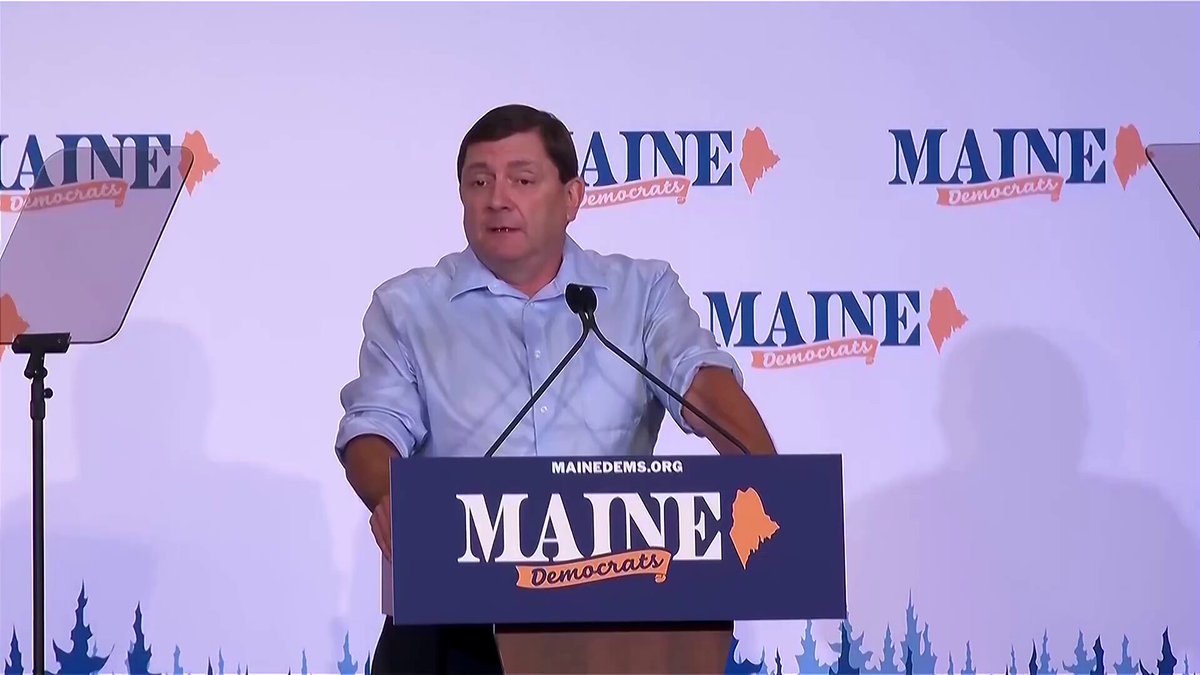
On 18 July 2026, between roughly 14:38 and 14:54 UTC, the Telegram channel ClashReport published a string of attributed remarks from New York City's mayoral race that, in tone and target, sit well outside a normal primary-news cycle. The fragments are short, partial, and visibly clipped from the same underlying New York Times reporting window. Read in sequence they form a single argument: that economic security, foreign-policy honesty, and a coherent human-rights frame are the same fight, and that the Democratic Party has been treating them as separate fights it can keep deferring.
The thesis lands harder than the fragments suggest, because the speaker is the kind of candidate who usually hedges. Zohran Mamdani, the Democratic front-runner for New York City mayor, has spent two months building a campaign on small concessions of language. On 18 July he dropped the hedging. The lines now circulating, per the Telegram-sourced NYT citations, are explicit: raise taxes on the wealthiest New Yorkers; redefine a "strong economy" by whether a working person can breathe; endorse Representative Alexandria Ocasio-Cortez for president without qualification; accuse members of Congress of privately conceding a genocide they will not call one in public; and argue that the Democratic Party must become "the party of human rights for all people," with Palestinians inside that frame on equal footing.
The economic argument, made bluntly
Mamdani's first two fragments are tax-and-cost-of-living boilerplate in their content, but they are pointed in their phrasing. The first says: "we can raise taxes a little bit more on the wealthiest New Yorkers to ensure that everyone can afford life in this city." The second sharpens it: "we have to go beyond the typical indicators of what makes a strong economy. We also have to measure whether a working person can breathe." Both lines assume the contest is over who gets to define "affordability" in a city where the median rent and the median wage stopped diverging a decade ago and have been drifting apart since. The implicit opponent is a fiscal-conservative frame in which municipal budgets are evaluated by bond-rating logic, not by working-class solubility. Mamdani is not asking the frame to widen; he is asking the audience to swap it.
The endorsements that are also litmus tests
The third fragment, on Representative Alexandria Ocasio-Cortez, is short enough to look throwaway but functions as a deliberate signal. "I think she'd make a good president. I think she would make a good anything." That is an endorsement without a strategy section attached, the kind that pulls a primary conversation leftward by refusing to attach itself to any one candidate's presidential timeline. The implicit message to rival New York Democratic factions is that the next-generation bench is no longer a matter of private preference; it is being declared.
The Palestinian frame as the hard edge
The fourth and fifth fragments are where the candidate stops being a New York mayoral hopeful and starts testing the national party. The line that there are "far more Congress people who will privately tell you that something is a genocide than publicly announce it to be so" is an open challenge to the caucus's silence on Gaza. The companion line, that the Democratic Party can "become the party of human rights for all people" and that this "must also include Palestinians" because "people are tired of exceptions being drawn," names the specific exception. Both lines are calibrated to a Progressive-Democratic audience that has watched the party split in slow motion over 2024 and 2025.
The strategy is not subtle. Mamdani is forcing a vote: either the party treats the Palestinian frame as a core human-rights commitment with the same standing as labor, abortion, or voting rights, or it accepts that a rising coalition of voters will treat that refusal as a disqualifying tell.
What the dominant framing does not want you to notice
Wire coverage of the 2026 New York race has tended to frame Mamdani as an affordability candidate in a city that now polls affordability above crime, immigration, and housing as a discrete issue. The 18-July remarks refuse that containment. They are an explicit argument that affordability without a human-rights frame is just municipal management, and that the Democratic Party's failure to defend human rights abroad corrodes its claim to defend them at home.
The counter-read is that this is a primary manoeuvre, not a governing posture. A mayor of New York does not set federal tax policy, does not appoint ambassadors, and does not move the party platform. On that view, the fragments are a fundraising and turnout device aimed at the under-35, heavily renter, disproportionately Muslim and Jewish-progressive electorate that decides Democratic primaries at low margins. Both reads can be true. The first read treats the lines as a set of commitments that bind a future administration; the second read treats them as a mobilisation tool with plausible deniability. Mamdani's campaign is betting that the first read wins him the primary and that the second read holds him harmless if he wins the general.
Stakes, in plain terms
If the Democratic Party absorbs Mamdani's frame, the 2028 presidential primary starts from a different premise: a human-rights floor that includes Palestinian life, an economic test that asks whether working people can breathe, and an AOC-shaped bench that needs no permission from older donors. If the party resists, it hands a younger, more urban, more renter-heavy cohort of voters a list of reasons to stay home in off-years, with the 2025 special-election pattern of low-turnout losses as the precedent. The next signal will come from how the national party committees, the DNC, and the broader congressional leadership respond to the 18-July remarks. Quiet non-response is itself a response.
What this publication is watching
A clean counter-read is welcome and was sought. The fragments are short, clipped from a single reporting window in The New York Times, and re-circulated by a Telegram account whose sourcing chain is one step removed from the underlying paper. Wider coverage is likely to surface in the next 24 to 48 hours; whether the full quotes land with the same texture, whether the Times stands by the framing, and whether named congressional figures respond will tell us how much of the cycle is real reporting and how much is compressed for a Telegram audience. Until then, treat the fragments as a campaign testing the party, not as the party's answer.
Desk note: Monexus ran the fragments against the wire pattern from the 2024 and 2025 Democratic-primary cycles, where progressive candidates used surrogate-friendly Telegram channels to set the day's frame ahead of mainstream outlets. The structural read here is the same: the candidate publishes, the wire catches up, the party decides whether to absorb or parry. The Palestinian frame is the new variable in that pattern.
Wire provenance
This editorial synthesis draws on the following public wire/social posts:
- https://t.me/clashreport/29418
- https://t.me/clashreport/29419
- https://t.me/clashreport/29420
- https://t.me/clashreport/29421
- https://t.me/clashreport/29422