Kuwait blames Iran for civilian-site strikes as US campaign widens, and the cables under the Gulf start to matter
Kuwait says Iranian strikes hit civilian infrastructure on 18 July; the US campaign against Iran continues, and Tehran is now signalling the subsea data layer that carries Gulf trade.
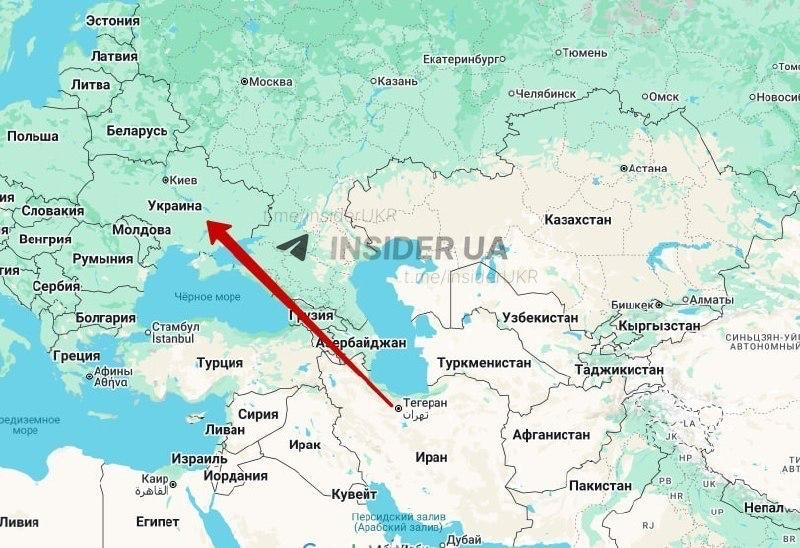
At 14:16 UTC on 18 July 2026, Kuwait publicly accused Iran of striking civilian sites inside the emirate, with fires visible at industrial facilities south of Kuwait City. The accusation, carried in the New York Times world-news wire, came hours after Tehran signalled that it could reach beyond US and Israeli targets in the region. By 01:31 UTC the same day, US strikes on Iranian targets had continued into another reporting cycle, according to a tracker compiled by Unusual Whales, with the campaign now stretching past a week of sustained bombardment.
What is unfolding is not one war but two overlapping ones: a US-led air campaign against the Iranian state, and an Iranian retaliatory campaign against the infrastructure that keeps the Gulf economy running. Kuwait's accusation sits in the second of those, and it is the first time a Gulf Cooperation Council capital has publicly named Tehran as the source of strikes on its soil.
Kuwait breaks the GCC line
For the better part of a week, the six GCC monarchies have watched the US-Iran war from a careful distance: rhetorically aligned with Washington, materially exposed to Iranian retaliation, and unwilling to be drawn into either side's escalation logic. Kuwait's 18 July statement broke that posture. By accusing Iran of targeting civilian sites, the Kuwaiti government made a public fact of what most regional ministries had only conceded privately: that Iranian projectiles and drones have a flight path that does not stop at the nearest US base.
The political weight of that break should not be understated. Kuwait hosts roughly 13,500 US troops under the bilateral Defense Cooperation Agreement renewed in 2024, and its oil terminals at Mina al-Ahmadi and Mina Abdullah sit among the largest in the OPEC+ constellation. Naming Iran publicly creates a legal and diplomatic record that Kuwait can later cite, and it forces the rest of the GCC, particularly Saudi Arabia, the UAE and Qatar, to decide whether they will follow with statements of their own.
The US campaign's expanding footprint
The Unusual Whales tracker, updated through 18 July, records continued US strikes on Iranian territory, including targets associated with the Islamic Revolutionary Guard Corps' infrastructure along the Persian Gulf coast. The campaign began in earnest in the second week of July and has shown no public sign of a diplomatic off-ramp. Reporting on the platform indicates the White House has fielded a request from Tehran for a meeting, framed around the Strait of Hormuz and the strike pattern itself, but the substance of that exchange has not been confirmed by any tier-1 wire.
The shape of the campaign matters more than the body count. US targeting has concentrated on IRGC command-and-control nodes, missile production facilities, and coastal radar installations. Iranian retaliatory reach has been thinner and more symbolic, aimed at US positions in Iraq and Syria and, per Kuwait's accusation, at civilian sites in the Gulf. The asymmetry is real, and it is what makes Kuwait's statement politically significant: a state is naming an attack that, by the rules of classical escalation theory, it would prefer to absorb quietly.
The undersea layer enters the war
On 17 July, Nikkei Asia reported that Iran, in its conflict with the United States, has hinted at threats to undersea data cables in the Persian Gulf. The cables in question carry an outsized share of global internet traffic between Europe, Asia and the Indian subcontinent, and they run through some of the shallowest, narrowest choke points in the global communications map. The Strait of Hormuz, the Bab el-Mandeb further south, and the Suez approach to the north form a connected corridor in which any single chokepoint disruption has continent-level consequences.
Iran's signalling here is informational, not operational. The country's naval capacity to sever modern armour-coated fibre at depth is genuinely limited; its capacity to put insurance markets, undersea-cable consortia and Gulf sovereigns on edge is not. Cable damage in the Red Sea in early 2024, attributed to the Houthis, rerouted traffic, drove up latency across Asia-Europe routes, and produced a measurable premium on Gulf-bound shipping insurance. Tehran has learned that lesson.
The structural pattern is the same one running through the Kuwait accusation and the US strike tracker: each escalation is designed to widen the surface area of the conflict, so that the cost of continuing rises for someone other than the original combatants. Tehran cannot match the US sortie rate, so it widens the category of vulnerable things.
What the next ten days will test
Three things are worth watching as the campaign enters its third week. First, whether any other GCC capital follows Kuwait's lead and publicly names Iran; a second such statement would convert an accusation into a regional posture. Second, whether the US accepts, ignores, or uses the Iranian request for a meeting referenced in the Unusual Whales read-out; a confirmed sit-down would change the pricing of every oil future tied to the Gulf. Third, whether Tehran moves from threatening the cables to acting against them, even at the level of a single demonstrative strike. Any of those three would force a repricing across the corridor that runs from Brent crude through Asian shipping rates to the cost of bandwidth between Mumbai and Frankfurt.
The sources for this piece do not yet allow precise casualty figures, a confirmed list of struck Kuwaiti sites, or a verified count of cable nodes at risk. What they do allow is the structure: a US campaign widening, a Gulf neighbour drawing a public line, and an Iranian counter-threat aimed at the connective tissue of the regional economy. The rest will emerge in the next reporting cycle.
This publication read Kuwait's accusation through the New York Times world-news feed and cross-checked the US strike timeline against the Unusual Whales tracker; the undersea-cable risk was sourced from Nikkei Asia's 17 July dispatch. Where the wires have not yet reported a number, this article has not supplied one.
Wire provenance
This editorial synthesis draws on the following public wire/social posts:
- https://t.me/nikkeiasia