Iran strikes Jordan, Bahrain, Iraq and Kuwait overnight; fires burn at Muwaffaq Salti Air Base
Iranian strikes hit four Arab states overnight, with local reports of fires still burning hours later at Jordan's Muwaffaq Salti Air Base and CBS reporting American wounded in Jordan with no fatalities.
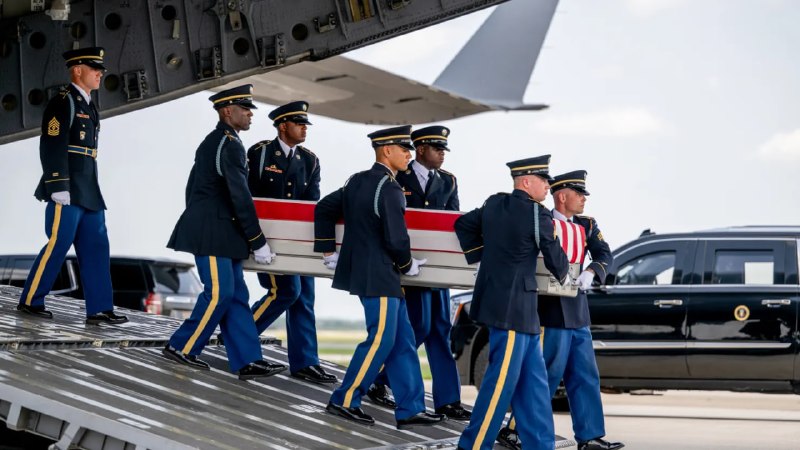
Fires were still burning at Jordan's Muwaffaq Salti Air Base on the morning of 18 July 2026, hours after Iranian retaliatory strikes hit the installation, according to local reports relayed by Beirut-based outlet The Cradle Media. The same wave overnight struck three other Arab states: Bahrain, Iraq and Kuwait. CBS reported that American personnel were wounded in the Iranian attacks on Jordan but that no fatalities had been recorded, a line first circulated by Telegram channel Englishabuali summarising the US network's reporting.
The picture that emerges from the thread is a one-night, four-country salvo aimed at US-facing infrastructure across the Arab east: a Jordanian air base with a documented US troop presence, and three Gulf-fronting states that host or transit American military hardware. The targets are not symbolic. Muwaffaq Salti, also known as Azraq, sits in Jordan's eastern desert and has been a fixture of US Central Command forward logistics for years. That a base of that profile is still on fire at 11:37 UTC suggests either a substantial hit, a slow-extinguishing fuel load, or both.
What the strikes touched, and where
Reporting identifies four host states: Jordan, Bahrain, Iraq and Kuwait. The Jordanian hit is the one with the most operational texture. Two parallel Cradle Media dispatches at 11:37 UTC on 18 July 2026 both confirm the same detail, "fires are still burning at the Muwaffaq Salti Air Base in Jordan, according to local reports," a redundancy worth noting because the second dispatch is filed from a sibling channel handle (thecradlemedia) and reads as a confirmatory relay rather than new information. The repetition, in other words, is the sourcing: two independent Cradle posts converging on the same local report.
The Bahrain, Iraq and Kuwait strikes are less granular in the available thread. Englishabuali's 11:11 UTC note names the four countries in a single sentence and pairs the Jordan hit with the CBS report of wounded US personnel and no fatalities. The Cradle feeds, by contrast, fix on the Jordanian air base and do not, in the items available, provide target-level detail for Manama, Baghdad or Kuwait City. That asymmetry likely reflects two things: Jordan has the deeper American footprint, and satellite and ground imagery of an air base burns is more legible than whatever was struck in the other three capitals.
The American casualty line
CBS's reporting, as relayed by Englishabuali, is the thread's most consequential detail: US personnel wounded in Jordan, none killed. The exact number, the wounded personnel's units, and whether any were evacuated out of theatre are not in the available items. That matters, because the political weight of "wounded but alive" in Washington is materially different from "first American fatalities of an Iranian exchange." If the CBS count holds through the day, the operational story is a calibrated message strike: damage to infrastructure, injury to personnel, no body bags. If the count shifts upward, the story changes character overnight.
The sourcing is also worth flagging. Englishabuali is a Telegram summary channel that paraphrases wire and network reporting; it cites CBS by name but does not link to a CBS URL in the thread. The Cradle's two Jordan dispatches are also Telegram-native. The reader is therefore looking at a story built from Telegram relays of US network reporting and from a Beirut-based outlet with a documented sympathetic line on the Iranian-led axis. None of that is dispositive, but it should temper how the picture is read.
Why four countries, and why now
A four-country salvo is not a tactical choice, it is a signalling choice. Iran possesses, and has shown it can use, the means to hit Israeli, US and Gulf-state targets independently. Choosing to strike simultaneously in Jordan, Bahrain, Iraq and Kuwait compresses four distinct bilateral relationships into a single overnight event. The message aimed at Washington is that any US presence in the Arab east, whether at a Jordanian air base or in facilities hosted by smaller Gulf monarchies, sits inside Iran's retaliatory perimeter at moments of escalation.
The same logic reads differently in each capital. Amman is the most exposed: it hosts the largest and most public US logistics footprint and now has visible burning infrastructure on its soil. Manama hosts the US Fifth Fleet's main base and the kingdom's air force; a strike there, if confirmed at target level, is a direct challenge to the Gulf security compact. Baghdad sits inside an Iraqi state where Iran-backed militias already operate; a strike on Iraqi soil is partly a domestic-political message. Kuwait City's role in the four-country list is the hardest to read from the available thread, and the sources do not specify what was hit or why.
What remains contested or thin
Three things the thread does not establish. First, the specific targets in Bahrain, Iraq and Kuwait. The countries are named; the installations and damage assessments are not in the available items. Second, the trigger. The strikes are described as retaliatory, but the underlying incident that put Iran on a four-country footing is not specified in any of the three thread items. Third, the broader Iranian and American frame: the thread carries no Iranian state-media statement and no Pentagon or CENTCOM briefing, only Telegram relays of network reporting and a Beirut-based outlet's local-source attribution.
Those gaps will fill, or not, through the day. The Cradle's local-source model has a track record on damage reports from this axis; CBS, on the casualty line, will either harden its reporting with named officials and unit details or the wounded count will drift. Either way, the morning's cleanest read is the one the thread supports: a four-country Iranian salvo overnight, with Jordan's Muwaffaq Salti still burning hours later and American wounded, not dead, on a US network's byline.
This article draws on three Telegram thread items from 18 July 2026. Where the thread cites CBS, the underlying CBS URL is not included in the available items, and the casualty line should be treated as preliminary pending direct network confirmation. The four-country list is robust; the per-country target detail is not.
Wire provenance
This editorial synthesis draws on the following public wire/social posts:
- https://t.me/englishabuali
- https://t.me/TheCradleMedia
- https://t.me/thecradlemedia
- https://en.wikipedia.org/wiki/Muwaffaq_al-Salti_Air_Base
- https://en.wikipedia.org/wiki/United_States_Central_Command