Explosions reported across three Iranian cities as Tehran denies any blasts
Reports of blasts in Qom, Bandar Abbas and Bandar-e Lengeh on 18 July 2026 were swiftly denied by Iranian state-linked outlet Tasnim, leaving the picture unresolved hours after the first reports surfaced.
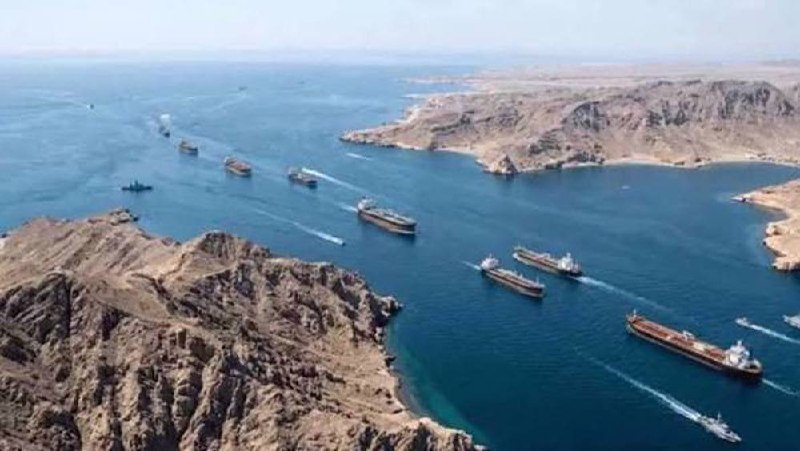
Tasnim, the news agency closely tied to Iran's Islamic Revolutionary Guard Corps, moved within minutes to deny reports of explosions in three separate Iranian cities on 18 July 2026, including the holy city of Qom, the strategic port of Bandar Abbas, and Bandar-e Lengeh on the Persian Gulf coast. By late evening UTC, the only verified facts were the reports themselves, the denials, and a partial concession that sounds had been heard in Bandar Abbas without a confirmed cause.
The sequence matters because it illustrates how quickly Iranian state-aligned media can shape the early phase of a breaking incident, and how little verifiable ground truth exists in the first hours after such reports circulate. Within roughly 90 minutes, the public record shifted from "explosion heard" to "sounds confirmed, no explosion" to "Tasnim denies" across three distinct locations.
What actually came across the wire
The first report surfaced at 22:46 UTC on 18 July 2026, citing unconfirmed accounts of an explosion heard in Bandar-e Lengeh, a port city in Hormozgan province on the northern shore of the Persian Gulf. Two minutes later, at 22:48 UTC, a second report cited an explosion heard in Bandar Abbas, Iran's largest port and the home of much of the naval infrastructure of the IRGC Navy and the regular Iranian Navy. By 22:53 UTC, Tasnim had issued a clarification: the sounds heard in Bandar Abbas were confirmed, the agency said, but no explosion had occurred.
At 23:20 UTC, the third city entered the picture: Qom, the Shi'a theological centre roughly 125 kilometres south of Tehran, home to the Fatima Masumeh shrine and a major IRGC recruiting ground. Reports of explosions there were also unconfirmed. By 23:44 UTC, Tasnim had extended its denial to Qom, and added that it was also denying reports of blasts in Behbehan, a city in Khuzestan province near the Iraqi border that had not appeared in the earlier English-language reporting seen by Monexus.
In other words: three, possibly four, Iranian cities generated blast reports inside a roughly one-hour window on a single Saturday night, and the only on-record voice addressing them belonged to an outlet with structural incentives to manage the narrative.
Why the denials matter
Tasnim's editorial posture in such moments is consistent. The agency, founded in 2002 and closely affiliated with the IRGC, has repeatedly served as a rapid-response channel for the Iranian state during security incidents, including missile and drone strikes attributed to Israel in 2024 and 2025, when initial denials were later walked back as damage assessments emerged. Its denials are not evidence of falsehood, but they are also not independent verification. They are the official line delivered at speed.
The Bandar Abbas concession is the most telling detail in the current set of reports. Tasnim did not say no sound had been heard; it said sounds had been heard but that no explosion had occurred. That phrasing is consistent with a controlled activity (military exercise, demolition, ordnance disposal, air-defence intercept of a drone) that Tehran wishes to acknowledge only partially. It is also consistent with sonic phenomena unrelated to ordnance, including industrial activity at the petrochemical complexes around Bandar Abbas. The wire, as of late 18 July, does not resolve which.
The Qom question
Qom is the harder case to dismiss. The city sits inland, more than 1,000 kilometres from Bandar Abbas and Bandar-e Lengeh, and is not adjacent to known live-fire ranges or large petrochemical installations. Reports of sounds there, if accurate, point either to an air-defence engagement (Iranian air-defence units have occasionally activated over central Iranian cities during Israeli strikes), a kinetic strike that has not been claimed, or a coordinated drill involving IRGC units based in the area.
That last possibility is not trivial. Iran conducted a round of wide-area air-defence exercises in 2024 and 2025, several of which generated blast reports across multiple cities as interceptors engaged target drones. Monexus's reporting at the time relied on Iranian military statements issued, in some cases, hours after the initial reports of explosions. The pattern is familiar enough that an exercise-based reading cannot be ruled out from the available wire.
The alternative reading, that some combination of Israeli or US kinetic action produced the reports, remains unevidenced on either side as of this article's publication. No Israeli military or government spokesperson had confirmed any strike against Iran by the time the denials came in, and the US Central Command public readouts carried no reference to operations over Iranian territory. Silence from Jerusalem and Washington is not, by itself, exculpatory; in past episodes, both governments have declined to comment for hours or days before acknowledging actions.
What the sources cannot tell us
The Telegram-based reporting assembled in the source thread is, by design, fast and partial. It records what channels claimed, not what sensors or independent journalists confirmed. No footage of craters, no satellite imagery, and no on-the-ground witness interviews from Qom, Bandar Abbas, Bandar-e Lengeh or Behbehan appear in the available record at the time of writing. Iranian opposition outlets and diaspora Persian-language media had not, as of 23:44 UTC on 18 July 2026, published independent confirmation of any of the four reported sites.
This is the epistemic ground state for any Iranian incident reported first through Iranian state-linked channels: the same outlet that breaks the denial also shapes the framing of whatever eventually emerges. Readers should treat the current record as a sequence of claims about claims, not as a confirmed event ledger.
What to watch next
The next 24 hours will resolve more than the next 24 hours of cable-news commentary. Three signals would shift the picture materially: an Iranian Ministry of Defence or IRGC statement addressing the four cities directly; imagery from any of the reported sites surfacing on Persian-language diaspora channels with independent verification; or a US or Israeli official comment, on or off the record, confirming or denying involvement. None had appeared by 23:44 UTC on 18 July 2026.
Until then, the cleanest reading is also the most cautious: Iran has reported sounds at multiple sites without an explosion at one, and denied explosions outright at the others, and the open-source record offers no independent corroboration either way.
Monexus is publishing this piece without an on-the-ground correspondent in Iran; the reporting relies on state-linked and diaspora-channel feeds flagged in the source ledger. We will update if independent verification emerges.
Wire provenance
This editorial synthesis draws on the following public wire/social posts:
- https://t.me/wfwitness
- https://t.me/wfwitness
- https://t.me/wfwitness
- https://t.me/wfwitness
- https://t.me/wfwitness