Tehran says US is hunting for control of Hormuz, calls American parallel route a violation
Iran's foreign ministry spokesperson says the US is seeking control over the Strait of Hormuz and characterises any American move to build an independent parallel route as a violation of the bilateral memorandum of understanding.
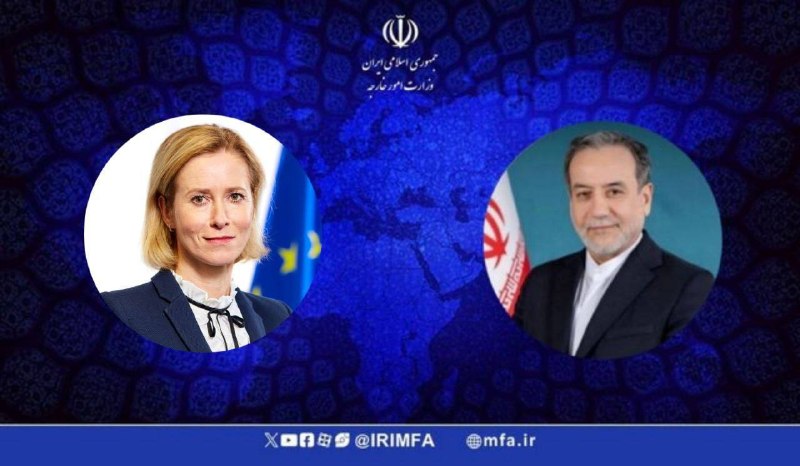
At a press briefing in Tehran on 18 July 2026, foreign ministry spokesperson Baqa'i argued that Washington is not simply managing traffic through the Strait of Hormuz but actively contesting control of the waterway, and accused the United States of creating what he called an independent parallel route in defiance of a bilateral memorandum of understanding. The comments, distributed via Iranian state-linked Telegram channels, are the most pointed Iranian public framing to date of an arrangement that has until now been described by both sides in technical, deconfliction language. The fifth article of the memorandum, Baqa'i said, explicitly emphasises the management of the strait, and contains no provision permitting a parallel American-managed corridor. What the United States has done, in his reading, is a violation.
The dispute sits at the centre of a wider argument between Tehran and Washington over who sets the terms of navigation in the world's most consequential oil chokepoint. Roughly a fifth of seaborne crude passes through Hormuz on any given day, and any disruption has historically moved benchmark prices within hours. Iran's claim is that the new arrangement moves beyond deconfliction and into unilateral stewardship of the corridor.
What Baqa'i actually said
Baqa'i opened his briefing by arguing that the American push in the current round of exchanges is animated by a desire for control, not coordination. "America is looking for control over the Strait of Hormuz," he said, framing the fifth article of the memorandum of understanding as proof that the agreement was designed to address management of the strait, not its re-engineering. He then turned to the question of routing, telling reporters that nothing in the text permits the United States to create an "independent parallel route" in Hormuz and characterising the move as a breach. The comments were carried in full by Tasnim News's English channel at 15:15 UTC and re-broadcast by Al-Alam's English feed at 15:41 UTC.
The distinction matters. Deconfliction language, the kind that appeared in earlier readouts, treats the corridor as a shared operating environment in which Iranian and American vessels communicate to avoid incident. A parallel route, in the Iranian telling, would amount to a US-administered channel inside Iranian-claimed waters, with its own rules of movement and its own enforcement logic. Tehran's objection is therefore not to the existence of the memorandum, but to what it says the United States has done inside it.
Fragmented Washington, in Tehran's telling
A second strand of Baqa'i's briefing was directed at the American side's internal coherence. Asked whether the US position reflects a single administration line, he replied that the American governance structure has become scattered and fragmented, with what he described as different factions inside the US government pulling in competing directions. The phrasing is standard Iranian diplomatic framing of US decision-making, but the timing is notable: it lands in the same briefing in which Tehran is accusing Washington of acting unilaterally on a specific corridor.
For analysts, the two claims are connected. If the United States is fragmented, the argument runs, it is harder for Tehran to negotiate with a single counterpart, easier to argue that any US move reflects an internal faction rather than settled policy, and easier to contest the move as outside the agreed text. The Iranian framing treats fragmentation not as a reason for caution but as a reason for sharper public pushback.
What the corridor actually is
The Strait of Hormuz is the narrow passage between Iran and the Arabian Peninsula, connecting the Persian Gulf to the Gulf of Oman and the Arabian Sea. Its shipping lanes carry crude from Saudi Arabia, Iraq, Kuwait, the UAE, Qatar and Iran itself, alongside liquefied natural gas from Qatar, the world's largest LNG exporter. Roughly a fifth of global oil consumption, and a comparable share of LNG, transits the strait each day, according to long-standing US Energy Information Administration estimates that have shaped how Western policymakers price Hormuz risk. Any structure that altered the routing, separation, or rules of navigation inside the strait would therefore touch global energy markets immediately.
Iran's claim that no provision of the memorandum permits a parallel American route is, in practical terms, a claim about sovereignty inside Iranian-claimed waters and airspace adjacent to the strait. The United States has historically insisted on freedom of navigation through the corridor under customary international law. Tehran's argument is that the memorandum sets the operational rules, and that those rules do not include an American-administered channel. Without independent confirmation of the memorandum's text, neither side's reading can be fully verified.
What stays contested
Three things remain unclear. First, the text of the memorandum itself has not been published; both sides have released summaries, and the fifth article's exact wording, on which Baqa'i's reading turns, is not in the public record. Second, the United States has not, on the record, described its Hormuz posture as a parallel route, and Western wire reporting on the briefing has so far relied on the Iranian read-out carried by Tasnim and Al-Alam. Third, the timing of any US move on the ground, and the operational definition of "parallel route" in the American usage, are not specified in the source material. The framing in Tehran is that the violation has already occurred; the framing in Washington, where it has been articulated at all, treats the corridor as a deconfliction measure.
The next test is whether the dispute stays in the briefing room or moves to the waterway. Iranian maritime posture in Hormuz has historically been the lever Tehran pulls when diplomacy stalls. Whether Baqa'i's language, deliberately chosen for foreign ministry distribution, signals a rhetorical escalation or a prelude to operational one is the question that will define the next 72 hours.
This article draws on Iranian state-linked reporting distributed via Tasnim News and Al-Alam English Telegram channels on 18 July 2026. Monexus's framing prioritises the Iranian public read-out as transmitted, and notes explicitly that the underlying memorandum text is not in the public domain; claims about its contents rest on the Iranian side's characterisation.
Wire provenance
This editorial synthesis draws on the following public wire/social posts:
- https://t.me/tasnimnews_en
- https://t.me/alalamfa
- https://t.me/alalamfa
- https://www.eia.gov/international/analysis/world-oil-transit
- https://en.wikipedia.org/wiki/Strait_of_Hormuz