England's World Cup exit hands Tuchel a scar, and the semifinal broadcasts reach well beyond football
Thomas Tuchel defended his choices hours after England's semifinal loss to Argentina, while the tournament's wider signal, from new women fans in Nairobi to political hostility toward Argentina online, kept generating copy.
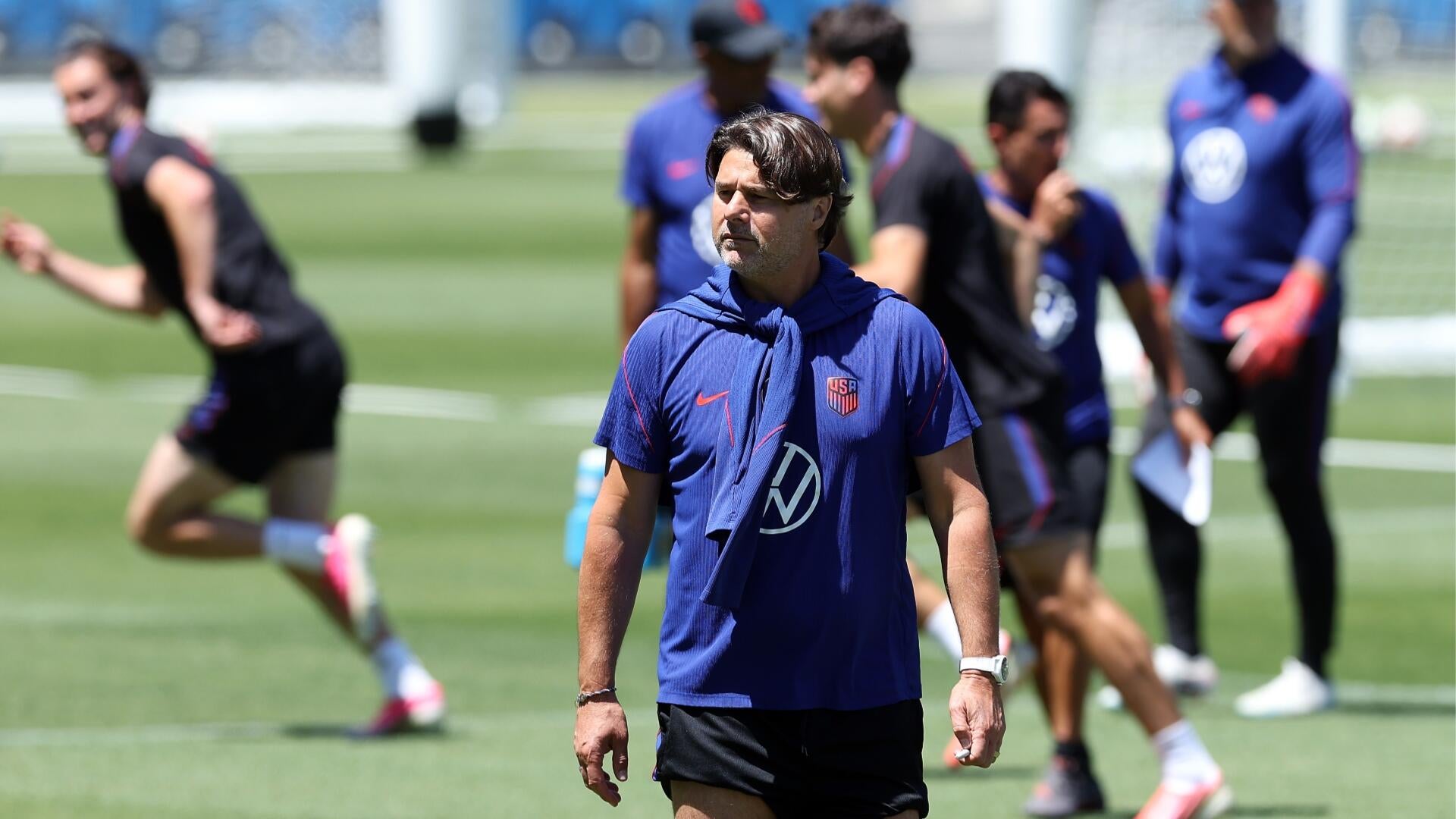
The England manager walked into the press auditorium at around 02:50 UTC on 18 July 2026 carrying a 1-0 semifinal defeat to Argentina and a tactical argument he plainly intends to keep having. Thomas Tuchel defended his team selection and in-game adjustments after the loss at the World Cup, telling reporters in a tense briefing that the result is "a scar we carry now" rather than a verdict on his methods. The phrasing was not resignation; it was defiance, the kind a coach keeps in reserve for a tournament that still has a third-place game to play and a contract that runs into 2028.
The semifinal produced the on-pitch story, but it also produced two parallel copy streams that have very little to do with football. One tracks how the tournament is changing who watches. The other tracks who is willing to back the eventual champion, and who is not.
What Tuchel actually defended
Tuchel's case, as set out in his briefing, runs along two lines. First, the Argentine goal came from a defensive lapse his substitutions were meant to anticipate, not from the structural choice to play a high line. Second, his midfield selections were designed to give England control of the second half, which by most statistical readings of the half they had, even as the scoreline did not move.
Neither argument is decisive on its own. A semifinal loss defined by a single moment tends to be read as a failure of fine-tuning, and the manager's defence has to explain why his preferences held even as the result turned. What was striking in the briefing was the willingness to absorb blame personally. "A scar we carry now", said repeatedly, was delivered without the usual coaching deflection onto the players. The subtext, hard to miss, was that Tuchel is more worried about a narrative around his methods than about the immediate result.
The third-place game is a pressure valve, not a reprieve. Anything less than a comfortable win, against a tired opponent, and the manager's thesis starts to look like a luxury England could not afford.
A different World Cup in Nairobi
While the English press room emptied, a quieter story was being written about who the tournament has reached. Reporting from Daily Nation on 18 July 2026 documents a wave of new women fans coming to the game through the World Cup, gathering in Nairobi living rooms and online groups to follow matches that until recently sat outside the regular rotation of African sports media coverage.
The economic read is straightforward: a tournament that adds viewers at scale gives broadcasters, betting platforms, and rights-holders a justification to spend on women's football and women's leagues for the first time. The cultural read is less transactional. Public viewing culture is gendered, and the spaces that have traditionally drawn male fans have not always welcomed women. Where that is changing, it is because the tournament offers a focal point cheap enough to organise and global enough to be a social statement.
This matters for more than sentiment. If the post-tournament spike in women viewers translates into subscriptions, club attendance, and youth registration in major African markets, then FIFA's commercial model for the women's game looks materially different by 2028. If it does not, the moment passes into a cycle of tournaments that briefly changed viewing habits and then reverted.
The geopolitics of a final nobody expected
The thread that ties together the morning's coverage is not Argentina's play but the reaction to Argentina's geopolitics. A 04:29 UTC post from Middle East Eye's account on X documents online opposition directed at the defending champions, framed around the perception that Argentina is closely aligned with Israel. The framing has gathered volume in the days before the final, in part because the tournament's largest audiences sit in regions where Israel's war in Gaza remains a daily reference point and sports diplomacy is read for signals that Western sports media tend to ignore.
The Argentine Football Association (AFA) has not been the only federation to face this pressure during the tournament. The pattern is the same: a national team whose government or governing body is read as sympathetic to Israel becomes a target for fans who read the World Cup as a stage on which other things can be said. Coverage of those fans ranges from sympathetic to scolding depending on the outlet and the country of publication, and the substantive point, that a football match can carry political freight, gets lost in arguments about whether the protests are appropriate at all.
For Argentina specifically, the cost of any boycott sentiment is bounded. Ticket sales for the final are largely committed and broadcast ratings do not typically track political mood in real time. But the longer-tail effect on sponsorship goodwill, especially from brands positioning themselves around Middle East and North Africa growth markets, is harder to discount. Several major kit sponsors have internal policies, kept off the record, about footballer image rights in politically sensitive markets. Those policies will be quietly re-read after the final whistle.
What the next week decides
Three specific dates will tell us whether Tuchel's scar is a footnote or a fault line. The third-place match, scheduled within the next 72 hours, will test whether his midfield structure can produce a result against an opponent with less to defend. The post-tournament assessment by the Football Association, expected before the September international window, will determine whether his England project gets a quiet reset or an airing out. And the seeding draw for the next round of qualifiers, later in 2026, will set the fixture list that decides whether England can rebuild quietly or whether every result is read as a referendum on the manager.
Off the pitch, the test for FIFA and the host broadcasters is whether the women-fan cohorts documented by Daily Nation can be converted into the recurring audience that justifies sustained investment in the women's game. And the test for Argentina is whether a World Cup final win, if it comes, doubles as a political shield or simply paints a larger target on the team's back in markets where football and foreign policy now share a stage.
The manager's scar is the most photogenic story of the morning, but the tournament's actual verdict will be read in the spaces further from the pitch: in subscription numbers, in sponsorship memos that never get quoted, in the question of which World Cup audience the next one is being sold to.
Monexus filed this under the Americas desk because the lead newsmaker sits on the North–South axis, even though the reporting reaches into East Africa and the Middle East. The English-language wire focused on Tuchel's briefing; the structural story is about how a men's final now carries political freight outside the dressing room.
Wire provenance
This editorial synthesis draws on the following public wire/social posts:
- https://t.me/middleeasteye