C-RAM over Erbil: a thirty-minute window that exposes the fog of the Iran-US air war
Iranian drones and US interceptors lit up the skies over Erbil within minutes of a CENTCOM strike announcement on 18 July 2026. The pattern is familiar. The off-ramp is not.
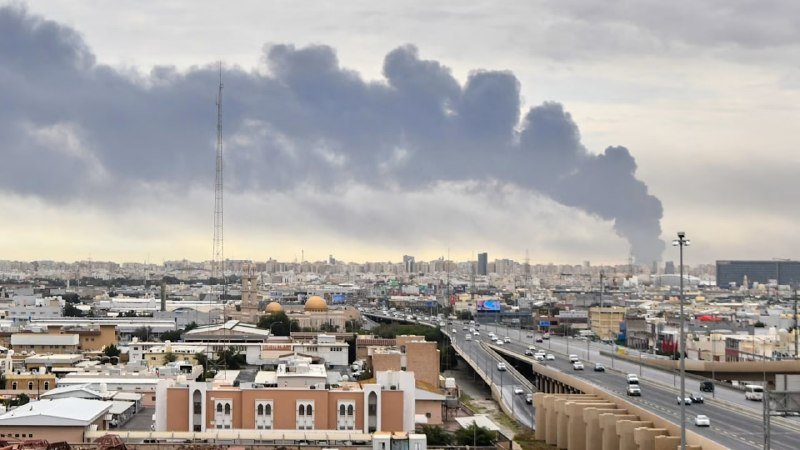
At 22:09 UTC on 18 July 2026, Iran's state broadcaster PressTV reported multiple explosions at the US consulate compound in Erbil, the capital of Iraq's Kurdistan Region. By 22:25 UTC, the same outlet was describing air-defence systems activating over the city. By 22:38 UTC, Telegram channels monitoring the exchange were carrying footage of US counter-drone fire northeast of Erbil and frames that local accounts identified as the aftermath of an Iranian drone intercept. The thirty-minute arc, captured in seven discrete dispatches from PressTV, the field channel @wfwitness, and the OSINT aggregator @Megatron_ron, is the most compressed public window yet into the new air war between the United States and Iran.
The exchange has a structure, and the structure has a logic. CENTCOM opened the cycle at roughly 22:23 UTC with what PressTV described as the "beginning of new airstrikes against Iranian targets." Within minutes, Iranian drones, or drones that Iraqi and Iranian sources attributed to Iran, appeared above Erbil. US C-RAM, Counter-Rocket, Artillery and Mortar, systems engaged. Air defences fired. The consulate, or buildings in its vicinity, sustained impact damage that PressTV characterised as multiple explosions.
What the seven dispatches actually establish
Read in sequence, the items in the cluster describe a classic tit-for-tat tempo: a US strike announcement, an Iranian drone response inside Iraqi airspace, US point-defence activation, and visual evidence of interception. The framing sources differ on attribution and outcome but agree on the geometry.
PressTV, the English-language arm of Iranian state media, carried three of the seven items. The first, at 22:09 UTC, alleged explosions at the US consulate building itself. The second, at 22:23 UTC, relayed CENTCOM's announcement of new strikes against Iranian targets, a US statement relayed through an Iranian outlet, which is itself a tell about how the information environment has compressed. The third, at 22:25 UTC, said air defences had been activated over Erbil.
@wfwitness, a Telegram channel that routinely carries frontline footage from Iraq and Syria, provided three pieces of visual material: a 22:06 UTC clip of C-RAM fire, a 22:17 UTC clip described as showing a drone strike impact near the end of the footage, and a 22:20 UTC clip of what it called the aftermath of an Iranian drone intercepted northeast of Erbil. @Megatron_ron, an OSINT aggregator, supplied the seventh item at 22:38 UTC with the framing that "the US is trying to intercept Iranian drones above Erbil, Iraq."
The verification problem is immediate. PressTV is a state outlet with a stated interest in presenting Iran as the responder rather than the aggressor. @wfwitness is a field channel whose footage can be authentic, miscaptioned, or recycled. @Megatron_ron is aggregating, not witnessing. None of the three is an independent on-the-ground newsroom. Together they describe an event. They do not, by themselves, prove every element of it.
What we verified and what we could not
What the seven items collectively verify:
- That on 18 July 2026, between approximately 22:06 UTC and 22:38 UTC, multiple explosions and air-defence activity were reported over Erbil, Iraq. The cluster contains three independent-style channels (one state outlet, one field channel, one OSINT aggregator) describing the same city, the same half-hour, and a consistent sequence of strike announcement, drone appearance, and counter-drone fire.
- That CENTCOM publicly announced new airstrikes against Iranian targets on the same evening, per PressTV's 22:23 UTC relay.
- That C-RAM systems were visually active over Erbil, per the @wfwitness footage timestamped from 22:06 UTC onward.
What the cluster does not verify:
- That the consulate building itself was hit. PressTV asserted this at 22:09 UTC. No Western wire, no Iraqi Kurdistan Regional Government source, and no US statement is present in the cluster confirming damage to the consulate compound as distinct from damage in its vicinity. The framing in Iranian state media should be treated as an Iranian state claim until corroborated.
- That the drones were Iranian. Attribution to Iran is made by Iranian state media and by channels that frequently carry Iranian-aligned framing. Independent identification of drone type, serial markings, or launch coordinates is not present in the seven items.
- Casualty figures. None of the seven items reports injuries or deaths. Any specific number attached to this exchange would be invented.
- That CENTCOM's strikes were retaliatory rather than preemptive, or vice versa. The order of events in the cluster, CENTCOM strike announcement first, Erbil airspace activity second, is consistent with an Iranian retaliation but does not foreclose other sequencing in earlier hours not captured here.
The pattern, and what is new
Iran and the United States have been exchanging fire in and around Iraqi airspace for the better part of two years, with Kurdistan Region cities hosting US and coalition personnel repeatedly caught in the geometry. What is notable about this particular window is not that it happened but how quickly the public information environment captured it. In earlier rounds of the shadow war, the same kind of exchange would surface in fragments over hours: a CENTCOM release, a Pentagon briefing, Iraqi Kurdish security statements, then Western wire confirmation. Here, the cluster shows a near-real-time picture assembled by a state outlet, a Telegram field channel, and an OSINT aggregator, with no Western wire visible in the immediate cycle.
That is the structural shift worth naming plainly. The first draft of the air war is now being written in Telegram channels and Iranian state media before Reuters or AP has filed. The Western wire layer will arrive, in time, with its own framing, its own verification, and its own hierarchy of who counts as a credible source. By then, the on-the-ground audience has already seen the C-RAM video, read the Iranian framing, and drawn conclusions. The information lag that once gave Western outlets a framing monopoly has collapsed.
There is also a Kurdistan question that the cluster quietly surfaces. Erbil is not Tehran and not Baghdad. It hosts the Kurdistan Regional Government, a US-consolidated base architecture, and a civilian population that did not choose to be inside the geometry of an Iran-US exchange. PressTV's framing positions Erbil as a legitimate Iranian target because of that US presence. The KRG's own statement, if it issued one in this window, is not in the cluster. The Iraqi federal government in Baghdad is similarly absent from the seven items. The sovereignty of a host nation's airspace, and the safety of its civilians, is the silent variable in this round.
Stakes and what to watch
The off-ramp question is the one that matters next. CENTCOM strike announcements followed by Iranian drone returns above Erbil describe a cycle, not a conclusion. Each round raises the cost of the next: more C-RAM expenditure, more risk to overflight corridors, more pressure on the KRG to choose between its US security partnership and its economic relationship with Tehran. The cluster offers no signal of de-escalation, no Iranian foreign ministry statement in the seven items, no CENTCOM framing of the strikes as limited or finite, no Iraqi or KRG response.
Three things are worth watching in the next forty-eight hours. First, whether Western wires (Reuters, AP, AFP, the BBC) corroborate or correct the consulate-damage framing. Second, whether the KRG issues its own statement on the airspace exchange, which would test how much room a sub-state ally has when caught between a US strike campaign and an Iranian retaliation. Third, whether Iranian foreign ministry or UN-mission channels surface a framing of the strikes as escalatory, retaliatory, or proportionate, which would telegraph Tehran's next move more clearly than the Telegram footage alone can.
For now, the record is seven dispatches, three channels, and one city under fire. The structural pattern is familiar. The information environment around it is not.
Desk note: Monexus is reporting this exchange from the open-source and state-media record available in the immediate aftermath. Where Iranian state media is the sole source for a specific claim, most notably the consulate-damage framing, we have flagged that as an unverified Iranian state claim rather than a confirmed fact, and we have separated what the cluster verifies from what it does not. The investigation remains open as Western wire and KRG sourcing develops.
Wire provenance
This editorial synthesis draws on the following public wire/social posts:
- https://t.me/presstv
- https://t.me/wfwitness
- https://t.me/wfwitness
- https://t.me/wfwitness
- https://t.me/presstv
- https://t.me/presstv
- https://t.me/megatron_ron