Clark's 40-10 line rewrites the WNBA record book, but the larger fight is over who controls the narrative
Caitlin Clark's 45-point, 10-assist career night produced the first 40-10 game in WNBA history, but Adam Silver's warning that she has become a 'political football' points to the deeper fight over officiating and physical play.
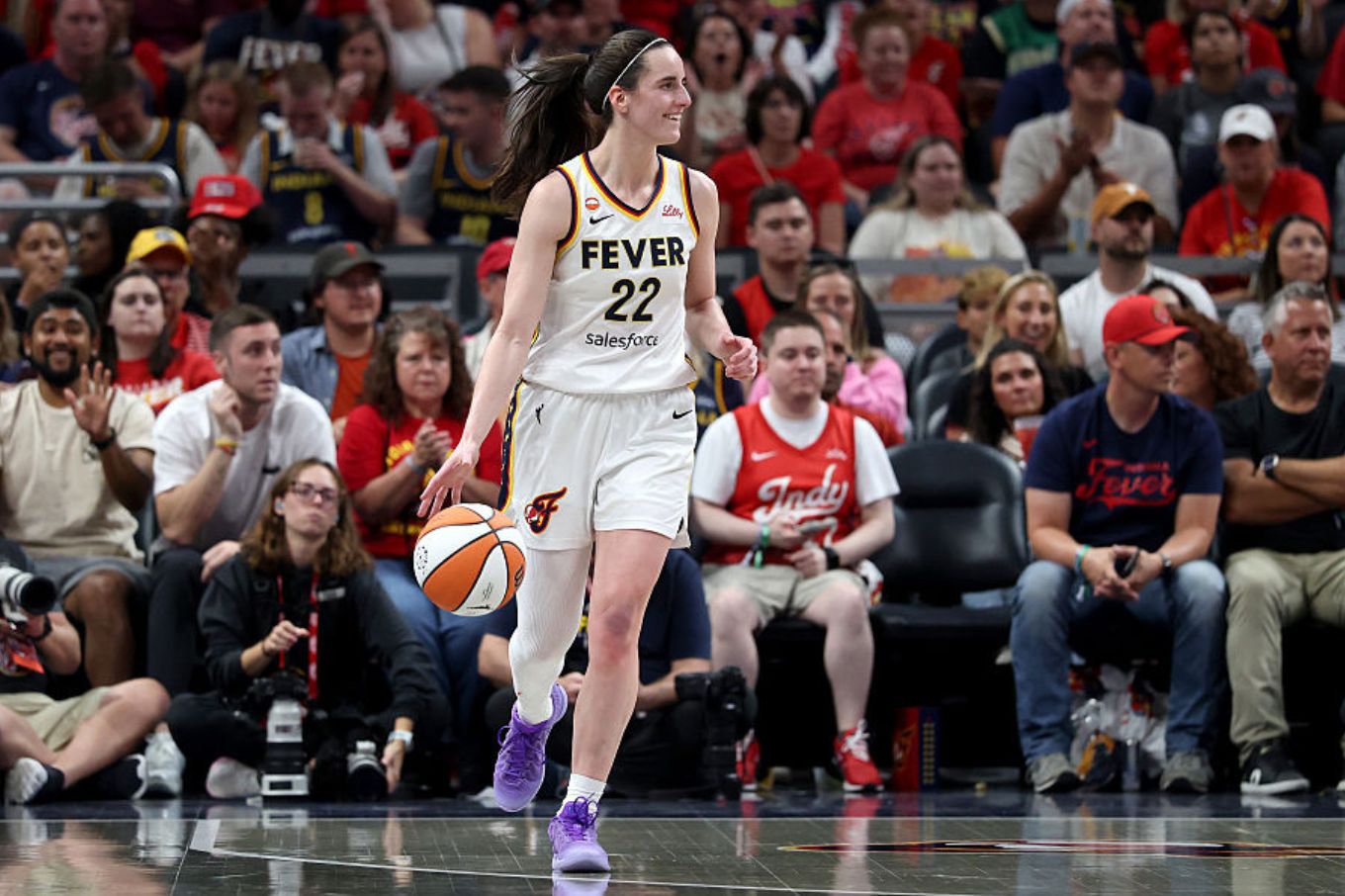
Caitlin Clark scored a career-high 45 points and added 10 assists in 29 minutes on Thursday night, and the Indiana Fever beat the Seattle Storm 110-107 to push her name into a category no WNBA player had occupied before. The stat line was the first 40-point, 10-assist game in league history, and the kind of offensive print that tends to settle debates on its own merits. Yet the box score landed in a league whose loudest arguments are no longer about basketball.
The deeper story is not whether Clark is great. It is whether a women's league built around her gravitational pull can survive a public fight over how the officials let opponents play her, and whether the league office, the players' union, and a viewership that arrived with Clark can be brought into the same conversation. Adam Silver, the NBA commissioner whose league runs the W as a separately owned property, said in a BBC Sport interview that Clark had become "a political football," and that the dispute around her treatment is "not largely about officiating." He did not say what it is largely about. That is the gap the next few weeks will fill.
What she actually did
Clark went 14-of-22 from the field, hit seven threes, and got to the line 12 times. She finished one assist shy of a 40-point triple-double, and her ten dimes were the kind of distribution that distinguishes a scorer from a playmaker. According to CBS Sports, she played only 29 minutes. That is the figure that should give defensive coordinators pause: she produced a historically efficient offensive game in roughly two-thirds of a regulation clock. The Fever, long the league's most-followed team by television demand and last in the East for stretches of recent seasons, are now the story the schedule keeps returning to.
Why Silver is calling it a political fight
Silver told BBC Sport, in remarks that aired Thursday, that the conversation about Clark "is not largely about officiating." The implication, left deliberately broad, is that something else is doing the work: ratings politics, the league's broadcast partners, the WNBA Players Association's ongoing labor posture, and a social media economy that turns any hard foul into a viral referendum. ESPN's separate write-up of his comments used the same "political football" language and noted the debate has stretched to "physical play" against the Indiana star. Silver's instinct to deflate the officiating conversation is itself a political move; treating it as a meta-fight lets him decline to referee the referee.
The plausible alternate read is that officiating is exactly the right place to start. Hard fouls on star players are not new, but the cumulative pattern across Clark's first two professional seasons has produced enough highlight-reel contact to justify the question. Silver's framing only makes sense if you accept that officiating cannot be cleanly separated from league-office incentives, broadcast partner input, or the CBA fight that has hovered over the W for the better part of a year. None of those threads end with the zebras.
The structural frame
A rookie-scale star in a league that spent two decades fighting for cable-tier relevance is not just a player. She is a distribution argument. The 2024 and 2025 WNBA seasons saw broadcast and attendance records broken in markets Clark visited, and the league's media rights negotiations with incumbent and streaming partners run on those numbers. When a player becomes the load-bearing column of a rights package, every body blow she takes becomes a balance-sheet question. The union, separately, has its own grievances about travel, pay, and charter flights, and any conversation that focuses only on one player's treatment risks crowding those out.
Silver's preferred frame, that this is politics rather than officiating, lets the league treat the controversy as exogenous noise rather than a product of how the W is governed. That is a useful posture for a commissioner protecting a media-rights cycle. It is less useful for a player whose body is the surface on which the debate is fought.
Stakes for the rest of the summer
The Fever have roughly six weeks of regular season left and a playoff seeding fight that will decide home-court leverage. The Storm, on the other side of Thursday's result, get to recalibrate a defense that gave up 110 to a one-woman offense. The league office, meantime, has a much narrower window: it can either let the officiating debate metastasize into a labor-and-coverage fight, or it can do what Silver's NBA has done in similar moments, which is publish a memo, tweak an enforcement standard, and move on. The first path costs the WNBA credibility with the audience that just showed up. The second costs it credibility with the players who were here first.
What remains genuinely uncertain is whether the WNBA and the NBPA-aligned officiating staff can decouple "protect the star" from "respect the defender," a tension the men's league has managed for thirty years and the women's league is now negotiating in public for the first time. Silver's "political football" line is meant to lower the temperature. It will, more likely, raise it.
Desk note: Monexus treated Silver's "political football" framing as the lead, rather than the box score, because the source material pointed to a governance story wearing the costume of a basketball one. The numbers are verified against CBS Sports and ESPN; Silver's quotes are verified against BBC Sport and ESPN.