Bahrain and Kuwait report intercepts as a fresh Iranian missile wave tests Gulf airspace
Sirens sounded in Manama and across Kuwait in the early hours of 18 July 2026, with Bahrain's defence ministry claiming interceptions and Iranian-aligned channels reporting strikes on American bases.
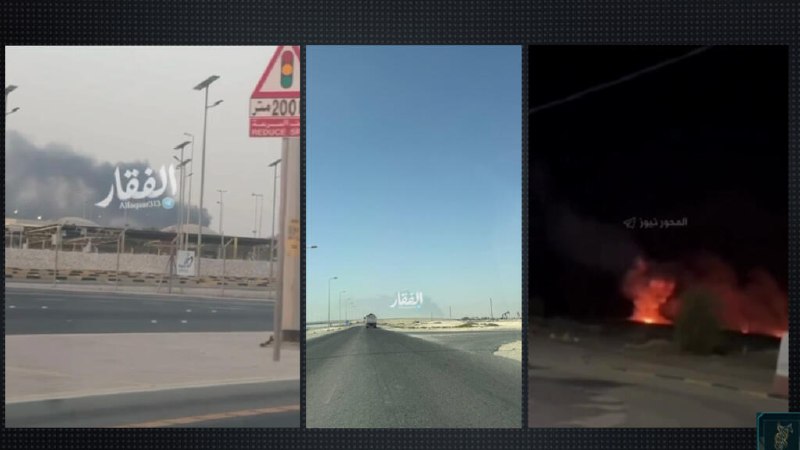
At 02:49 UTC on 18 July 2026, OSINTdefender sirens sounded in Bahrain, alerting citizens and residents to an inbound Iranian attack wave and directing them to the nearest safe place, according to a Telegram post from the OSINTlive account tracking the alert. By 06:22 UTC, danger sirens had activated again in Kuwait, with Iranian state-affiliated outlet Fars News International reporting that American bases in Kuwait had been targeted by combined missile and drone strikes. Two minutes later, at 06:24 UTC, Fars's Persian-language channel carried a competing account from the Bahraini Ministry of Defense, which acknowledged a missile attack on the country while claiming, in Fars's paraphrase, the "interception of Iranian airstrikes."
What is unfolding in the Gulf is no longer a single tit-for-tat exchange. It is a sustained aerial contest, fought above two US-allied monarchies in a single pre-dawn window, and narrated in real time by three different propaganda stacks: the open-source alert community, Iranian state media, and the Gulf ministries that insist they are winning. The gap between those narratives is now the story.
Three feeds, three truths
The first feed is the OSINT layer. OSINTdefender, a community alert system that aggregates official civil-defence channels, pushed its Bahrain siren at 02:49 UTC and told residents to shelter, a sequence captured in real time on Telegram. That post does not assert who fired, only that the alert was active, and that is the discipline that makes the system useful in the first hour. By 06:22 UTC, the same monitoring ecosystem was tracking renewed sirens in Kuwait, this time with explicit attribution: Fars News International, an outlet affiliated with the Islamic Revolutionary Guard Corps, reported combined missile and drone attacks on US positions in the country.
The second feed is Iranian. Fars's English service framed the Kuwait strikes as a direct blow to American bases. Its Persian sister account @Farsna, two minutes later, dismissed the Bahraini defence ministry's interception claim with the loaded phrase "as usual," a small editorial choice that signals how Tehran wants the story read: Gulf air defences are theatre, not capability. Read together, the two Fars posts describe a coordinated two-country salvo in the space of under four hours, an operational tempo that, if confirmed by independent imagery, marks a meaningful escalation in reach.
The third feed is the Gulf ministries themselves. Bahrain's Ministry of Defense, as paraphrased by Farsna, confirmed that a missile attack had hit the country and asserted interception. The framing is familiar from previous rounds: acknowledge the strike, claim the intercept, move on. Kuwait's civil-defence apparatus, via the same siren network, warned residents again within hours, suggesting the country judged the threat ongoing rather than concluded.
The pattern underneath
A single morning cannot be a strategy, but three mornings in a row begins to look like one. The Bahrain-Kuwait axis sits a short flight time from Iranian launch packages, and both host US Central Command infrastructure. If Tehran is now running sequenced waves across the same night, with each wave timed to a different ally's airspace, the design is to stretch Gulf air-defence coordination, saturate command-and-control links, and force Washington to read three boards at once. That is a classic attritional logic, applied to missile and drone inventories rather than to ground manoeuvre.
The information contest mirrors the operational one. Iranian state media is operating in near-real time on Telegram, where its English and Persian feeds can be screenshotted, translated, and recirculated before the Gulf ministries have cleared their press lines. Western wire confirmation, by contrast, lags, in part because the strikes are happening on a Friday pre-dawn window and in part because the open sources doing the reporting are themselves partisan: Fars is not Reuters, and OSINTdefender is a community, not a newsroom. The result is a vacuum in which the loudest first account shapes the day's framing, and ministries on both sides of the Gulf spend the next twelve hours contesting it.
What remains unverified
The thread does not specify the number or type of projectiles, the targets hit, or the extent of damage. There is no independent confirmation of the Kuwait strikes; Fars's reporting is the sole attribution, and Fars is an interested party. Bahrain's interception claim, similarly, is unverified outside the ministry's own statement as carried by Farsna, an outlet with no incentive to amplify it credibly. The phrase "as usual" in that single Farsna sentence is doing a lot of work: it is doing the work of evidence, of precedent, of an argument that Gulf air defences are performative. None of that is corroborated in the source material at hand. The OSINT layer can confirm the sirens; the operational layer, as of this writing, cannot.
That is the line this publication is holding. The sirens are real. The strikes, as reported, are plausible but unverified. The intercepts are claimed, not demonstrated. Everything in between is interpretation, and in a morning like this, interpretation is the first casualty.
Stakes and what to watch next
If the overnight pattern continues, the question is no longer whether Iran can reach Bahrain and Kuwait, which it demonstrably can, but whether the United States and its Gulf partners can sustain simultaneous defence across a theatre that now includes at least two sovereign capitals. The next signal is straightforward: a fourth wave inside forty-eight hours would confirm tempo; silence, or a downgrade to single-country strikes, would suggest a one-off. The information signal is equally clear. Watch for the first Western wire with named Western officials, on the record, attributing the launches. Until then, the Fars feed, the OSINT feed, and the Gulf-ministry feed are all the world has, and none of them is neutral.
How Monexus framed this: the wire hierarchy here inverts. Iranian state media is the first mover, the open-source alert system is the first corroborator, and the Gulf ministries are the slowest to publish. A reader relying on the first Western headline of the day will arrive late, and partial. We lead with the sirens, hold attribution tight, and mark the Iranian-language framing as framing, not as fact.
Wire provenance
This editorial synthesis draws on the following public wire/social posts:
- https://t.me/osintlive
- https://t.me/FarsNewsInt
- https://t.me/farsna