Cape Verde steal the show as Africa's largest World Cup cohort bows out on late goals
Five African sides exited the 2026 World Cup on stoppage-time goals, but Cape Verde's run and the continent's record nine-team delegation mark a deeper shift in how African football projects itself on the global stage.
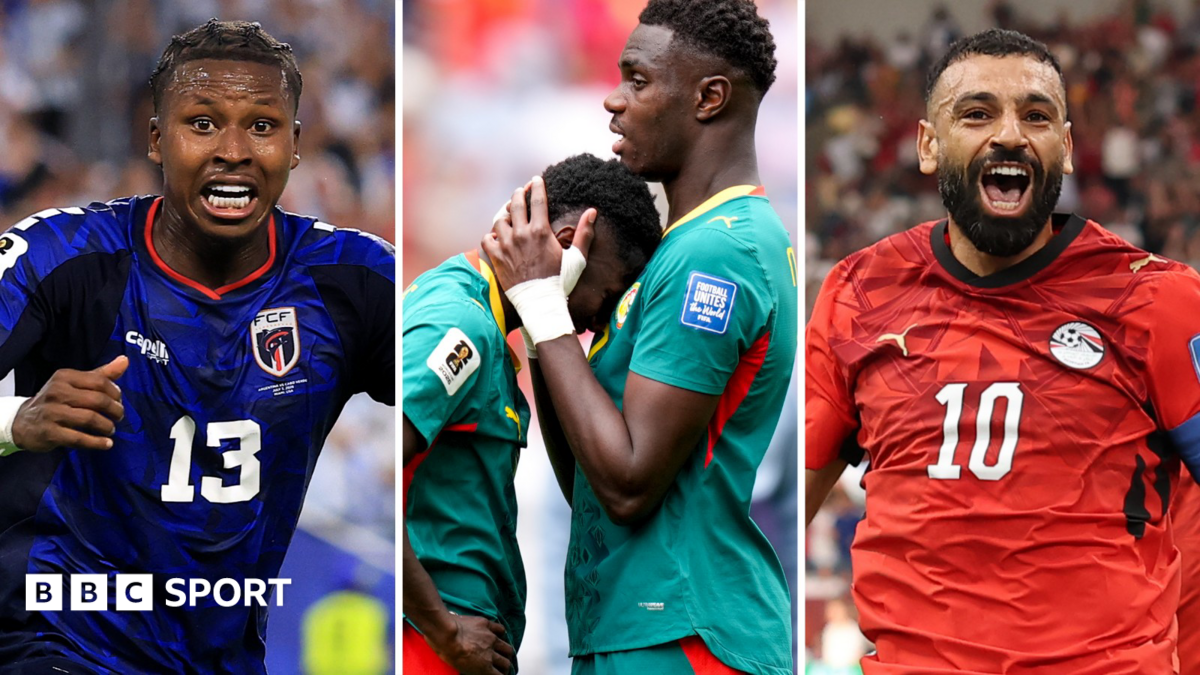
Cape Verde's 1-0 win over a higher-ranked opponent on 16 July 2026 was the moment a tournament of near-misses turned into a statement. The Blue Sharks, an island nation of roughly 600,000 people, became the smallest country by population to reach the knockout round of a men's World Cup, per BBC News's 17 July wrap-up of the African contingent. They did it the hard way: goals deep in added time decided five of the nine African matches at this finals, and Cape Verde were on the right side of that margin more often than not.
Africa sent its largest-ever delegation to a World Cup, nine teams across the 48-nation field that kicked off across the United States, Canada and Mexico. Five of those nine sides were eliminated by goals scored in the 89th minute or later, a pattern heavy enough to flatten the continent's headline and obscure the more durable story underneath it: that the floor, not the ceiling, is what moved.
The record that mattered most
The raw arithmetic is striking. Nine African teams at a 48-team World Cup is more than double the four that travelled to Qatar 2022, and one more than the eight that went to Brazil 2014. For a confederation that has spent two decades arguing it deserves more than the five slots it was allotted in the 32-team era, the expansion has functioned as a quiet correction. According to the BBC's 17 July review, the scale of the delegation is itself the headline: depth, not just a flag-bearer, is now African football's baseline.
The losses stung because they were narrow. Morocco and Senegal exited on late opposition goals. Two further sides were knocked out by stoppage-time equalisers that flipped goal difference. The continent finished the group stage with two teams in the last 16, in line with recent editions, but the conversion rate in the round of 16 was the disappointment. Both African sides that advanced were eliminated at that stage.
Cape Verde, and the small-state template
What made Cape Verde's run different was the shape of the squad. Head coach Pedro Leitão Brites, who took over in 2023, built the side around a diaspora that includes first-teamers born in Portugal, the Netherlands and France, players who held dual nationality and chose the islands over more decorated footballing nations. Cape Verde's federation formalised that pipeline years ago; this tournament was the dividend.
On the pitch, the result followed a familiar African pattern in this tournament: a goal scored late, this time the winner rather than the concession. The BBC report credits the Blue Sharks' organisation and set-piece threat, attributes consistent with their qualifying campaign, in which they finished ahead of continental heavyweights. Their knockout-round appearance is not a fluke. It is the product of a federation that has invested in coaching, diaspora outreach and a youth pathway that does not depend on a single elite academy.
What the late-goal pattern actually says
A continent getting eliminated by late goals is, on its face, a tale of fragility. Read more carefully, it is a tale of compression. With the field expanded to 48 teams and the gap between seeded and unseeded sides narrowed, the margins in the group stage have shrunk. African teams have spent the last two cycles arguing that they underperformed at World Cups because they were under-seeded and under-tested at the confederation level. At this tournament, they were tested, and the scores reflect it.
The structural pattern is familiar from club football: more games, more late drama, fewer clean sheets. African teams have historically been strongest in the opening 60 minutes and most vulnerable in the final 20, a fatigue and conditioning gap that several federations have spent the last four years trying to close. That gap is closing, but unevenly. Morocco, who reached the semi-finals in Qatar, have the resources to train at European-club intensity; smaller federations do not.
The stakes for the next cycle
The 2026 cycle also resets the calendar for the next round of confederation politics. FIFA has already confirmed that the 2030 World Cup will be hosted across Spain, Portugal and Morocco, with three centenary matches in Argentina, Paraguay and Uruguay. African football's governing body, CAF, has used the 2026 delegation as evidence in a campaign for a permanent allocation above nine slots, arguing that performance under expansion justifies further expansion. The argument has not yet landed at FIFA level, where the European and South American federations remain the swing voters on slot allocation.
For the nine federations that travelled, the more immediate stakes are bilateral. Morocco's 2030 co-host status means they will not need to qualify in the traditional sense; their challenge is to host a tournament that puts African infrastructure on permanent display. Egypt, Nigeria, Ghana, Senegal and Cameroon will spend the next 18 months managing a generation that has just had its first extended taste of a World Cup. And Cape Verde, whose federation runs on a fraction of the budget of any side they faced, will spend the cycle trying to prove that a Pacific-island-sized nation can do this twice.
What the wire is under-playing
Mainstream coverage has framed the late-goal exits as heartbreak, which is the correct emotional register but the wrong analytical one. The deeper story is structural: Africa sent more teams, more of them were competitive, and more of them were undone by fine margins than at any previous finals. That is not a slump. It is the shape of a confederation that has closed the talent gap but not yet closed the conditioning, depth or seeding gap. The cycle that decides whether the next nine become twelve starts now.
Desk note: Monexus framed Africa's 2026 World Cup around the depth of the delegation and the diaspora-fuelled rise of Cape Verde, rather than the late-goal heartbreak that dominated wire headlines. The structural read is that African football's floor has lifted, even if the ceiling has yet to break.