The trophy, the ring, and the cheque: what the 2026 World Cup leaves behind
Two days before the final, FIFA's most durable rituals are colliding with new commercial ones: a ring, a third-place playoff, and a transfer window waiting on the other side of the whistle.
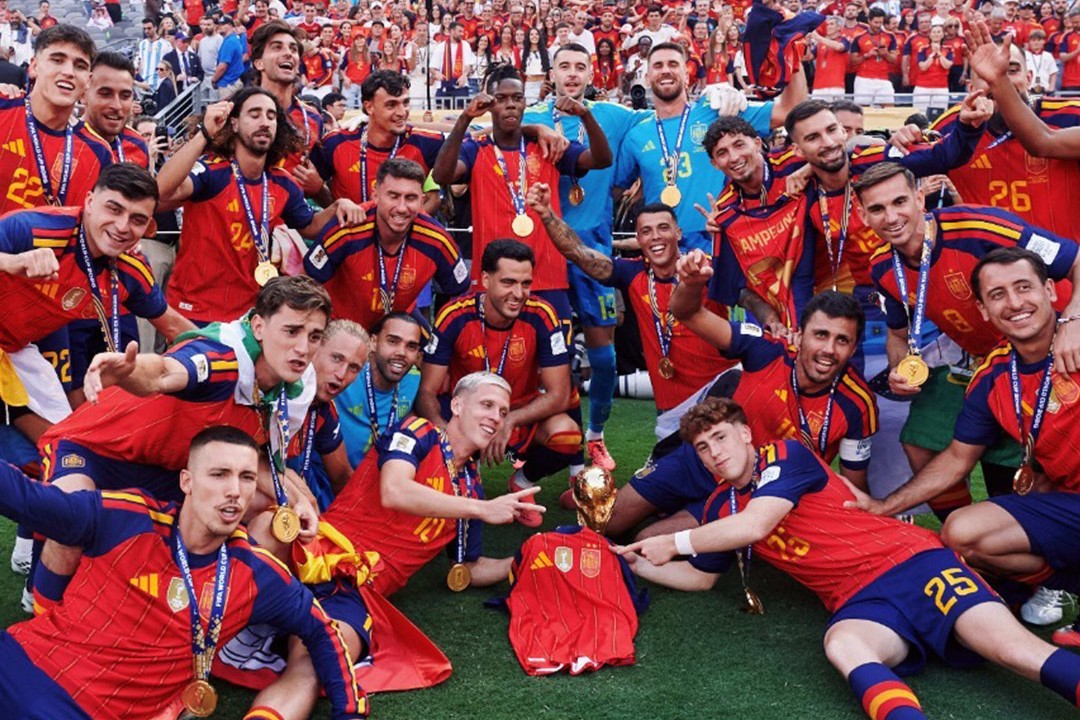
At 12:13 UTC on 17 July 2026, ESPN reported the news that will travel furthest in dressing rooms from Madrid to Buenos Aires: the World Cup winners will be handed championship rings, on top of the trophy and the gold medals. The detail is small, the symbolism isn't. A tournament built on a single raised cup is now also a jeweller's job, and a jeweller's job is a commercial job.
The final, scheduled for 19 July at MetLife Stadium in East Rutherford, New Jersey, is not under threat from the air-quality warnings that have hovered over the New York metro area in recent days, sources told ESPN at 15:27 UTC on 17 July. That buys FIFA one fewer weather headache; it does not buy the organisation any quieter a fortnight. From the rings to the third-place playoff to the transfer window opening the moment the confetti lands, this World Cup is closing the way modern tournaments close: as a financial event first and a football event second.
The trophy is the story, the ring is the business
The rings, ESPN reported without naming a manufacturer or a per-unit cost, mark the first time FIFA has formally attached jewellery to the winners' haul. The gesture borrows wholesale from the four North American leagues that have built an industry around championship hardware: the NFL, NBA, NHL and MLB all hand out rings on top of their trophies, and each franchise orders between 100 and 400 of them, at prices that run from the mid-five figures into the low six. None of those figures appeared in the ESPN report, but the pattern is the pattern. If FIFA follows the North American template, the rings will be sold as memorabilia long before the next qualifier is kicked.
A separate broadcast decision is also quietly reshaping how the final is being staged for viewers. ESPN's separate piece on CFP expansion, filed at 16:02 UTC on 16 July, drew the line explicitly: World Cup expansion, whatever its on-field compromises, had access as a stated goal, while the College Football Playoff's expansion has not. The implicit pitch is that FIFA's 48-team gamble is the only major tournament structure in town that understands what American sports fans actually want, which is more doors opened, not more doors sealed.
The match nobody admits they want to watch
Two days before the final, BBC Sport is still arguing, gently and at length, that the third-place playoff is worth the price of admission. The BBC's framing at 10:44 UTC on 16 July is that the third-place match is the tournament's most honest contest: no tactical caution, no legacy anxiety, just two exhausted squads emptying the tank for bronze. The argument is correct, and also a little defensive, because the third-place playoff is the part of every World Cup that broadcasters quietly try to schedule into oblivion and that fans quietly try to ignore.
It will be played anyway, because the calendar needs it and the broadcasters need the slot. ESPN and Fox have hours to fill across the Saturday-Sunday bridge to the final, and an extra match is easier to monetise than another studio panel. The fixture's true constituency, in other words, is not the supporter in the stadium but the rights-holder's spreadsheet.
The window opens at full-time
While the rings are being fitted and the bronze medals handed out, the European transfer window is already open. BBC Sport's 06:30 UTC bulletin on 17 July laid out the first wave of names whose post-tournament moves will dominate the back-pages of every outlet from the Daily Mail to Marca: the players whose World Cup performances have either inflated or collapsed their market value in the space of three weeks. The pattern is familiar: the tournament's breakout striker is already being priced out of his current club; the goalkeeper whose penalty shootout went viral has two offers on the table; the midfielder who looked finished three weeks ago is suddenly worth a Premier League wage packet.
The transfer market is where the World Cup's real ledger gets written. Players leave for fees that are calculated as a multiple of the broadcast revenue, sponsorship uplift and shirt-sales projection their new club expects to capture in the first 18 months of the contract. The tournament is, in effect, a three-week shop window for an industry that runs the rest of the year on the price list those three weeks set.
The cheque the federations are already writing
The final commercial picture, however, is being drawn outside the stadium. BBC News's 23:16 UTC report on 16 July laid out the financial winners and losers of the 2026 tournament: which federations walked away with the broadcast and sponsorship surplus, which host cities absorbed infrastructure costs that the central FIFA pot did not cover, and which national associations entered the tournament in surplus and will leave in deficit. The headline finding is that the gap between the haves and the have-nots of international football has widened, not narrowed, and that the gap is now structural rather than cyclical.
The nuance the BBC report does not flatten: the winners are not simply the usual European suspects. Co-hosts Mexico, the United States and Canada all booked nine-figure surpluses from hosting revenue alone, and the Mexican federation's cut of broadcast and ticket income has reset its operating budget for the next cycle. The losers are smaller: any federation that travelled across the Atlantic and lost in the group stage, and any host city that built a temporary venue it cannot redeploy.
What is actually new, and what isn't
Two of the week's stories are genuine novelties: the rings, and the explicit framing of the 48-team field as an access-first design choice. The rest, from the third-place playoff to the transfer scramble to the financial winners-and-losers ledger, is the tournament doing what it always does, only louder and on a bigger balance sheet. The air-quality scare that ESPN knocked down at 15:27 UTC was the only genuine threat to the final's staging, and FIFA's quick rebuttal suggests the federation had rehearsed for it.
The match itself will be remembered for the score. Everything around it, the rings, the playoff, the transfer fees, the surplus lines in the federations' accounts, is the tournament's real afterlife, and it starts the moment the whistle blows.
Desk note: the wires covered the closing week of the 2026 World Cup in the register the closing week of any major tournament is covered in: trophy ceremony as commerce, third-place match as content, transfer window as consequence. Monexus has read the financial winners-and-losers ledger as the structural frame, rather than as a footnote, because the gap between the federations leaving New Jersey in surplus and those leaving in deficit is the story the trophy will not tell.