Venezuela's earthquake death toll crosses 4,900, a number Caracas and relief agencies are still counting
Twin June quakes along Venezuela's western coast have killed more than 4,900 people, according to state-aligned reporting, with the official toll still climbing and relief coordination stretched thin.
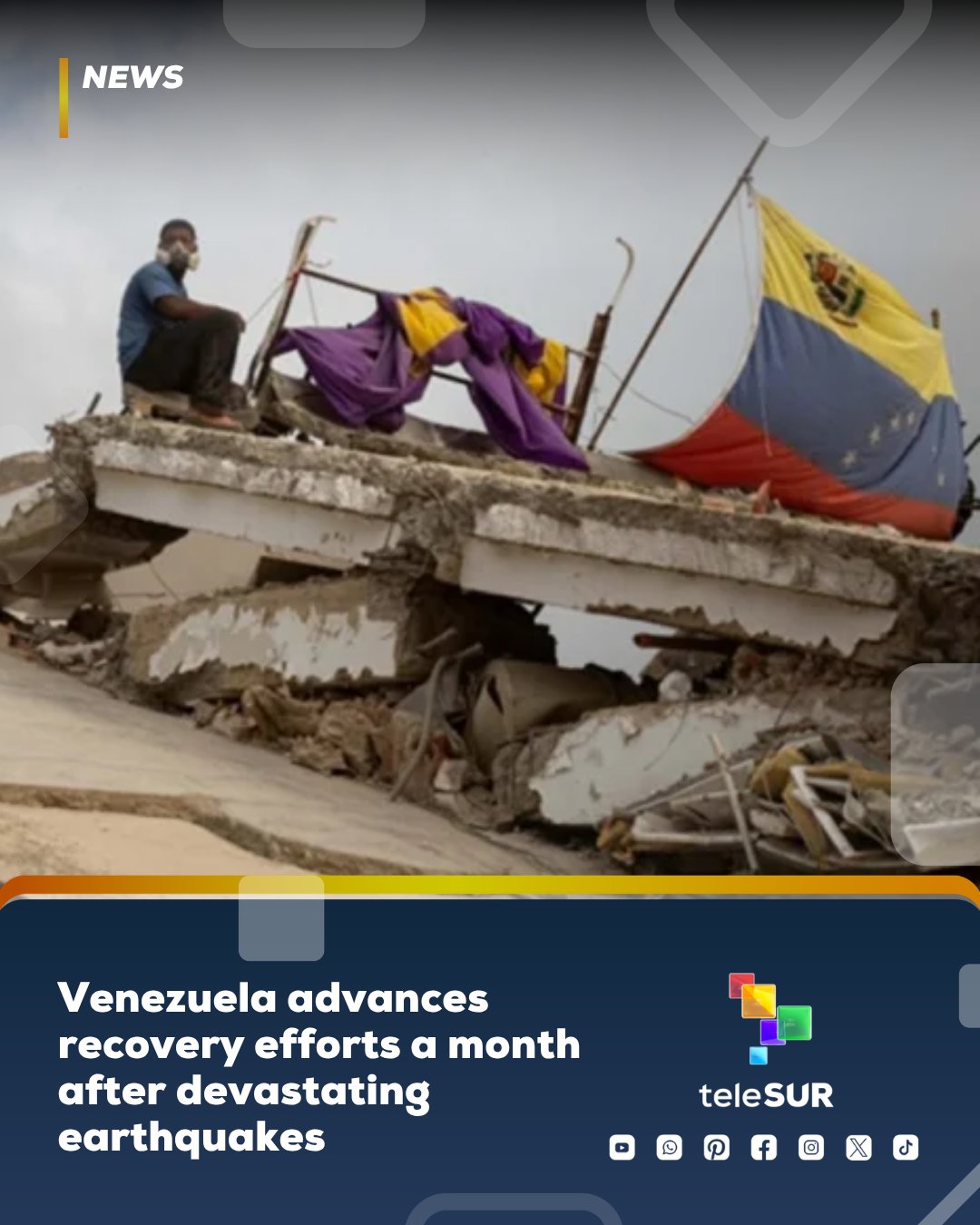
More than 4,900 people have died in the twin earthquakes that struck western Venezuela in June, according to a figure circulated by Iranian state-affiliated outlet PressTV on 17 July 2026. The number, attributed to Venezuelan authorities, marks one of the highest reported national casualty counts from a seismic event in the Americas in two decades, and it is still climbing.
The toll matters less for the digits themselves than for what they reveal about how Caracas, foreign partners, and humanitarian agencies are narrating a disaster in a country under sanctions, with restricted access for independent relief workers, and with a government that has had to choose between acknowledging need and admitting state capacity is stretched. The thread of reporting around the figure is thin: one Telegram post from a state-aligned channel, no independent wire confirmation yet, no breakdown by municipality or building type. What is on the record is a round number that exceeds the early post-event estimates of regional civil defence agencies by an order of magnitude.
A death toll, in absence of a wire confirmation
PressTV's 17 July post is short. It states the toll has "climbed to over 4,900" and credits the figure to Venezuelan authorities. Iranian state media has carried the figure without elaboration. Reuters, AP, and AFP had not, as of publication, posted independently verified counts matching the 4,900 figure, and the Venezuelan government's own civil defence agency has not, in this reporting cycle, published a national post-event mortality summary that this publication could verify line by line.
That asymmetry is the story. Western wires have largely stepped back from granular day-by-day Venezuelan reporting in recent years, citing access constraints and the difficulty of independently verifying Caracas's official figures. The vacuum has been filled, predictably, by state-adjacent outlets whose editors have an editorial interest in amplifying Caracas's frame and its scale of loss. The result is a public information environment in which the most prominent single number attached to the disaster originates from a channel that is neither neutral nor independent.
For Venezuelan families, none of this matters. For diaspora organising around remittances, it matters a great deal. The headline number drives fundraising appeals, drives diaspora demands on host governments for temporary protected status, and drives Caracas's negotiating posture with international donors, particularly as the country's oil revenue base remains under sanctions pressure.
Where the quakes hit and what is known
The June twin earthquakes struck Venezuela's western coast, in the state of Zulia, a region already strained by years of infrastructure under-investment, controlled electricity rationing, and the slow exodus of technical professionals. The geography matters: Zulia is the country's oil-engineering heartland but also its poorest populous state outside of Caracas's western periphery. Seismic risk in this belt is well documented; building code enforcement is uneven.
The 4,900 figure, if accurate, would put the June event in the same order of magnitude as the 2010 Haiti earthquake (estimated 220,000 to 300,000 deaths) in scale per capita, though not in absolute size, and roughly comparable to the 1999 Armenia (Colombia) event, which killed more than 1,000 people in a similarly under-instrumented urban zone. Without an independent count, comparing the Venezuelan toll to historical precedents is journalistic guesswork, and any outlet that publishes such a comparison without naming its uncertainty is doing readers a disservice.
What is verifiable from open-source records: western Venezuela is seismically active along the boundary between the Caribbean and South American plates; Zulia's housing stock includes a high share of informal construction that predates modern seismic codes; and Caracas has historically been reluctant to release detailed mortality data during acute crises, including the 2019 nationwide blackout, when official death figures lagged independent hospital tallies by weeks.
A pattern of numbers and the politics they serve
Disaster casualty counts are never neutral. They set the ceiling on international aid pledges, they justify the activation or refusal of financial facilities, and they shape the political authority of the government in power. A figure of 4,900 invites international assistance at a level that a figure of 400 would not. It also invites scrutiny at a level Caracas has, so far, managed to keep narrow.
PressTV's amplification of the figure is itself a structural choice. Iranian state media has, since the mid-2010s, treated Latin American disaster and political stories as opportunities to project solidarity with governments under US sanctions and to position Tehran as a reliable diplomatic counterpart for the Bolivarian bloc. Caracas has reciprocated by carrying Iranian coverage of Palestinian, Syrian, and Yemeni affairs at length. The mutual amplification is not conspiracy; it is the visible machinery of a multipolar media layer operating in parallel to the Western wires, with its own editorial logic and its own reliability profile.
The counter-frame is straightforward. Independent relief agencies that have worked in Venezuela, including UN OCHA country office staff and the Venezuelan Red Cross, have, in past crises, published their own mortality and displacement estimates that diverged downward from official Caracas figures by 30 to 60 percent, citing verification constraints and political pressure on hospital administrators. If that pattern repeats, the 4,900 figure could overstate the true toll. Or it could understate it, given that rural municipalities along the Colombia border have historically been slow to register deaths through formal channels. The honest reading of the available evidence is that no one outside Caracas's interior ministry currently knows with confidence which direction the error runs.
What is not yet on the record
Three things would meaningfully improve the public's ability to assess the scale of the disaster. First, a municipal-level breakdown of deaths, hospitalised injuries, and displaced households, published by Venezuela's civil defence agency and confirmed by an independent observer, ideally a UN agency. Second, satellite-derived building-damage assessments from Sentinel-1 or similar platforms, cross-referenced against ground-truth reporting from established humanitarian NGOs operating in Zulia. Third, an independently sourced estimate of infrastructure damage to hospitals, water systems, and electrical grids, since these shape the secondary mortality that follows the initial event by weeks.
None of these have appeared in the sources available to this publication as of the 17 July UTC publication window. The 4,900 figure remains, at this stage, a state-affiliated claim. It is the most prominent number in circulation, but prominence is not verification.
The longer Caracas holds to a single number without releasing the underlying administrative data, the more the disaster becomes a contest over narrative control rather than a coordinated relief effort. That is the structural cost of operating under sanctions, under restricted wire access, and within a media ecosystem where Caracas's loudest interlocutors are governments whose own press freedom records do not invite confidence. Western readers who see only the 4,900 headline should hold it provisionally. Diasporic readers who rely on the figure to make decisions about remittances, family reunification, and host-country lobbying should ask, before they forward it, which institution sourced it, and whether that institution has any incentive to inflate, deflate, or stand pat.
The death toll, in other words, is not yet a fact. It is a claim in motion. The reading public deserves to know the difference.
This article was written using a single state-affiliated source for the headline figure, with the asymmetry noted explicitly; Monexus prefers an independent wire confirmation before publishing a higher-confidence casualty figure.
Wire provenance
This editorial synthesis draws on the following public wire/social posts:
- https://t.me/presstv/