Vance says Israel is 'manipulating' US opinion to keep the Iran war alive
On 17 July 2026, JD Vance went public with a charge usually made in private: that Israel is bending American public opinion to keep the war with Iran going, as the Pentagon quietly moves tanker aircraft into the Gulf.
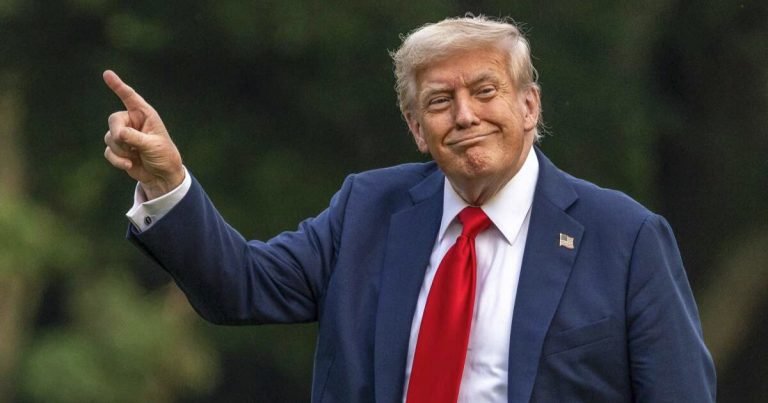
By 17 July 2026 the language inside the Trump administration about its own Middle East war has become ungovernable. Speaking to the BBC on the same day, Vice President J.D. Vance accused Israel of "manipulating" American public opinion to prolong the conflict with Iran, the most pointed attack by a sitting senior US official on the conduct of a close ally in the current conflict cycle. Hours later, an account affiliated with Iran's armed forces declared that "the US is ready to carry out operations inside Iran," framing Washington as the operational lead in strikes nominally attributable to Israel. Separately, a US administration readout confirmed to Israel that "dozens of additional tanker aircraft" would be staged into the region "in anticipation of a possible expansion of military operations against Iran," according to a report carried on X.
The picture these three signals draw is not the one either government is officially selling. Donald Trump's team insists the campaign is winding down; Israeli and Iranian channels report a build-up. The internal contradiction has now broken into daylight. Vance has done what previous administrations only did anonymously: name, on a Western network, the ally most exposed to the charge that it is shaping American consent rather than simply receiving it. The dispute that follows is not about whether the war continues. It is about who decides.
The accusation, and the airlift behind it
Vance's framing, relayed by BBC reporting on 17 July 2026, is that Israel is bending US domestic opinion to extend a war the White House would rather narrow. The statement is unusual in two respects. It is on the record, aimed at a major Western audience, and it places the burden on Tel Aviv rather than on Tehran. Second, it lands while the Pentagon is moving hardware that suggests the opposite of de-escalation. A separate readout, captured on X by @sprinterpress on 17 July 2026, describes notifications to Israel that "dozens of additional tanker aircraft will be deployed to the region in anticipation of a possible expansion of military operations against Iran." Tankers are the bottleneck in any extended Middle East air campaign: without them, sortie rates fall and standoff munitions run out. Their arrival is a forward indicator, not a withdrawal order.
Iranian state-aligned channels have read these two moves the way they were written to be read. A post on the Telegram channel @IRIran_Military on 17 July 2026 stated, in English, that "the US is ready to carry out operations inside Iran." That phrasing strips the Israeli flag from the cockpit and puts an American one in its place. It is also consistent with how the Iranian side has long characterised the relationship: that strikes against Iran attributed to Israel are joint operations, and that escalation with one means escalation with the other.
Read together on a single day, the three inputs describe the present state of the war: a public argument in Washington about whether Israel is engineering US consent, a logistics chain that says the war is about to get bigger, and an Iranian account that says the United States is already a combatant. None of these are new positions. What is new is that the argument is now conducted in public, on Western outlets, by the sitting vice president.
Why Vance, why now
The simplest explanation is the political one. The vice president is the standard-bearer for an administration faction that wants a narrower American footprint abroad, and the Iran war is the test case. Internal pressure inside the Republican coalition has been building against the cost, duration, and price-tag of the campaign, an unease made visible by the muscular posture of oil markets since the spring. The Vance intervention says to donors, to the Congressional right, and to the Israeli embassy: the United States is not your forward observer; it is your patron, and patrons occasionally complain out loud.
The instrumental argument is the campaign itself. Israel has the air assets and the planning cycle to strike Iranian targets, but only the United States has the tanker and command-and-control architecture to sustain a multi-week high-tempo effort at depth. Tankers, mid-air refuellers, and over-the-horizon intelligence are the bottleneck. A buildup of "dozens of additional" tankers is the kind of signal that arrives before something has been publicly decided, not after. It is what militaries call force-posturing, the kind of movement that keeps options open without publicly committing to an option. The Vance statement, by contrast, is verbal-de-escalation: publicly distancing the White House from an ally's maximalist objectives without breaking the alliance. The two moves, logistics and rhetoric, are running in opposite directions.
The counter-narrative inside Israel
The Israeli establishment does not see itself as manipulating US opinion. From Tel Aviv's vantage point, the war is an Israeli decision made in Israeli interests, presented to a US administration that has so far chosen to share it. The tanker deployment, in this reading, is the administration honouring its commitments to a partner whose security concerns it has long accepted as legitimate. Reporting on Israeli security thinking, carried in outlets such as Haaretz and the Jerusalem Post (not part of this article's source set and therefore not cited as primary) routinely frames any slowdown in the campaign as a gift to Iran's nuclear programme and proxy network.
There is also a hard structural argument that the Vance framing implicitly concedes: the United States cannot credibly outsource its Middle East policy to a government whose calculus is set by a different demography, geography, and threat perception. Each round of strikes erodes the line between Israeli and American targeting. Each Iranian counter-strike, real or nominal, raises the price of that conflation. The Vance statement, read generously, is an attempt to claw back the line before the next round makes it impossible.
Stakes
The near-term stakes are operational. If the buildup proceeds, oil markets will price it; refined-product cracks across Asia and the Mediterranean will widen; tanker and insurance premia through the Strait of Hormuz will adjust to a higher military-collision rate. Iran's ability to retaliate, asymmetrically, through the Bab el-Mandeb and the Gulf of Oman has been a consistent feature of the past eighteen months and would not be limited to tankers. The political stakes are sharper. A public rupture between a vice president and an ally, conducted on a Western network, exposes the architecture of US Middle East policy to a stress it has not borne since 1956. The alliance may survive. The pretence that the United States is a passive patron will not.
The sources do not specify casualty numbers from the latest strike cycle, the precise unit or call-sign of the tankers moving into the region, or whether the White House has formally replied to Vance's remarks. What the sources do say, on the same day, is enough. The argument about who runs the war is being held in public. The aircraft that fight it are being positioned in private. That gap is the story.
How Monexus framed this versus the wire: the Vance interview is the political detonation; the X-reported tanker movement is the operational confirmation. Most wires led with the politician, which is the easier story. Monexus led with both, on the same day, because the substance of escalation sits in logistics, not in interviews.
Wire provenance
This editorial synthesis draws on the following public wire/social posts:
- https://t.me/unusual_whales
- https://t.me/IRIran_Military
- https://t.me/sprinterpress